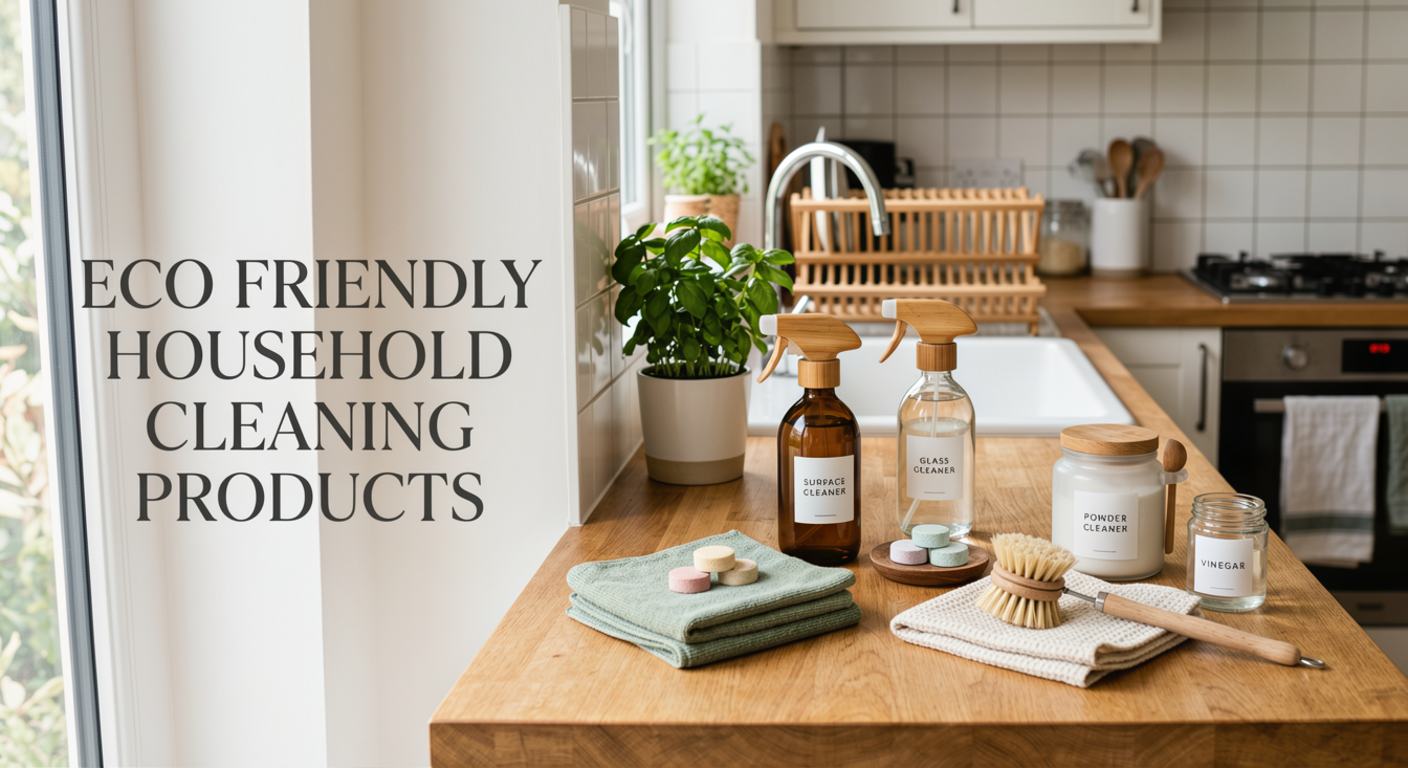









Cleaning Supplies Every Home Should Have for Deep Cleaning, including essential tools, products, and simple tips for a cleaner home. Deep cleaning feels much easier when you have the right supplies within reach. You do not need a cupboard full of expensive products, either. A few reliable cleaners, useful tools, and basic protective items can help you tackle dust, grime, stains, grease, soap buildup, and those forgotten corners around the house. The best cleaning supplies every home should have for deep cleaning are practical, versatile, and easy to use. Once your basic kit is ready, cleaning the kitchen, bathroom, bedrooms, living areas, and floors becomes far less overwhelming.
What Cleaning Supplies Do You Really Need for Deep Cleaning?
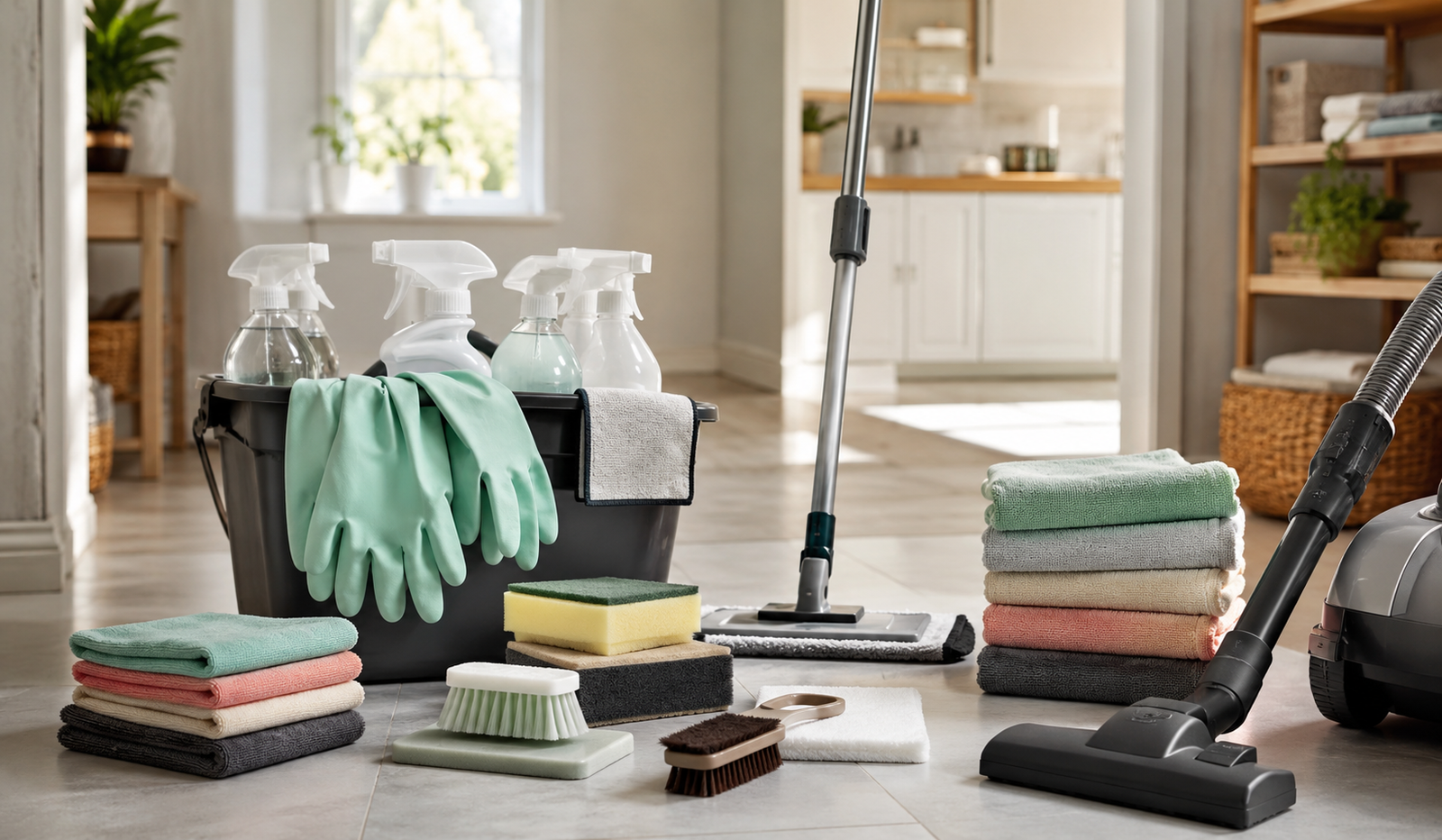
A good deep-cleaning kit should cover the main jobs you regularly face at home, including dusting, wiping, scrubbing, vacuuming, mopping, removing grease, cleaning glass, and reaching difficult areas. The essentials include microfiber cloths, an all-purpose cleaner, a vacuum, broom and dustpan, mop, bucket, scrub brushes, sponges, glass cleaner, cleaning gloves, and a few specialty products. Choosing versatile supplies saves both money and storage space while still giving you enough tools for a thorough clean.
1. Microfiber Cleaning Cloths
Microfiber cloths are one of the most useful supplies to keep at home because they can handle everything from dusty shelves to kitchen counters. Their soft texture makes them suitable for many surfaces, and they are especially useful when you want to remove dust without simply moving it around. Keep several cloths available so you can use separate ones for kitchens, bathrooms, glass, and general household cleaning.
/how-to-clean-microfiber-cloth-GettyImages-1314720631-dfb583e54f9e40dea2fea26b6dfaf26f.jpg)
2. All-Purpose Cleaner
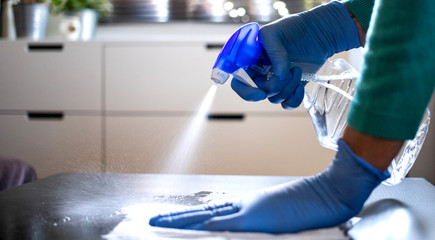
An all-purpose cleaner is a dependable starting point for many deep-cleaning jobs around the house. It can often be used on suitable countertops, cabinets, doors, shelves, and other washable surfaces, depending on the product label. Having one good general cleaner means you do not have to reach for a different bottle every time you clean a new area.
3. Vacuum Cleaner
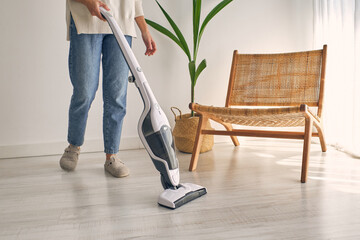
A vacuum cleaner is essential when deep cleaning because dust and dirt often collect in places that a quick sweep cannot reach. A useful model should ideally include attachments for corners, upholstery, crevices, and other difficult areas. Use it on carpets, rugs, sofas, stairs, baseboards, and underneath furniture where dust tends to hide.
4. Broom and Dustpan
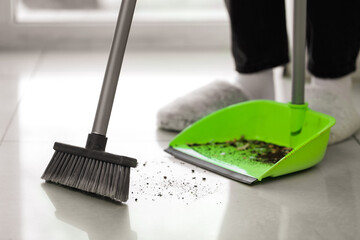
Even if you own a vacuum cleaner, a broom and dustpan still deserve a place in your cleaning cupboard. They are convenient for quickly collecting larger debris, dirt near entrances, crumbs, and dust on hard floors. They can also be useful for balconies, patios, garages, and other areas where you may not want to use a vacuum.
5. Mop and Bucket
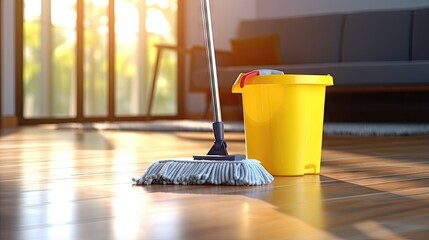
A good mop is essential for removing the dirt that remains after sweeping or vacuuming hard floors. Choose a mop that suits the type of flooring in your home, and avoid using excessive water on materials that can be damaged by moisture. During a deep clean, work in manageable sections so you can clean the floor thoroughly without spreading dirty water across already-clean areas.
6. Scrub Brushes
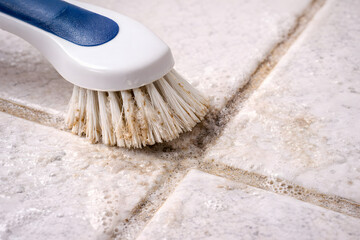
Scrub brushes make difficult cleaning jobs much easier, especially when dirt has become stuck to a surface. A small brush can help around faucets, grout lines, corners, appliance seals, and other narrow spaces, while a larger brush can be useful for tougher floor or outdoor cleaning. Keep both soft and firm brushes available because different surfaces require different levels of scrubbing.
7. Non-Scratch Sponges
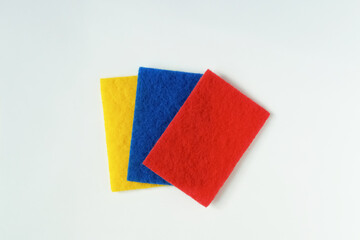
Non-scratch sponges are useful for sinks, tubs, countertops, appliances, and other areas where you need a little extra scrubbing power. They can loosen food residue, soap buildup, and everyday grime without being as aggressive as harsher abrasive tools. Always check the surface and product instructions first, especially when cleaning delicate finishes.
8. Glass Cleaner
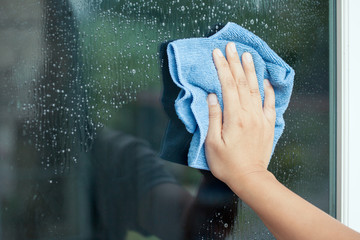
Clean windows and mirrors can make an entire room feel brighter, which is why glass cleaner is worth keeping in your supplies. Use it for suitable mirrors, windows, glass doors, and other smooth glass surfaces. A microfiber cloth or squeegee can help reduce streaks and leave the surface looking cleaner without excessive wiping.
9. Squeegee
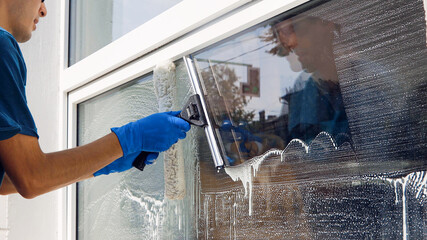
A squeegee is a small tool that can make a surprisingly big difference in bathrooms. After cleaning shower glass or tiles, it can help remove excess water and reduce the amount of moisture left behind. Regular use can also make routine bathroom maintenance easier because water spots and residue have less opportunity to build up.
10. Kitchen Degreaser
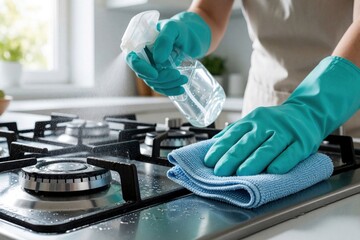
Kitchen grease can be stubborn, particularly around stovetops, range hoods, backsplashes, and cabinet surfaces. A suitable kitchen degreaser can help break down greasy residue that an ordinary cleaner may struggle to remove. Use it according to the label and make sure the product is appropriate for the material you are cleaning.
11. Bathroom Cleaner
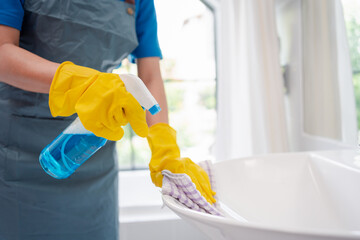
Bathrooms often need more targeted cleaning because they deal with moisture, soap residue, mineral deposits, and everyday grime. A bathroom cleaner designed for the surfaces in your home can make showers, tubs, sinks, and tiles easier to clean. For a deep clean, give extra attention to corners, grout, fixtures, and areas that are usually missed during a quick wipe-down.
12. Toilet Bowl Cleaner and Toilet Brush
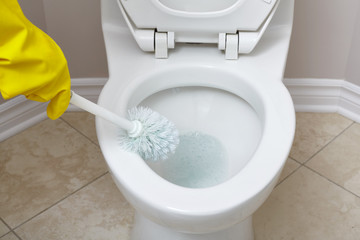
A toilet brush and suitable toilet bowl cleaner are basic bathroom essentials. The brush helps remove buildup from areas that a cloth cannot reach, while the cleaner is designed specifically for toilet surfaces. Keeping these supplies separate from general household cleaning tools is also a simple way to maintain better cleaning hygiene.
13. Baking Soda
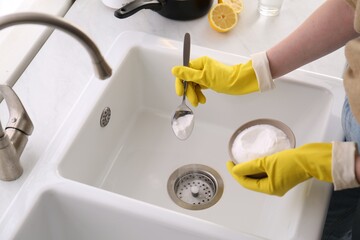
Baking soda is a useful household staple for certain cleaning and deodorizing tasks. Its mild abrasive quality can help with some stubborn residue, while its odor-absorbing properties can be useful in areas such as refrigerators and bins. Because not every surface reacts well to abrasive materials, test it carefully before using it on delicate finishes.
14. White Vinegar
White vinegar can be useful for certain household cleaning tasks, particularly when dealing with some mineral deposits and odors. However, it is not a universal cleaner and should not be used on every surface. Avoid using acidic products on materials that can be damaged by acids, and never mix vinegar with bleach or other incompatible cleaning chemicals.

15. Extendable Duster
Deep cleaning means looking above eye level, too. Ceiling fans, light fixtures, high shelves, vents, and the tops of cabinets can collect an impressive amount of dust over time. An extendable duster lets you reach these areas without constantly climbing on furniture, making it a practical addition to a regular cleaning kit.

16. Small Detail Brush
Some of the dirtiest areas in a home are also the smallest. A small cleaning brush or old toothbrush can help clean around faucets, window tracks, appliance edges, grout, handles, and tight corners. It is inexpensive, takes up almost no space, and can be surprisingly useful when you are doing a detailed deep clean.
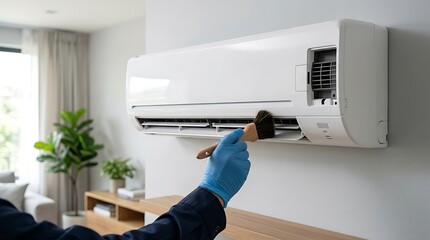
17. Rubber Cleaning Gloves
Cleaning gloves protect your hands from prolonged contact with water, dirt, and cleaning products. They are especially useful when scrubbing bathrooms, washing floors, or handling stronger cleaners. Choose a comfortable pair that fits properly, and wash or replace them as needed to keep them hygienic.
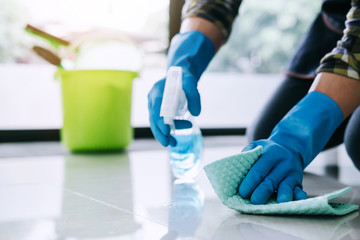
18. Magic Eraser or Melamine Sponge
A melamine sponge can help remove certain marks, scuffs, and stubborn residue from appropriate surfaces. It works through gentle abrasion, so it should not automatically be treated as safe for every material. Test it on a small hidden area first, particularly when cleaning painted surfaces, glossy finishes, or delicate materials.

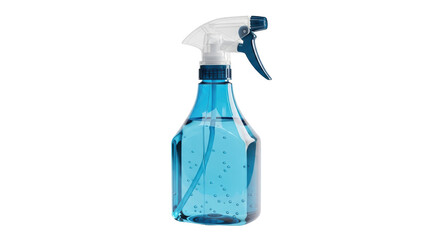
19. Spray Bottles
A few clearly labeled spray bottles can make certain cleaning routines more organized, particularly if you use approved homemade or diluted cleaning solutions. Never reuse bottles without properly identifying their contents, and never mix different cleaning chemicals together. Clear labels are especially important if multiple people in your household use the cleaning supplies.
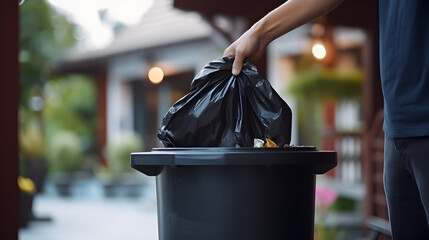
20. Trash Bags
Deep cleaning usually creates more waste than ordinary cleaning. Old packaging, expired household products, damaged items, dust, and clutter can quickly fill a small bin. Keeping strong trash bags nearby means you can remove unwanted items as you work instead of creating piles that make the cleaning process feel even more chaotic.
Cleaning Supplies for Different Rooms
Different rooms create different cleaning challenges, so it helps to organize your supplies around the jobs you actually perform. The kitchen usually needs a degreaser, sponges, microfiber cloths, and suitable surface cleaner, while the bathroom benefits from a toilet brush, bathroom cleaner, scrub brush, and squeegee. Bedrooms and living rooms rely more heavily on a vacuum, duster, microfiber cloths, and upholstery attachments.
Kitchen Deep-Cleaning Supplies
For a kitchen deep clean, focus on products and tools that can handle grease, food residue, dust, and spills. An all-purpose cleaner, kitchen degreaser, microfiber cloths, non-scratch sponges, scrub brushes, vacuum attachments, and a mop can cover most jobs. Remember to clean overlooked areas such as cabinet handles, appliance sides, backsplash edges, and the space underneath movable appliances.
Bathroom Deep-Cleaning Supplies
Bathroom cleaning requires tools that can handle soap residue, water spots, grime, and areas where moisture collects. A suitable bathroom cleaner, toilet cleaner, toilet brush, scrub brush, microfiber cloths, sponge, squeegee, and gloves form a practical bathroom cleaning kit. Pay attention to shower corners, grout, drains, faucets, and the areas behind and around the toilet.
Bedroom and Living Room Supplies
Bedrooms and living rooms usually need more dust removal than heavy scrubbing. A vacuum cleaner with useful attachments, microfiber cloths, an extendable duster, upholstery attachment, and suitable surface cleaner can handle most deep-cleaning tasks. Remember to move lightweight furniture when possible so you can reach dust and debris underneath rather than cleaning only the visible areas.
How to Organize Your Deep-Cleaning Supplies
Keeping cleaning products organized can save more time than buying extra products. Store frequently used supplies together in a secure cleaning caddy or designated cupboard, and group similar products so you can find what you need quickly. Keep stronger cleaning products away from children and pets, follow the manufacturer’s storage instructions, and avoid storing incompatible chemicals together.
How Often Should You Deep Clean Your Home?
There is no single schedule that works perfectly for every household. Many people benefit from a deeper cleaning session every few months, while high-traffic areas may need more frequent attention. Your household size, pets, lifestyle, allergies, climate, and daily cleaning habits can all affect how often deeper cleaning is necessary. Instead of waiting until the entire house feels dirty, break larger jobs into smaller seasonal or monthly tasks.
How to Make Deep Cleaning Easier
The easiest way to deep clean is to avoid treating the whole house as one enormous job. Start by removing clutter, then dust from higher surfaces before cleaning lower areas, and vacuum before mopping. Work room by room and keep your essential supplies nearby. A simple routine prevents you from repeatedly walking back and forth looking for a missing cloth, brush, or cleaner.
Cleaning Mistakes to Avoid
One of the biggest mistakes is assuming that more cleaning product means a cleaner surface. Excess product can leave residue and may even make some surfaces harder to clean. Another common mistake is using the same dirty cloth throughout the house, which can spread grime between rooms. Always follow product labels, use the right cleaner for the surface, and never mix cleaning chemicals unless the manufacturer specifically says it is safe.
A Simple Deep-Cleaning Checklist
A practical checklist includes microfiber cloths, an all-purpose cleaner, vacuum cleaner, broom and dustpan, mop and bucket, scrub brushes, non-scratch sponges, glass cleaner, squeegee, bathroom cleaner, toilet brush, kitchen degreaser, baking soda, suitable specialty cleaners, cleaning gloves, an extendable duster, detail brush, and trash bags. You can add specialty products later based on the surfaces and cleaning challenges in your home.
Conclusion
The best cleaning supplies every home should have for deep cleaning are not necessarily the most expensive ones. What matters is having a small collection of dependable tools that can handle dust, dirt, grease, stains, moisture, and hard-to-reach areas. Start with versatile basics, add specialty products when necessary, and keep everything organized. Once your cleaning kit is ready, deep cleaning becomes less of a stressful project and more of a straightforward household routine.
FAQs
What are the most important cleaning supplies for deep cleaning?
The most important supplies include microfiber cloths, an all-purpose cleaner, vacuum cleaner, broom, mop, bucket, scrub brushes, sponges, glass cleaner, cleaning gloves, and suitable bathroom and kitchen cleaners. These cover most common deep-cleaning tasks.
How many microfiber cloths should a home have?
Having around 8 to 12 microfiber cloths is a practical starting point for most homes. Keeping separate cloths for bathrooms, kitchens, glass, and general cleaning can make it easier to maintain good cleaning habits.
What should I use to clean hard-to-reach areas?
An extendable duster, vacuum crevice attachment, small detail brush, and old toothbrush can help reach corners, vents, window tracks, appliance gaps, ceiling fans, and other difficult areas.
Do I need different cleaners for every room?
Not necessarily. A good all-purpose cleaner can handle many suitable surfaces, while specialty products can be added for jobs such as toilet cleaning, heavy kitchen grease, or particular flooring and materials. Always check the product label before use.
Is baking soda safe for cleaning everything?
No. Baking soda can be useful for certain cleaning and deodorizing tasks, but its mild abrasive quality may affect delicate finishes. Test it on an inconspicuous area first and follow the care instructions for the surface.
Read also: Best Healthy Hgh Protein Snacks For Work