








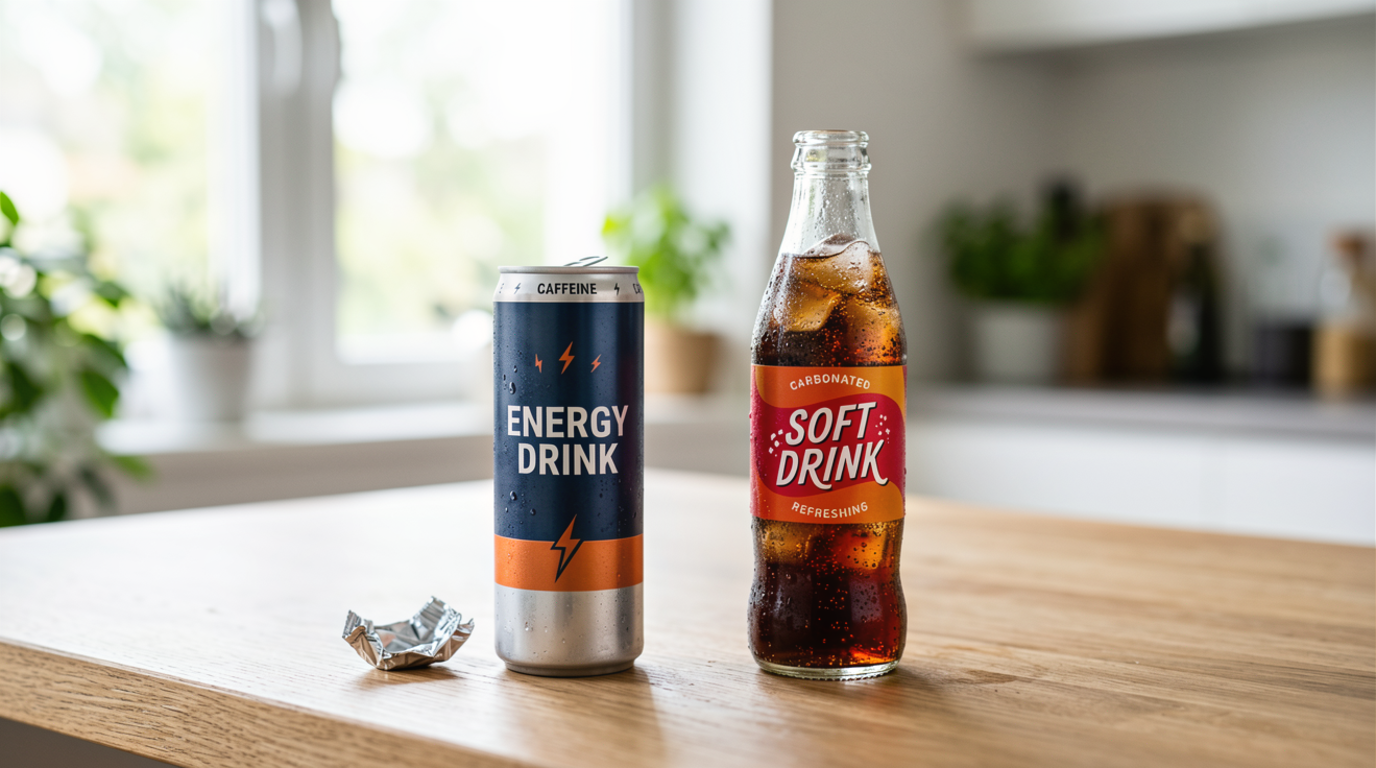
Learn the difference between energy drink and soft drink, including caffeine, sugar, ingredients, effects, and what makes each beverage different. If you have ever wondered about the difference between energy drink and soft drink, the easiest way to understand it is to look at their purpose and ingredients. Soft drinks are mainly made for refreshment and taste, while energy drinks are designed to increase alertness and provide a temporary stimulating effect. Both can contain sugar, sweeteners, flavors, and sometimes caffeine, but energy drinks usually contain significantly more caffeine and may include ingredients such as taurine and B vitamins.
What Is a Soft Drink?
A soft drink is a non-alcoholic beverage that is commonly flavored, sweetened, and often carbonated. Popular examples include cola, lemon-lime drinks, orange soda, and other flavored fizzy beverages. Their main purpose is refreshment and enjoyment rather than providing a stimulant effect. Some soft drinks contain caffeine, while others are completely caffeine-free. The amount of sugar can also vary considerably between products, especially when comparing regular and zero-sugar versions.
What Is an Energy Drink?
An energy drink is a beverage formulated to increase alertness and help reduce the feeling of tiredness for a period of time. Caffeine is usually the main active stimulant, although some products also contain ingredients such as taurine, B vitamins, guarana, or other compounds. Energy drinks may be consumed by adults during demanding work, study, travel, or physical activities, although their caffeine content makes it important to pay attention to serving sizes and individual sensitivity.
Difference Between Energy Drink and Soft Drink
The biggest difference is what each beverage is intended to do. A soft drink is primarily a flavored refreshment, whereas an energy drink is specifically formulated around ingredients that can stimulate the nervous system and increase alertness. A regular cola may contain caffeine, but an energy drink generally contains more caffeine and is marketed for its stimulating properties. Energy drinks can also contain additional ingredients that are not normally found in standard soft drinks.
Caffeine Content
Caffeine is one of the clearest differences between these two beverage categories. Many traditional soft drinks contain little to moderate amounts of caffeine, while some contain none at all. Energy drinks commonly contain a higher concentration of caffeine per serving, although the exact amount varies by brand and product size. When comparing beverages, checking the nutrition or caffeine information on the label is more useful than assuming every energy drink or soft drink contains the same amount.
Sugar and Calories
Sugar is not exclusive to either category, so it cannot be used as the only way to distinguish energy drinks from soft drinks. Regular versions of both may contain substantial amounts of added sugar, while sugar-free or zero-sugar versions use alternative sweeteners instead. If you are watching your sugar or calorie intake, the nutrition label gives you a much clearer picture than the name of the beverage. An energy drink can be sugar-free, and a soft drink can also be sugar-free.
Ingredients in Energy Drinks
Energy drinks often contain a combination of caffeine, sweeteners, flavorings, acids, and other ingredients. Some formulas include taurine, B vitamins, guarana, or other sources of caffeine. The exact formula depends on the product and country, so two energy drinks can have noticeably different ingredient lists. This is one reason it is useful to read the label instead of assuming that all energy drinks work in exactly the same way.
Ingredients in Soft Drinks
Traditional soft drinks usually have a simpler formulation based around carbonated water, sweeteners, flavorings, acids, and sometimes caffeine. Different varieties may include fruit flavors, caramel coloring, preservatives, or other food additives. Diet and zero-sugar versions replace some or all of the sugar with non-sugar sweeteners. Unlike energy drinks, ordinary soft drinks are generally not formulated around a combination of stimulant ingredients.
How Energy Drinks Affect Alertness
The caffeine in an energy drink can temporarily increase alertness and make a person feel less tired. Caffeine works by affecting the brain’s response to adenosine, a chemical associated with sleepiness. The experience varies from person to person, however. Someone who is sensitive to caffeine may notice effects more strongly, while a regular caffeine consumer may experience a smaller noticeable effect. The amount consumed and the person’s individual tolerance also matter.
How Soft Drinks Affect the Body
The effects of a soft drink depend largely on what it contains. A sugar-sweetened soft drink provides carbohydrates and calories, while a zero-sugar version may provide little or no sugar. Caffeinated soft drinks can also contribute to overall caffeine intake. Because soft drinks vary widely, it is more accurate to consider the specific beverage rather than treating every soft drink as nutritionally identical.
Energy Drink vs Soft Drink: Which Has More Caffeine?
In general, energy drinks tend to contain more caffeine than many common soft drinks, but there are exceptions. Some colas contain caffeine, while caffeine-free sodas contain none. Energy drinks also come in different serving sizes and caffeine concentrations. The most reliable comparison is therefore the caffeine amount listed on each product’s label. Remember that drinking multiple servings can substantially increase your total caffeine intake.
Energy Drink vs Soft Drink: Which Has More Sugar?
Neither category automatically has more sugar because recipes differ from product to product. A regular energy drink can contain a considerable amount of added sugar, but some energy drinks are sugar-free. The same is true for soft drinks. If sugar is your main concern, compare the grams of total and added sugars per serving and check how many servings are contained in the bottle or can.
Are Energy Drinks and Soft Drinks the Same?
No, energy drinks and soft drinks are not the same category even though they can share ingredients such as carbonated water, sugar, flavorings, and caffeine. The key distinction is their intended function and formulation. Soft drinks are generally positioned as refreshments, while energy drinks are formulated and marketed to provide a stimulating effect, usually through caffeine. Some products may blur the line, which makes reading the label especially useful.
Can a Soft Drink Give You Energy?
A soft drink can provide calories if it contains sugar, but this is different from the stimulant effect associated with an energy drink. Sugar provides the body with energy in the form of calories, while caffeine can temporarily increase alertness. A caffeinated soft drink can therefore have both effects to some degree, but its formulation and caffeine level may be very different from those of an energy drink.
Why Do Energy Drinks Feel Stronger?
Energy drinks can feel stronger because they are often designed around a higher caffeine content and may be consumed specifically for their stimulating effect. Some also contain additional caffeine sources or other ingredients. Serving size matters as well. A person drinking a large energy drink may consume substantially more caffeine than someone having a small serving of a caffeinated soft drink.
Are Energy Drinks Healthy?
It is difficult to describe all energy drinks as either healthy or unhealthy because their ingredients and serving sizes vary. However, products containing significant amounts of caffeine and added sugar deserve particular attention. Excessive caffeine can cause unwanted effects such as nervousness, restlessness, a rapid heartbeat, or difficulty sleeping in some people. Sugar-sweetened versions can also add substantial amounts of added sugar to the diet. Moderation and awareness of the label are important.
Are Soft Drinks Healthy?
Soft drinks are generally best viewed as occasional beverages rather than an important source of nutrition, particularly when they contain substantial amounts of added sugar. Regular consumption of sugary drinks can make it easier to consume more added sugar and calories than intended. Zero-sugar varieties avoid the sugar and calories from sugar but are still primarily beverages for taste and refreshment rather than sources of essential nutrients.
Energy Drinks and Exercise
Energy drinks are sometimes used around exercise because people associate caffeine with increased alertness and performance. However, they should not automatically be treated as sports drinks. Sports drinks are designed primarily to provide fluids and electrolytes, while energy drinks are formulated around stimulation, usually through caffeine. Anyone using caffeinated beverages during physical activity should consider the total caffeine intake as well as hydration needs.
Energy Drinks and Sleep
Because caffeine is a stimulant, consuming an energy drink later in the day can interfere with sleep for some people. The effect depends on the amount of caffeine, the time of consumption, and individual sensitivity. If you notice that caffeinated beverages make it harder to fall asleep or reduce your sleep quality, limiting them later in the day may be worth considering. Sleep needs should not be replaced with repeated stimulant use.
Who Should Be Careful With Energy Drinks?
People who are particularly sensitive to caffeine should pay close attention to the amount they consume. Children and adolescents are generally advised to avoid energy drinks because of their caffeine and stimulant content. Pregnant or breastfeeding individuals and people with certain medical conditions may also need specific guidance about caffeine intake. When there is uncertainty, checking with a healthcare professional is a sensible approach.
How to Choose Between an Energy Drink and Soft Drink
The better choice depends on what you actually want from the beverage. If you simply want something flavored and refreshing, a soft drink may fit that purpose. If you are considering an energy drink because you want caffeine and increased alertness, check the caffeine and sugar content before drinking it. Water, unsweetened beverages, tea, or coffee can also be alternatives depending on your needs and preferences.
Energy Drink vs Soft Drink: Quick Comparison
The difference between energy drink and soft drink becomes clearer when you compare their purpose, caffeine, ingredients, and typical effects. Energy drinks are generally designed to stimulate alertness and commonly contain more caffeine, while soft drinks are mainly flavored refreshments that may or may not contain caffeine. Both categories can contain sugar, and both also have sugar-free options. The label remains the best source for comparing a particular product.
Conclusion
The simplest way to remember the difference is this: soft drinks are mainly about refreshment, while energy drinks are mainly about stimulation and alertness. They can look similar because both may be carbonated, sweetened, and flavored, but their formulations and intended uses are different. If you regularly consume either type, pay attention to caffeine, added sugar, serving size, and how your body responds. A quick look at the label can tell you much more than the name printed on the front of the can.
FAQs
1. What is the main difference between an energy drink and a soft drink?
The main difference is their purpose. Soft drinks are primarily made for refreshment and flavor, while energy drinks are formulated to increase alertness, usually through caffeine.
2. Do energy drinks have more caffeine than soft drinks?
Generally, energy drinks contain more caffeine than many common soft drinks, although the exact amount varies by product. Always check the label for the actual caffeine content.
3. Do soft drinks contain caffeine?
Some soft drinks contain caffeine, particularly certain cola products, while others are caffeine-free. The caffeine content should be listed on the product label.
4. Which has more sugar, an energy drink or a soft drink?
There is no universal answer. Both can contain significant amounts of sugar, while both categories also have sugar-free options. Comparing the nutrition labels is the easiest way to know.
5. Can energy drinks replace soft drinks?
They are not direct substitutes because they serve different purposes. An energy drink is primarily formulated for a stimulating effect, while a soft drink is generally consumed for refreshment and taste.
Read also: Monthly Grocery List For Family of 4
One thought on “Difference Between Energy Drink and Soft Drink”