






A macaron is a small, elegant sandwich cookie known for its smooth outer shell, delicate texture, and flavorful filling. Made primarily with almond flour, powdered sugar, egg whites, and sugar, it has a crisp or slightly firm exterior that gives way to a soft, chewy center. Between the two shells is usually a layer of buttercream, ganache, curd, or jam. Although macarons look simple, making them well requires careful attention to ingredients, mixing, piping, baking, and resting.
What Is a Macaron?
A macaron is a French-style confection made from two round almond meringue shells joined together with a filling. The shells are typically smooth on top, slightly crisp on the outside, and soft or chewy inside. A properly prepared macaron may also develop a characteristic ruffled edge called a “foot” around the bottom of each shell. This combination of appearance and texture is part of what makes the dessert so distinctive.
What Does a Macaron Taste Like?
The taste depends heavily on the filling and flavoring, but a well-made macaron is usually lightly sweet with a subtle almond note and a soft, satisfying texture. Chocolate versions can taste rich and deep, while pistachio, raspberry, lemon, vanilla, coffee, or salted caramel varieties offer very different experiences. The shell itself is relatively mild, allowing the filling to become the main source of flavor.
What Are Macarons Made Of?
Traditional macarons are made with a small group of basic ingredients, including almond flour, confectioners’ sugar, granulated sugar, and egg whites. Food coloring and flavoring may be added to the shells, while the center can contain buttercream, chocolate ganache, fruit preserves, caramel, or other fillings. Despite the short ingredient list, proportions and technique matter considerably because small changes can affect the texture and appearance.
Almond Flour
Almond flour gives the shells their characteristic nutty flavor and contributes to their delicate texture. It is usually made from finely ground blanched almonds, which help produce a smoother-looking finished cookie. Very coarse almond flour can make the shells look rough, so bakers often sift the dry ingredients carefully before combining them.
Egg Whites
Egg whites are responsible for much of the structure in the shells because they can be whipped into a stable meringue. The meringue needs enough strength to hold its shape but must eventually be incorporated with the dry ingredients carefully. Poorly whipped or improperly handled egg whites can contribute to flat, cracked, or uneven shells.
Sugar
Sugar provides sweetness while also playing an important structural role. Granulated sugar is generally used when preparing the meringue, while powdered sugar is combined with the almond flour. Getting the balance right helps create shells that hold their shape while developing the desired texture during baking.
How Are Macarons Made?
Making macarons generally involves preparing a meringue, combining it with sifted almond flour and powdered sugar, piping the mixture into small rounds, allowing the shells to rest, and then baking them. The mixing stage is especially important because the batter needs to reach the right consistency. If it is too thick, the piped shells may remain peaked; if it becomes too thin, they can spread too much.
Why Is Making a Macaron Difficult?
Macarons have a reputation for being tricky because several stages need to work together. Humidity, oven temperature, mixing technique, ingredient measurements, and resting time can all influence the final result. A batch may look perfect before baking and still develop cracks, hollow centers, uneven feet, or other problems in the oven. That learning curve is one reason experienced bakers pay close attention to small details.
What Is the Macaron Foot?
The foot is the slightly ruffled area that forms around the lower edge of a macaron shell during baking. It is often considered one of the visual signs of a well-developed shell. The foot forms as the surface of the batter sets while air and moisture inside continue moving outward. However, appearance alone does not determine quality; texture and flavor matter just as much.
Popular Macaron Flavors
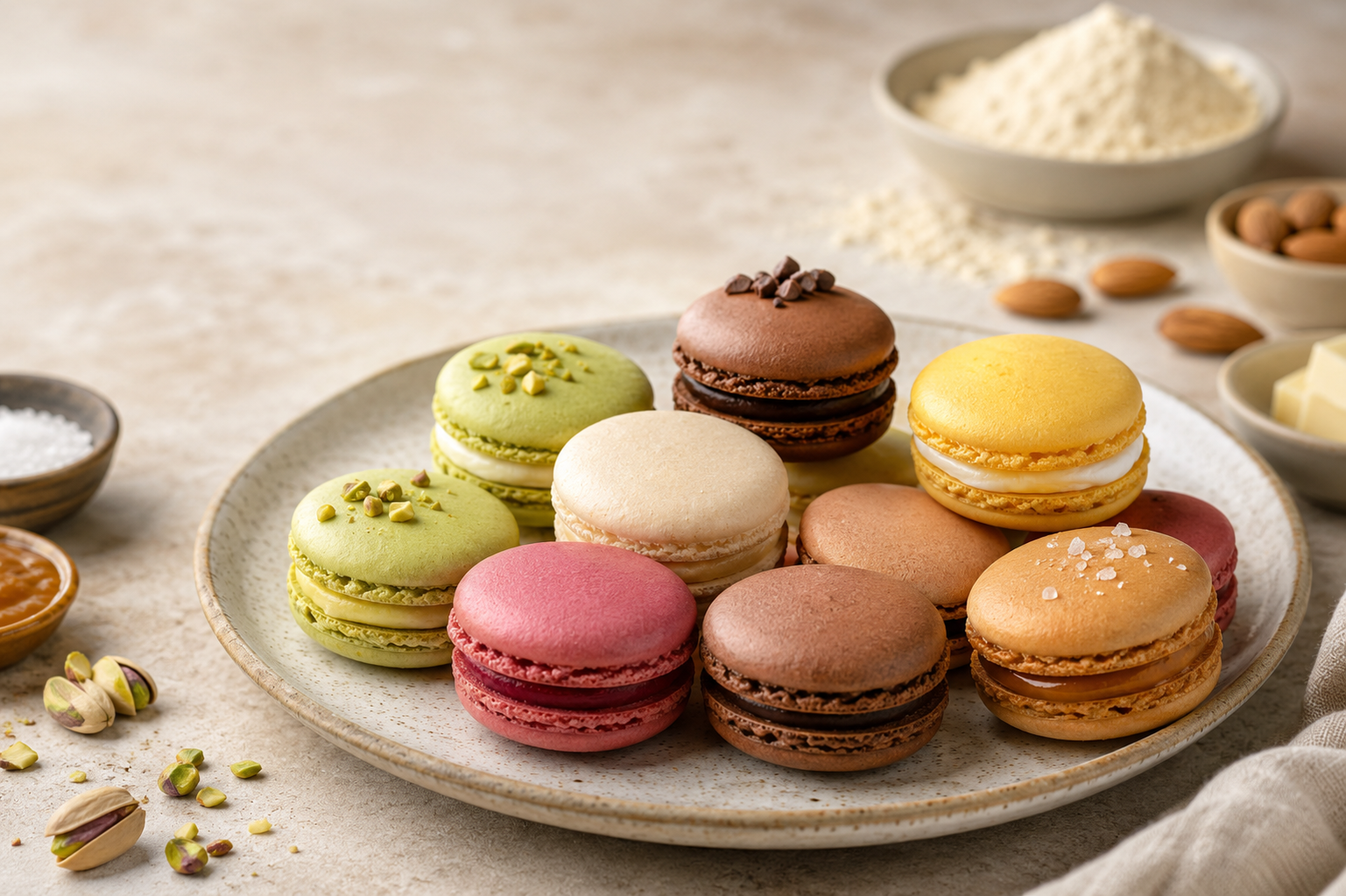
Macarons come in an enormous range of flavors, from classic combinations to creative seasonal recipes. Vanilla, chocolate, pistachio, raspberry, lemon, coffee, salted caramel, coconut, and strawberry remain popular choices because their flavors work naturally with the sweet almond shell. More adventurous bakeries may experiment with matcha, rose, passion fruit, hazelnut, mango, or combinations of several flavors.
Chocolate Macaron
Chocolate macarons are a favorite for people who prefer a richer dessert. Cocoa can be incorporated into the shells, while the filling may be made with chocolate ganache or chocolate buttercream. The result combines the delicate texture of the shell with a deeper cocoa flavor.
Pistachio Macaron
Pistachio macarons have a gentle nutty flavor that pairs naturally with the almond-based shells. A pistachio buttercream or pistachio ganache can strengthen the flavor without making the dessert feel overly heavy. Their subtle green appearance also makes them especially attractive on dessert tables.
Raspberry Macaron
Raspberry macarons offer a pleasant contrast between sweet shells and bright fruit flavor. Raspberry jam, curd, or fruit-flavored buttercream can be used as the filling. The slight tartness helps balance the sweetness and gives the dessert a fresher character.
Lemon Macaron
Lemon macarons are often chosen when a lighter, sharper flavor is wanted. Lemon curd or lemon buttercream provides acidity that cuts through the sweetness of the shells. They are particularly appealing during spring and summer celebrations.
Macaron vs. Macaroon: What Is the Difference?
The main difference is that a macaron is an almond-meringue sandwich cookie, while a macaroon is generally a chewy coconut cookie. Their names sound almost identical, which causes plenty of confusion, but they are quite different in appearance, ingredients, and texture. Macarons are usually colorful and smooth with a filling between two shells, whereas coconut macaroons tend to have a rougher, more textured appearance.
Why Are Macarons So Popular?
Part of the appeal comes from their appearance. Macarons are small, colorful, elegant, and easy to arrange for birthdays, weddings, afternoon tea, and other celebrations. Their size also makes them feel like a small indulgence rather than a large dessert. Add dozens of possible flavors and fillings, and it becomes easy to understand why they have developed such a strong following.
Are Macarons Gluten-Free?
Traditional macarons are generally made without wheat flour, so they are often naturally gluten-free. Their primary dry ingredients are almond flour and powdered sugar rather than conventional wheat flour. However, people with celiac disease or serious gluten sensitivity should check the specific product and preparation environment because cross-contact can occur in bakeries and commercial kitchens.
Are Macarons Vegetarian?
Many traditional macarons can fit a vegetarian diet because their main ingredients do not require meat or fish products. However, the exact filling and recipe can vary, so it is worth checking ingredients when purchasing them. Some fillings may contain ingredients that a particular vegetarian diet avoids.
How Should Macarons Be Stored?
Macarons are usually best kept in an airtight container in the refrigerator, especially when the filling contains buttercream, ganache, or other perishable ingredients. Chilling can also improve their texture because moisture from the filling gradually softens the shells. Before serving, allowing them to sit at room temperature for a short period can bring out their flavor and create a more enjoyable texture.
How Long Do Macarons Last?
The shelf life depends on the filling and storage conditions. Properly stored homemade macarons can often remain enjoyable for several days, while some filled varieties may last longer when refrigerated. Fruit-based or dairy-rich fillings can have different storage requirements, so following the recipe or bakery’s guidance is the safest approach.
Should Macarons Be Refrigerated?
Refrigeration is commonly recommended for filled macarons because it helps protect their freshness and keeps many fillings stable. However, macarons should be sealed properly so they do not absorb strong odors from other foods in the refrigerator. A short period at room temperature before eating can improve the texture.
Why Do Macarons Cost More Than Regular Cookies?
Macarons can cost more because they require relatively expensive ingredients such as almond flour and because the production process is more delicate. Bakers also have to account for careful piping, resting, baking, filling, and sometimes individual decoration. A small mistake can ruin an entire batch, so the labor involved is greater than it may appear from the finished cookie.
Tips for Making Better Macarons at Home
The best approach is to measure ingredients accurately, sift dry ingredients thoroughly, prepare the meringue carefully, and avoid overmixing the batter. Consistency matters more than rushing through the recipe. It is also useful to make notes about oven temperature, baking time, and batter consistency so that each batch teaches you something about the process.
Common Macaron Problems
Cracked shells, hollow centers, uneven feet, excessive spreading, and lopsided shapes are among the problems beginners commonly encounter. These issues can have several causes, including incorrect batter consistency, trapped air, insufficient resting, unsuitable oven temperature, or inaccurate measurements. Instead of changing several things at once, adjusting one variable at a time makes troubleshooting much easier.
How to Serve Macarons
Macarons are usually served as a small dessert alongside coffee, tea, or other drinks. They can be arranged on a dessert platter, packed into gift boxes, or displayed individually for special events. Because they are naturally colorful and compact, they also work well as decorative additions to dessert tables without requiring elaborate presentation.
Are Macarons Good for Special Occasions?
Macarons are particularly well suited to celebrations because they can be customized by color, flavor, filling, and decoration. A bakery can create coordinated selections for weddings, birthdays, baby showers, holidays, or corporate events. Their small size also makes it easy to offer several flavors so guests can choose something they enjoy.
How to Choose Good Macarons
When buying macarons, look for shells that are reasonably smooth and evenly shaped without excessive cracks or discoloration. The filling should look balanced rather than dramatically overflowing from the sides. More importantly, the texture should not be completely dry or rock-hard. A quality macaron should offer a pleasant contrast between its outer shell, soft interior, and filling.
The Texture of a Perfect Macaron
Texture is one of the defining features of a great macaron. The outer shell should have a delicate bite rather than feeling excessively hard, while the interior should remain soft and slightly chewy. The filling adds another layer of creaminess or richness. When these elements come together, the result feels light at first but develops a surprisingly full flavor.
Can You Freeze Macarons?
Yes, macarons can generally be frozen when stored correctly. Filled macarons can be placed in an airtight container with enough protection to prevent freezer odors and moisture from affecting them. When ready to eat, they should be thawed carefully, preferably while still protected in their container, so condensation does not damage the shells.
What Makes a Macaron Different From Other Cookies?
Unlike many everyday cookies, macarons rely heavily on meringue technique and almond flour to create their signature structure. They are also typically assembled from two separate shells and a filling. This gives them a combination of crispness, chewiness, creaminess, and delicate flavor that is quite different from a standard chocolate chip or sugar cookie.
Conclusion
A macaron is much more than a colorful little cookie. Its appeal comes from the balance of almond-based shells, flavorful fillings, delicate texture, and careful craftsmanship. From classic vanilla and chocolate to pistachio, raspberry, lemon, and creative seasonal combinations, there is a flavor for almost every preference. Whether you buy them from a bakery or learn to make them at home, understanding the ingredients and technique makes these elegant treats even more enjoyable.
FAQs About Macaron
What exactly is a macaron?
A macaron is a French-style sandwich cookie made from almond flour, sugar, and egg whites, with two delicate shells joined by a filling such as buttercream, ganache, jam, or curd.
What is the difference between a macaron and a macaroon?
A macaron is made with almond flour and has two smooth shells with a filling, while a macaroon is usually a chewy coconut-based cookie. Despite their similar names, they are different desserts.
Why are macarons so expensive?
Macarons can be relatively expensive because they use ingredients such as almond flour and require careful preparation. Their delicate baking process also means that producing consistent results takes considerable skill and time.
Are macarons gluten-free?
Traditional macarons are generally made without wheat flour and can therefore be gluten-free. However, recipes and bakery preparation methods vary, so anyone avoiding gluten for medical reasons should always verify the ingredients and risk of cross-contact.
How should macarons be stored?
Filled macarons are commonly stored in an airtight container in the refrigerator. Letting them sit at room temperature briefly before serving can help restore a softer, more enjoyable texture.
Read also: Where To Buy Beauty Essentials For Less?
One thought on “Macaron The Elegant French Treat Everyone Loves”