Different Types of Sticky Rice Sold in Grocery Stores
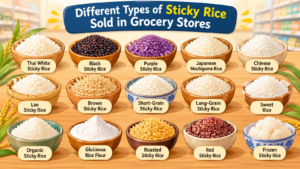
Different types of sticky rice sold in grocery stores include Thai white sticky rice, black glutinous rice, purple sticky rice, Japanese sweet rice, brown sticky rice, and several other varieties. These products differ in grain size, color, texture, flavor, and cooking uses. Some are commonly found in supermarket rice aisles, while others are available mainly in Asian grocery stores and specialty food markets.
Sticky rice is a popular ingredient in many Asian cuisines. It is used in sweet desserts, savory meals, rice dumplings, steamed dishes, and traditional snacks. Although shoppers sometimes assume all sticky rice is the same, there are several varieties worth knowing before choosing a bag. Understanding their differences makes grocery shopping easier, especially when a recipe calls for a particular type.
What Is Sticky Rice?
Sticky rice is a special type of rice that becomes soft, chewy, and sticky after cooking. It is also called glutinous rice or sweet rice, although it does not contain gluten. Its sticky texture comes from its high amylopectin starch content and very low amylose content. These starch characteristics make the cooked grains cling together rather than remain separate like ordinary long-grain rice.
Sticky rice is especially popular in Thailand, Laos, China, Japan, and other parts of Asia. Depending on the variety, it can have white, black, purple, or brown-colored grains. Grocery stores usually sell it in dry bags, while some larger supermarkets and Asian food shops also carry frozen or prepared versions.
12 Different Types of Sticky Rice Sold in Grocery Stores
The sticky rice section of a supermarket can look a little confusing because products often use different names for similar varieties. Some bags say sweet rice, others say glutinous rice, and certain products mention their country of origin. Here are the main varieties shoppers may encounter.
1. Thai White Sticky Rice
Thai white sticky rice is one of the most recognizable varieties sold in Asian grocery stores. It has opaque white grains and develops a soft, chewy consistency after steaming. It is widely used in traditional Thai meals, particularly alongside grilled meat, spicy salads, and other savory dishes. It is also the main ingredient in the popular mango sticky rice dessert. Grocery stores generally sell it in clear or printed bags in different package sizes, making it a practical choice for households that prepare sticky rice regularly.
2. Black Sticky Rice
Black sticky rice is a visually distinctive variety that stands out because of its deep purple-black color. Once cooked, the grains usually become dark purple and develop a slightly nutty flavor with a pleasantly chewy texture. It is often used in Asian puddings, sweet rice desserts, breakfast dishes, and mixed-grain recipes. Some grocery stores label it black glutinous rice, so shoppers should check the packaging rather than assume every black rice product has the same sticky characteristics. It is a good option for people who want something different from ordinary white rice.
3. Purple Sticky Rice
Purple sticky rice is another colorful option found in specialty food stores and some larger supermarkets. Its natural pigmentation gives it a purple appearance, particularly after cooking. The texture is generally chewy, and the flavor can be slightly earthy or nutty depending on the variety. It is commonly used in traditional desserts, sweet rice bowls, and other recipes where both appearance and texture matter. Some purple sticky rice products are actually blends of different rice varieties, so reading the ingredient label is useful when choosing a particular product.
4. Japanese Mochigome Rice
Mochigome is the Japanese name for glutinous rice traditionally used to prepare mochi. It has short, plump grains that become extremely sticky and elastic after cooking. Japanese grocery stores and international supermarkets commonly sell it in bags labeled mochigome, sweet rice, or glutinous rice. This variety is particularly useful for Japanese desserts, traditional rice cakes, and certain festive dishes. It is different from ordinary Japanese short-grain table rice, which becomes somewhat sticky but does not have the same texture as genuine glutinous rice.
5. Chinese Glutinous Rice
Chinese glutinous rice is widely used in traditional Chinese cooking and is available in many Asian supermarkets. It usually has white, plump grains that become sticky and chewy after cooking. One popular use is preparing zongzi, a traditional rice dumpling wrapped in bamboo leaves. It is also used in sweet rice cakes, stuffed dishes, and steamed recipes. Grocery packaging may describe it as Chinese sticky rice, sweet rice, or glutinous rice. Checking the grain description and product label can help distinguish it from ordinary white rice.
6. Lao Sticky Rice
Lao sticky rice is an important everyday food in Laos, where it is commonly eaten with vegetables, grilled meats, sauces, and traditional dishes. It is usually sold as dry white glutinous rice in Asian grocery stores. The grains become compact and chewy when steamed, making them easy to pick up by hand and pair with different foods. Shoppers may find Lao sticky rice under the names Lao glutinous rice or traditional sticky rice. It is particularly suitable for people interested in preparing authentic Laotian meals at home.
7. Brown Sticky Rice
Brown sticky rice is a whole-grain version of glutinous rice that retains its outer bran layer. It has a light brown appearance and a slightly nuttier flavor than the more familiar white variety. Because the bran remains intact, it generally takes longer to cook and may require additional soaking. Its texture is chewy and somewhat firmer, making it suitable for rice bowls, mixed-grain meals, and traditional recipes. It is not as widely stocked as white sticky rice, but shoppers may find it in organic food shops and larger Asian supermarkets.
8. Sweet Rice
Sweet rice is a common grocery-store name for glutinous rice. Despite the name, it is not necessarily sweetened or flavored. The word sweet refers to the rice variety and its starch characteristics rather than added sugar. It becomes very sticky after cooking and works well in desserts, dumplings, steamed dishes, and traditional rice snacks. Many American and international grocery stores use this name on their packaging, so it is worth recognizing when comparing products. If a recipe requests glutinous rice, an unsweetened sweet rice product is often an appropriate choice.
9. Short-Grain Glutinous Rice
Short-grain glutinous rice has small, rounded grains that become very soft and sticky when prepared correctly. It is commonly used in Japanese and Chinese cooking, particularly for rice cakes, desserts, and other recipes that need a compact texture. Its grains tend to cling together more noticeably than those of ordinary long-grain rice. It is often sold in smaller packages at Asian grocery stores and international supermarket sections. Shoppers should look specifically for the word glutinous because not every short-grain rice product has the same sticky properties.
10. Long-Grain Glutinous Rice
Long-grain glutinous rice has a more elongated appearance than short-grain varieties. It is associated with certain Southeast Asian rice products and can be found in specialist grocery shops. When cooked, it develops the characteristic sticky texture of glutinous rice, although its shape remains more elongated. It is suitable for traditional steamed dishes and recipes that specifically call for this grain form. Because long-grain rice is often confused with regular jasmine or basmati rice, shoppers should check the package carefully to confirm that it is genuinely glutinous rice.
11. Organic Sticky Rice
Organic sticky rice is a shopping category rather than a separate botanical variety. It refers to glutinous rice grown and certified according to the applicable organic production standards. It may be available in white, brown, or other varieties depending on the supplier. Grocery stores often place these products in their organic food sections or alongside specialty grains. Some shoppers prefer organic options because of their production standards and certification requirements. Before buying, check the certification information, country of origin, package condition, and ingredients.
12. Frozen Cooked Sticky Rice
Frozen sticky rice is a convenient alternative to preparing dry grains from scratch. It is generally sold as a ready-cooked or partially prepared product that needs reheating according to the package instructions. Some Asian supermarkets stock frozen sticky rice in individual portions, while others sell larger packs intended for family meals. It can save preparation time for busy households and is useful when someone wants sticky rice without soaking and steaming the dry grains. Buyers should check whether the product is plain or seasoned, as some frozen versions include additional ingredients.
How Sticky Rice Varieties Differ From Each Other
Not all sticky rice products have the same appearance, flavor, or cooking requirements. White varieties usually have a mild taste, while black and purple options can offer more noticeable nutty or earthy flavors. Brown sticky rice retains its bran layer, which gives it a firmer texture and longer cooking time. Japanese mochigome is particularly associated with elastic rice cakes, while Thai and Lao varieties are commonly used as steamed accompaniments to savory meals.
The most important difference is the intended use. A product suitable for mango sticky rice may not be the best option for Japanese mochi. Similarly, a frozen prepared product serves a different purpose from a bag of uncooked glutinous rice. Understanding these distinctions helps shoppers avoid purchasing the wrong product.
Where to Find Sticky Rice in Grocery Stores
Sticky rice is usually available in the international foods section, Asian food aisle, or specialty rice section of a supermarket. Larger grocery stores may stock white glutinous rice, sweet rice, and black sticky rice, while smaller shops might carry only one or two varieties.
Asian grocery stores generally offer a wider selection. They are useful places to look for Thai, Lao, Japanese, and Chinese rice products, particularly when a recipe requires a specific variety. Organic supermarkets may also carry brown or certified organic sticky rice.
In Pakistan, shoppers can check larger supermarkets and stores specializing in imported Asian food products. Availability can vary by location, so checking the product label or asking the store about glutinous rice can make the search easier.
How to Choose the Right Sticky Rice at the Supermarket
Choosing sticky rice becomes easier when you know what you plan to cook. For traditional Thai meals and mango sticky rice, Thai white glutinous rice is a suitable choice. Japanese mochigome is better suited to mochi and Japanese rice cakes, while black sticky rice is a popular option for colorful desserts. Brown sticky rice may appeal to shoppers looking for a whole-grain version.
It is also worth checking the packaging before placing a product in your shopping basket. Look for clear ingredient information, a reliable manufacturer, a properly sealed bag, and a reasonable expiration or best-before date. If the rice is sold in transparent packaging, inspect the grains for unusual discoloration, moisture, insects, or damaged kernels.
Check the Product Name
The words glutinous rice, sweet rice, and sticky rice are useful indicators when shopping. However, product names can vary between manufacturers and countries. Reading the complete label is more reliable than choosing a product based only on its front packaging.
Compare Grain Color and Size
White, black, purple, and brown varieties have visibly different appearances. Grain size also matters because short-grain and long-grain products are used differently in certain traditional recipes. A quick look at the product description can help you identify what you are buying.
Consider Package Size
Sticky rice is often sold in small bags for occasional cooking and larger packages for regular household use. If you are trying a variety for the first time, a smaller package is a sensible starting point. It allows you to test the flavor and texture without purchasing more than you need.
How to Prepare Sticky Rice at Home
Preparing sticky rice is slightly different from cooking ordinary white rice. Most dried glutinous rice varieties benefit from soaking before cooking because this helps the grains absorb water more evenly. For traditional Thai sticky rice, rinse the grains several times until the water becomes less cloudy, then soak them for around four to eight hours or overnight. Drain the rice and steam it in a suitable steamer or lined steaming basket until the grains become tender and chewy. Cooking times vary depending on the variety, grain size, and soaking period, so following the package instructions is always a good idea.
Steaming Sticky Rice
Steaming is one of the most traditional ways to prepare Thai and Lao sticky rice. After soaking and draining, place the rice in a steaming basket over boiling water. Cover it and allow the steam to cook the grains until they become soft and stick together. Turn or gently toss the rice during cooking if necessary to help it cook evenly. The finished rice should feel tender and chewy without becoming excessively wet or mushy.
Cooking Sticky Rice in a Rice Cooker
A rice cooker can also be used for certain glutinous rice varieties. Rinse and soak the grains according to the product instructions, then add the recommended amount of water before starting the cooking cycle. Some rice cookers include a dedicated sticky rice setting, while others use a standard cooking program. Since water requirements differ between products, avoid assuming that the same measurements used for regular white rice will work perfectly.
Common Grocery Shopping Mistakes When Buying Sticky Rice
One common mistake is confusing ordinary short-grain rice with glutinous rice. Both can become somewhat sticky after cooking, but they are not interchangeable in recipes that require the highly cohesive texture of genuine sticky rice. Another mistake is assuming that black rice is automatically black glutinous rice. Some black rice products are non-glutinous varieties that remain relatively separate after cooking. Shoppers should also avoid choosing a product based entirely on its country of origin because different countries produce multiple rice varieties. Checking the actual product name, ingredients, and cooking instructions is a more dependable way to make the right purchase.
How to Store Sticky Rice After Buying
Uncooked sticky rice should be kept in a cool, dry place away from direct sunlight and moisture. Once a package has been opened, transferring the remaining grains into an airtight food container can help protect them from insects, odors, and humidity. Brown sticky rice may have a shorter storage life than polished white rice because its retained bran contains natural oils. Cooked sticky rice should be refrigerated promptly in a covered container and used within a few days. For longer storage, it can be frozen in suitable portions and reheated thoroughly before serving.
Is Sticky Rice Different From Regular White Rice?
Yes, sticky rice is different from regular white rice because of its starch composition and cooking behavior. Ordinary white rice contains a combination of amylose and amylopectin, which usually allows the cooked grains to remain more separate. Glutinous rice contains very high levels of amylopectin and very little amylose, producing its characteristic sticky and chewy texture. Regular jasmine, basmati, and long-grain white rice are not direct substitutes when a recipe specifically requires glutinous rice. The distinction matters most in traditional desserts, rice cakes, and dishes where the grains need to hold together.
Conclusion
Sticky rice is not limited to plain bags of uncooked grains. Grocery stores also carry several products made from glutinous rice that are useful for different recipes. Glutinous rice flour is one of the most common examples. It is produced by grinding glutinous rice into a fine powder and is widely used for mochi, rice cakes, dumplings, and Asian desserts. Some stores also stock frozen rice cakes, packaged mochi, and ready-to-heat sticky rice portions. These products provide convenient alternatives for shoppers who want the texture and flavor of sticky rice without preparing the grains themselves.
Frequently Asked Questions
1. What is the most common type of sticky rice sold in grocery stores?
Thai white sticky rice is one of the most common varieties available in Asian grocery stores. It is widely used for steamed rice dishes, traditional meals, and desserts such as mango sticky rice. Japanese sweet rice and Chinese glutinous rice are also popular options.
2. Is sweet rice the same as sticky rice?
Yes. Sweet rice is another common name for glutinous rice. Despite the name, it does not contain added sugar and is not necessarily sweet in flavor. It becomes sticky and chewy when cooked because of its starch composition.
3. Can I find black sticky rice in regular supermarkets?
Some larger supermarkets carry black sticky rice in their international food or specialty rice sections. However, it is more commonly available in Asian grocery stores. Always check that the packaging specifically identifies it as glutinous or sticky rice.
4. What type of sticky rice is best for mango sticky rice?
Thai white glutinous rice is a traditional choice for mango sticky rice. Its soft, chewy texture works particularly well with fresh mango slices and sweet coconut milk.
5. Is Japanese mochigome different from Thai sticky rice?
Yes. Both are glutinous rice varieties, but they are associated with different culinary traditions and uses. Japanese mochigome is commonly used for mochi and Japanese rice cakes, while Thai sticky rice is frequently served with savory meals and traditional desserts.
Pingback: Different Types of Mozzarella Cheese Products