Difference Between Green Tea and Black Tea
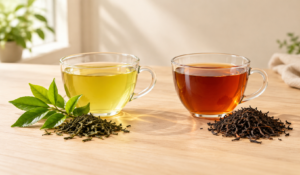
Difference between green tea and black tea explained, including caffeine, taste, antioxidants, health benefits, side effects, and which tea is better for you. The difference between green tea and black tea comes down to how the leaves are processed, their taste, caffeine content, and antioxidant composition. Both teas come from the same plant, Camellia sinensis, but they offer different drinking experiences. Green tea has a lighter, fresher flavor, while black tea tastes stronger and richer. Both can fit into a healthy lifestyle, whether you enjoy a warm cup in the morning or a relaxing drink in the afternoon. Understanding their benefits, nutritional differences, and effects on the body can help you choose the tea that best suits your daily routine.
What Is the Difference Between Green Tea and Black Tea?
The main difference between green tea and black tea is oxidation. Green tea leaves are heated soon after harvesting to limit oxidation, helping preserve their green color and many natural catechins. Black tea leaves undergo extensive oxidation, which gives them their darker color, stronger flavor, and distinctive antioxidant compounds. Both contain caffeine and beneficial plant chemicals, but their amounts vary depending on the tea variety and brewing method. Neither tea is automatically healthier than the other, so your best choice depends on your taste preferences, caffeine sensitivity, and health goals.
What Is Green Tea?
Green tea is made from the leaves of the Camellia sinensis plant, which are quickly heated after harvesting to prevent extensive oxidation. This process helps preserve the leaves’ green color and contributes to their fresh, grassy, or slightly vegetal flavor. Green tea is popular among people who prefer a lighter beverage with a moderate amount of caffeine. It also contains catechins, including epigallocatechin gallate (EGCG), which have antioxidant properties. When prepared without sugar or other calorie-rich additions, green tea is a low-calorie drink that can be enjoyed as part of a balanced diet.
What Is Black Tea?
Black tea comes from the same tea plant as green tea, but its leaves undergo a more extensive oxidation process. During this process, natural compounds in the leaves change, producing the dark color and rich flavor associated with black tea. Depending on the variety, black tea can taste malty, earthy, fruity, or slightly sweet. It is often used to make breakfast tea, milk tea, and iced tea. Black tea contains caffeine, along with polyphenols such as theaflavins and thearubigins. These compounds contribute to its flavor and antioxidant profile, making black tea another reasonable option for everyday enjoyment.
Green Tea vs. Black Tea: Quick Comparison
Green tea and black tea share several similarities, but their processing, flavor, and caffeine levels make them different in everyday use. Green tea generally has a lighter taste and often contains less caffeine, while black tea tends to have a stronger flavor and may provide more caffeine per cup. Green tea is particularly known for its catechins, whereas black tea contains oxidation-related polyphenols, including theaflavins and thearubigins. Both are naturally low in calories when consumed plain, and both can provide beneficial plant compounds without requiring complicated preparation.
| Feature | Green Tea | Black Tea |
|---|---|---|
| Source | Camellia sinensis | Camellia sinensis |
| Processing | Oxidation is limited | Extensive oxidation |
| Color | Light green or yellow | Amber, reddish-brown, or dark brown |
| Taste | Fresh, grassy, and sometimes vegetal | Strong, malty, and rich |
| Caffeine | Usually lower | Usually higher |
| Main polyphenols | Catechins, including EGCG | Theaflavins and thearubigins |
| Calories when plain | Almost zero | Almost zero |
| Common serving style | Often served without milk | Often served plain or with milk |
| Best suited for | People who enjoy lighter tea | People who enjoy a stronger brew |
How Are Green Tea and Black Tea Made?
The way tea leaves are processed explains much of the difference between green tea and black tea. Both begin as leaves from the same plant, but the steps after harvesting affect their color, aroma, flavor, and chemical composition. Green tea is processed to limit oxidation, while black tea is intentionally oxidized to develop its characteristic dark appearance and bold taste. These differences are also responsible for changes in the types and amounts of polyphenols found in each drink.
How Green Tea Is Processed
After harvesting, green tea leaves are quickly heated through steaming or pan-firing, depending on the style. This step deactivates enzymes that would otherwise promote oxidation. The leaves are then rolled and dried to create the finished tea. Japanese green teas are often steamed, which can produce a fresh, vegetal flavor, while many Chinese varieties are pan-fired and may have a nuttier taste. The final flavor also depends on the growing conditions, leaf quality, and brewing temperature.
How Black Tea Is Processed
Black tea leaves are typically withered to reduce moisture, rolled or otherwise processed to release their natural compounds, and exposed to oxygen during oxidation. The leaves gradually darken as their chemical composition changes. They are then dried to stop further processing and preserve the finished product. This method creates the rich color and stronger flavor that distinguish black tea from green tea. The amount of oxidation, the tea variety, and the production method all influence the final taste.
Green Tea vs. Black Tea: Which Has More Caffeine?
Black tea generally contains more caffeine than green tea, although the exact amount depends on the type of leaves, serving size, water temperature, and brewing time. An eight-ounce cup of green tea may contain around 20–45 milligrams of caffeine, while the same amount of black tea may contain around 30–70 milligrams. These ranges overlap, so a strong cup of green tea can contain more caffeine than a lightly brewed black tea. If you are sensitive to caffeine, pay attention to how your body responds rather than relying on the tea’s color alone.
Does Green Tea Give You Energy?
Green tea can help you feel more alert because it contains caffeine. Some people find it a comfortable morning or afternoon drink because its flavor is lighter and its caffeine content is often lower than that of black tea. Green tea also contains L-theanine, an amino acid that has been studied for its effects on attention and relaxation. However, the experience varies from person to person, and green tea should not be treated as a guaranteed way to improve concentration or eliminate fatigue.
Does Black Tea Provide a Stronger Energy Boost?
Black tea may provide a stronger caffeine boost because many varieties contain more caffeine per serving than green tea. This can make it a useful choice when you want a warm drink with breakfast or need a little extra alertness during the day. However, caffeine affects people differently. A strong cup may cause restlessness, a racing heartbeat, or difficulty sleeping in people who are sensitive to it. If you experience these effects, consider a smaller serving, a shorter brewing time, or a decaffeinated option.
Health Benefits of Green Tea
Green tea contains several plant compounds that have attracted scientific interest, especially catechins such as EGCG. These compounds have antioxidant properties, meaning they can help counter oxidative processes in the body. Research has also examined green tea consumption in relation to heart health, metabolism, and other health outcomes. Some findings are promising, but the strength of the evidence varies, and drinking green tea does not prevent or treat disease by itself. Its greatest practical benefit may be that it offers a flavorful, low-calorie alternative to sugary beverages.
Green Tea and Heart Health
Green tea contains polyphenols that researchers have studied for their potential relationship with cardiovascular health. Some studies suggest that regular tea consumption may be associated with favorable heart-health outcomes, but these associations do not prove that green tea alone causes the benefits. Your overall eating pattern, physical activity, sleep, blood pressure, and other lifestyle factors remain important. Green tea can be part of a heart-conscious routine, but it should not replace prescribed medication or medical advice.
Green Tea and Weight Management
Green tea is often promoted for weight loss because caffeine and catechins may have a small effect on energy expenditure. However, these effects are generally modest, and results vary between individuals. Drinking green tea will not automatically burn body fat or compensate for an overall diet that provides more calories than your body uses. If you are trying to manage your weight, plain green tea can be helpful as a replacement for sugary drinks. A balanced diet, regular movement, and sustainable habits have a much greater influence on long-term results.
Green Tea and Antioxidants
One of green tea’s most studied features is its catechin content. EGCG is a particularly well-known catechin because researchers have investigated its antioxidant and other biological effects. The amount present in a cup depends on the tea variety, leaf quality, water temperature, and brewing time. Drinking green tea provides these compounds as part of a beverage, but its effects should not be exaggerated. Green tea is not a detox treatment, and you do not need concentrated green tea supplements to enjoy a healthy diet.
Health Benefits of Black Tea
Black tea also contains polyphenols and other compounds that may contribute to its health value. Its theaflavins and thearubigins develop during oxidation and help give the tea its characteristic color and flavor. Researchers have examined black tea consumption in connection with cardiovascular health, blood vessel function, and other measures of well-being. Although some studies report potentially favorable associations, the evidence does not mean black tea guarantees protection from illness. Enjoying it without excessive sugar can be a simple way to include a plant-based beverage in your daily routine.
Black Tea and Heart Health
Black tea contains polyphenols that have been studied for their possible effects on cardiovascular health. Some research suggests that regular consumption may be associated with improvements in certain cardiovascular markers, although individual results and study findings vary. The benefits of black tea should be considered alongside other habits, such as eating a variety of fruits and vegetables, staying active, and managing blood pressure. Drinking black tea is a reasonable dietary choice for many adults, but it is not a substitute for treatment when a medical condition is present.
Black Tea and Mental Alertness
The caffeine in black tea can temporarily improve alertness and help you feel less sleepy. This can make it appealing during a busy morning or after lunch when your energy begins to dip. However, using caffeine to push through ongoing tiredness can hide the effects of insufficient sleep. Too much black tea may also lead to nervousness or disrupted sleep, especially if consumed late in the day. For the best experience, adjust your serving size and drinking time to suit your own caffeine tolerance.
Black Tea and Digestive Comfort
Many people enjoy black tea after a meal because it is warm, familiar, and easy to prepare. However, there is limited evidence that black tea directly improves digestion for everyone. Its caffeine and tannins may cause discomfort in some people, particularly when consumed on an empty stomach. If black tea makes you feel nauseated or worsens acid reflux, try a smaller cup, drink it with food, or switch to a different beverage. Individual tolerance matters more than general claims about digestive benefits.
Which Tea Has More Antioxidants?
Green tea and black tea both contain antioxidants, but their main polyphenols differ because of the way the leaves are processed. Green tea is known for catechins, including EGCG, while black tea contains theaflavins and thearubigins formed during oxidation. It is difficult to declare one universally superior because antioxidant measurements depend on the specific tea, preparation method, and testing approach. More importantly, antioxidant activity measured in a laboratory does not automatically translate into a greater health benefit for people. Both teas can contribute useful plant compounds to a balanced diet.
Green Tea vs. Black Tea for Weight Loss
If weight management is your goal, either green tea or black tea can fit into your routine. Green tea receives more attention in weight-loss discussions because researchers have investigated the combined effects of caffeine and catechins on metabolism. However, evidence suggests that any weight-loss effect is small rather than dramatic. Black tea can be equally practical when it replaces sweetened beverages. The biggest difference often comes from what you add to your cup: sugar, syrups, cream, and large amounts of milk can increase calories considerably. Plain tea is usually the simplest choice.
Which Tea Is Better for Skin?
Green tea and black tea contain polyphenols that researchers have studied for their antioxidant and anti-inflammatory properties. Green tea, particularly its EGCG content, has received attention in skin-related research, while black tea also contains potentially beneficial plant compounds. However, drinking either tea has not been proven to clear acne, reverse skin aging, or treat skin conditions on its own. Healthy skin depends on several factors, including genetics, sun protection, sleep, nutrition, and a suitable skincare routine. Enjoy tea for its flavor and possible general health benefits, but avoid treating it as a replacement for evidence-based skincare.
Green Tea vs. Black Tea for Morning and Evening
The best time to drink green tea or black tea depends largely on your schedule and caffeine sensitivity. Black tea can be a satisfying morning drink because its bold flavor and caffeine content may help you feel more awake. Green tea can also work well in the morning or early afternoon if you prefer something lighter. Neither tea is naturally caffeine-free, so drinking either close to bedtime may affect your sleep. If you enjoy tea in the evening, choose a decaffeinated version or a caffeine-free herbal infusion instead.
Which Tea Is Better for Your Stomach?
Neither green tea nor black tea is automatically easier on the stomach. Both contain caffeine and tannins, which may cause nausea or discomfort in some people, particularly when the tea is strong or consumed on an empty stomach. Green tea may taste lighter, but that does not guarantee it will be gentler for everyone. Black tea may be more comfortable for some people when served with food, while others may prefer a weaker green tea. If you have frequent stomach discomfort or reflux, monitor your symptoms and seek medical advice if they persist.
Side Effects of Green Tea and Black Tea
Both teas are generally safe for most healthy adults when consumed in moderate amounts, but their caffeine content can cause problems in sensitive individuals. Possible effects include anxiety, restlessness, headaches, a racing heartbeat, and difficulty sleeping. Drinking tea with meals can also reduce the absorption of non-heme iron from plant foods, which is worth considering if you have iron deficiency. Large amounts of green tea extract can carry additional risks, including liver injury, so concentrated supplements should not be treated as equivalent to an ordinary cup of tea. Pregnant people and anyone advised to limit caffeine should follow appropriate medical guidance.
How to Brew Green Tea and Black Tea Properly
The brewing method can make a noticeable difference to the flavor of both teas. Green tea usually tastes best when brewed with water below boiling, often around 70–85°C (158–185°F), for roughly one to three minutes, depending on the variety. Water that is too hot or steeping for too long can make it bitter. Black tea generally tolerates hotter water, around 90–100°C (194–212°F), and is often steeped for three to five minutes. These are starting points rather than strict rules, so adjust the temperature and timing to suit your preferred strength.
Can You Drink Green Tea and Black Tea Every Day?
Most healthy adults can enjoy both green tea and black tea every day, provided their total caffeine intake remains within a suitable range. For many adults, up to 400 milligrams of caffeine per day is considered a general upper limit, although individual tolerance varies and lower limits apply during pregnancy and in certain medical situations. Remember that coffee, chocolate, energy drinks, and some medicines may also contribute caffeine. If you notice sleep problems or increased anxiety, reduce your intake or choose decaffeinated tea. Drinking tea without large amounts of sugar is a sensible everyday habit.
Green Tea vs. Black Tea: Which One Should You Choose?
The choice between green tea and black tea comes down to your preferences and what you want from your daily drink. Green tea is a good option if you enjoy a lighter taste and want a beverage rich in catechins. Black tea may suit you better if you prefer a stronger flavor or a potentially higher caffeine content. Both offer plant compounds and can be enjoyed hot or cold. Rather than choosing based on exaggerated health claims, consider which tea you enjoy, how it affects your sleep and stomach, and whether you drink it with added sugar.
Conclusion
The difference between green tea and black tea is mainly their processing, flavor, caffeine content, and types of polyphenols. Green tea is processed to limit oxidation and retains a characteristic catechin profile, while black tea undergoes extensive oxidation that creates its darker color and richer taste. Both can be enjoyable, low-calorie drinks with potential health benefits when consumed without excessive sugar. There is no single winner for everyone. Choose green tea if you like a fresh, lighter brew, or black tea if you prefer a bold, full-bodied cup. Either can be a sensible part of a balanced lifestyle.
Frequently Asked Questions (FAQs)
1. Is green tea healthier than black tea?
Neither is universally healthier. Green tea contains catechins such as EGCG, while black tea contains theaflavins and thearubigins. Both can be part of a balanced diet.
2. Which has more caffeine, green tea or black tea?
Black tea generally contains more caffeine per cup, but the amount varies by tea variety, serving size, and brewing method.
3. Which tea is better for weight loss?
Green tea has been studied for its potential modest effects on metabolism, but neither tea causes significant weight loss on its own. Unsweetened tea can help replace higher-calorie drinks.
4. Can I drink green tea and black tea every day?
Yes, most healthy adults can drink either tea daily in moderation. Consider your total caffeine intake and reduce consumption if you experience sleep problems or other side effects.
5. Which tea is better for the stomach?
Neither is best for everyone. Both may cause discomfort when brewed strongly or consumed on an empty stomach. Your personal tolerance is the best guide.