Instant Yeast to Active Dry Yeast Conversion
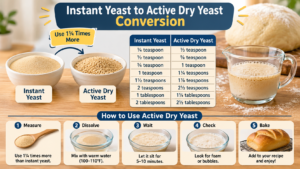
Instant yeast to active dry yeast conversion is the process of adjusting the amount of yeast when replacing instant yeast with active dry yeast in a baking recipe. Both types help dough rise by producing carbon dioxide during fermentation, but they differ slightly in their processing, granule size, and preparation methods. As a general rule, you can use approximately 25% more active dry yeast than instant yeast. For example, if your recipe requires one teaspoon of instant yeast, you can use 1¼ teaspoons of active dry yeast instead. This small adjustment helps account for differences between the two varieties and makes it easier to follow recipes without purchasing another type of yeast.
Instant Yeast to Active Dry Yeast Conversion Chart
A conversion chart is one of the easiest ways to understand how much active dry yeast you need when your recipe calls for instant yeast. Instead of calculating the difference every time you bake, you can simply check the measurement and adjust your ingredients accordingly. The following chart provides common kitchen measurements for everyday baking recipes, including bread, pizza dough, dinner rolls, and sweet baked goods.
| Instant Yeast | Active Dry Yeast |
|---|---|
| ¼ teaspoon | About ⅓ teaspoon |
| ½ teaspoon | ⅝ teaspoon |
| ¾ teaspoon | About 1 teaspoon |
| 1 teaspoon | 1¼ teaspoons |
| 1½ teaspoons | 1⅞ teaspoons |
| 2 teaspoons | 2½ teaspoons |
| 2¼ teaspoons | About 2¾ teaspoons |
| 1 tablespoon | 1¼ tablespoons |
| 2 tablespoons | 2½ tablespoons |
These measurements are practical estimates based on the 1.25 conversion ratio. For small quantities, slight differences in measuring are generally less important than using fresh yeast and allowing enough time for the dough to rise. If you are working with a recipe that requires precise baking results, using a kitchen scale and checking the yeast manufacturer’s instructions can provide greater accuracy.
What Is the Difference Between Instant Yeast and Active Dry Yeast?
Instant yeast and active dry yeast are two popular types of baker’s yeast used in homemade and commercial baking. Both are living microorganisms that help dough expand, develop texture, and produce the familiar flavor associated with freshly baked bread. However, they are processed differently, which affects how they are used in recipes. Instant yeast has smaller granules and is designed to mix directly with dry ingredients, while active dry yeast generally has larger granules and is commonly dissolved in warm water before being added to the dough. Although they can often replace each other, understanding their differences helps you choose the right preparation method and avoid confusion when following baking instructions.
What Is Instant Yeast?
Instant yeast is a dried form of baker’s yeast that has been processed into fine granules, allowing it to hydrate quickly when mixed with flour and other ingredients. One of its biggest advantages is convenience because you usually do not need to dissolve it in water before using it. You can add it directly to your dry ingredients and continue preparing the dough as instructed. Instant yeast is particularly useful for busy home bakers who want a straightforward baking process without an additional activation step. It is commonly used in sandwich bread, pizza dough, dinner rolls, cinnamon rolls, and many other recipes.
What Is Active Dry Yeast?
Active dry yeast is another type of dried baker’s yeast, but its granules are generally larger than those of instant yeast. It is traditionally dissolved in warm water before being mixed into the dough. This process allows the yeast to absorb moisture and become active before it is combined with the other ingredients. Many bakers prefer this method because they can observe whether the yeast produces foam, which can indicate that it is active. Active dry yeast is widely available in supermarkets and grocery stores and works well in many traditional bread recipes, homemade rolls, and other baked goods.
Which Yeast Works Faster?
Instant yeast generally works faster because it hydrates more quickly and can be mixed directly into the flour. Active dry yeast may take slightly longer because it is commonly dissolved in water before use. However, the actual rising time depends on several factors, including room temperature, dough moisture, sugar content, flour type, and the amount of yeast used. A warm kitchen may help dough rise more quickly, while a cool environment can slow fermentation. It is better to judge dough by its appearance and size rather than relying only on a fixed number of minutes.
How to Convert Instant Yeast to Active Dry Yeast
Replacing instant yeast with active dry yeast is not complicated, but following the correct steps can make a noticeable difference in your baking results. The most important things are adjusting the quantity, preparing the yeast properly, and giving the dough enough time to rise. Once you understand the process, you can confidently adapt many everyday recipes without changing their basic ingredients.
Step 1: Check the Amount of Instant Yeast
Start by checking how much instant yeast your original recipe requires. This measurement is important because it determines how much active dry yeast you should use. For example, if the recipe lists two teaspoons of instant yeast, you will need approximately 2½ teaspoons of active dry yeast. Reading the recipe carefully before mixing your ingredients helps prevent measurement mistakes, especially when preparing larger batches of bread or rolls.
Step 2: Measure the Active Dry Yeast
Once you know the required amount, measure approximately 25% more active dry yeast than the instant yeast quantity. A measuring spoon is suitable for most home baking recipes, although a kitchen scale can help when working with larger quantities. Try to avoid estimating the amount by eye because too much yeast may cause dough to rise too quickly, while too little can result in slow fermentation and a dense texture. Accurate measurements make the baking process more predictable.
Step 3: Dissolve the Yeast in Warm Water
Active dry yeast is commonly dissolved in warm water before being added to the other ingredients. Use a small portion of the liquid already included in your recipe rather than adding extra water unnecessarily. The water should feel comfortably warm, ideally around 100–110°F (38–43°C), although checking the yeast manufacturer’s instructions is important. Water that is too hot can damage or kill the yeast, preventing it from working properly. Stir gently and allow the mixture to stand for approximately five to ten minutes.
Step 4: Check for Foam or Bubbles
After a few minutes, look at the surface of the yeast mixture. Fresh, active yeast may produce bubbles, foam, or a slightly creamy appearance. These signs suggest that the yeast is producing carbon dioxide and is ready to be used. However, the amount of foam can vary depending on the yeast brand and preparation conditions. If nothing happens after ten minutes, check the expiration date and water temperature before adding the mixture to your dough.
Step 5: Mix the Ingredients and Prepare Your Dough
Once the yeast has been activated, combine it with the remaining ingredients according to your recipe. Mix everything until a rough dough forms, then knead as instructed. During kneading, gluten develops and creates the structure that helps bread hold its shape and trap the gases produced by the yeast. Avoid adding too much extra flour because this can make the finished bread dry or heavy. Follow the recipe’s instructions and allow the dough to become smooth and elastic before moving to the next stage.
Can You Substitute Active Dry Yeast for Instant Yeast Without Activating It?
Yes, active dry yeast can sometimes be added directly to flour without dissolving it first, particularly when using newer formulations that are designed for direct mixing. However, traditional active dry yeast is generally best dissolved in warm liquid before use. This gives the granules an opportunity to hydrate evenly and allows you to check whether the yeast is active. If you are unsure about the type of active dry yeast you have, follow the package instructions. This is especially helpful when working with older products or recipes that require reliable rising performance.
Can You Use the Same Amount of Instant and Active Dry Yeast?
In some recipes, the same quantity may work, but it is not the standard conversion recommendation. When replacing instant yeast with traditional active dry yeast, using approximately 25% more active dry yeast is a common guideline. For example, one teaspoon of instant yeast is generally replaced with 1¼ teaspoons of active dry yeast. Some modern active dry yeast products can be substituted at equal quantities according to their manufacturers’ instructions. Therefore, it is worth checking the packaging before making adjustments. The best approach depends on the specific yeast product and the recipe you are preparing.
Instant Yeast to Active Dry Yeast Conversion for Different Recipes
Different baked goods use different amounts of yeast depending on their flour quantity, moisture level, sugar content, and fermentation time. The conversion ratio remains a useful starting point, but the dough’s texture and rising behavior should always guide your next steps. Here are some common baking situations where this substitution can be helpful.
Bread Recipes
Bread recipes frequently use instant yeast because it is convenient and mixes easily with flour. If your bread recipe requires 2¼ teaspoons of instant yeast, you can generally replace it with approximately 2¾ teaspoons of active dry yeast. Dissolve the active dry yeast in some of the recipe’s warm water before mixing it with the flour. After kneading, allow the dough to rise until it has expanded sufficiently. The exact time depends on the temperature of your kitchen and the ingredients used.
Pizza Dough
Homemade pizza dough is another recipe where yeast conversion is useful. Some pizza recipes use only a small amount of instant yeast and allow the dough to ferment slowly for several hours or overnight. If you replace instant yeast with active dry yeast, use approximately 25% more as a starting point. Dissolve it in a little of the recipe’s water before mixing. Remember that pizza dough does not always need to double in size immediately, especially when using a slow fermentation method. Follow the recipe’s resting and refrigeration instructions.
Cinnamon Rolls
Cinnamon rolls usually contain sugar, butter, milk, and eggs, making them richer than ordinary bread dough. If your recipe calls for instant yeast but you only have active dry yeast, you can use the same general 1.25 conversion ratio. Make sure the liquid is warm rather than hot, particularly when working with milk. After preparing the dough, allow it to rise until noticeably puffy. Rich doughs can sometimes take longer to rise, so patience is important when preparing soft, fluffy cinnamon rolls.
Dinner Rolls
Dinner rolls are often made with simple ingredients, although some recipes include milk, butter, and sugar for a softer texture. When replacing instant yeast with active dry yeast, adjust the quantity before beginning. Dissolving the yeast in warm liquid helps distribute it throughout the dough. Once the dough has been kneaded, allow it to rise before shaping the rolls. After shaping, give them enough time for a second rise so they become light and fluffy when baked.
Common Mistakes When Converting Yeast
Even a simple yeast substitution can lead to disappointing results if a few important details are overlooked. Many baking problems are caused by water temperature, expired yeast, incorrect measurements, or insufficient rising time rather than the conversion itself. Understanding these common mistakes can help you avoid wasting flour, butter, and other ingredients.
Using Water That Is Too Hot
One of the most common mistakes is adding active dry yeast to excessively hot water. Yeast is sensitive to temperature, and very hot liquid can damage or kill the living microorganisms responsible for fermentation. Always use comfortably warm water and check the manufacturer’s recommended temperature range. If you accidentally use boiling or very hot water, it is better to prepare a fresh yeast mixture than risk an entire batch of dough.
Adding Too Much Yeast
Using more yeast than necessary may seem like an easy way to make dough rise faster, but it can create problems. Excessive yeast can cause dough to expand too quickly, become difficult to handle, or develop an overly strong fermented flavor. It may also collapse if it rises beyond its ideal point. Follow the conversion ratio instead of adding extra yeast without a reason.
Ignoring the Expiration Date
Yeast does not remain equally effective forever. Exposure to moisture, heat, and air can gradually reduce its activity, particularly after a package has been opened. Before baking, check the expiration date and inspect the packaging. If you are unsure whether the yeast is still usable, test a small quantity in warm water according to the package instructions.
Not Giving the Dough Enough Time to Rise
Another common mistake is expecting active dry yeast to produce exactly the same rising time as instant yeast. Fermentation depends on several conditions, so the dough may need additional time. Rather than following the clock too strictly, observe the dough’s volume and texture. If it has expanded sufficiently and looks airy, it may be ready for shaping or baking.
How to Know If Active Dry Yeast Is Still Good
Before using active dry yeast as a replacement, it is helpful to check whether it is still active. A simple test can save you from discovering that your yeast is ineffective after spending time preparing the dough. Mix a small amount of yeast with warm water and, if desired, a little sugar. Allow the mixture to stand for five to ten minutes. If it becomes bubbly or foamy, the yeast is likely active. If there is no visible activity, check the temperature and package instructions, then repeat with a fresh sample if necessary. Yeast that consistently shows no activity should not be relied upon for baking.
How to Store Instant Yeast and Active Dry Yeast
Proper storage helps maintain yeast quality and prevents unnecessary waste. Unopened yeast should be kept in a cool, dry place according to the manufacturer’s instructions. Once opened, it is generally best to transfer it to an airtight container and refrigerate it. Some manufacturers also recommend freezing yeast for longer storage, although their packaging instructions should take priority. Always protect yeast from moisture and temperature fluctuations because these conditions can reduce its effectiveness. Labeling the container with the opening date is a simple habit that makes it easier to track freshness.
Which Is Better: Instant Yeast or Active Dry Yeast?
Neither type is automatically better for every baking situation because both can produce excellent results when used correctly. Instant yeast is convenient for everyday baking because it can usually be mixed directly with dry ingredients and may help shorten preparation time. Active dry yeast is also reliable and works well in traditional bread recipes, especially when properly dissolved before use. Your choice may depend on availability, recipe instructions, personal preference, and the time you have available. If you already have one type in your kitchen, there is usually no reason to purchase another just for a single recipe.
Conclusion
Understanding yeast conversion makes home baking much easier, especially when you do not have the exact ingredient listed in a recipe. In most cases, you can replace instant yeast with approximately 25% more active dry yeast and dissolve it in warm water before adding it to the dough. The difference may seem small, but measuring correctly and preparing the yeast properly can help you achieve better results. Whether you are baking homemade bread, pizza, cinnamon rolls, or soft dinner rolls, the key is to use fresh yeast, avoid excessively hot liquid, and give your dough enough time to rise. Once you become familiar with these simple adjustments, switching between the two types of yeast will feel much less complicated.
Frequently Asked Questions (FAQs)
1. How much active dry yeast equals 1 teaspoon of instant yeast?
Approximately 1¼ teaspoons of active dry yeast can replace one teaspoon of instant yeast. Dissolve traditional active dry yeast in a little warm water before adding it to your recipe.
2. Can I substitute active dry yeast for instant yeast in any recipe?
In most bread, pizza, and roll recipes, you can substitute active dry yeast for instant yeast. Adjust the quantity by approximately 25% and follow the preparation instructions for your yeast product.
3. Do I need to activate active dry yeast before using it?
Traditional active dry yeast is generally dissolved in warm water before use. Some newer products can be mixed directly with dry ingredients, so check the manufacturer’s instructions.
4. What happens if I use equal amounts of instant yeast and active dry yeast?
The recipe may still work, but traditional active dry yeast can take longer to hydrate and may produce a slower rise. Using approximately 25% more is a common substitution guideline.
5. Is instant yeast stronger than active dry yeast?
Instant yeast hydrates more quickly and is generally used in slightly smaller quantities. However, both types can produce excellent baking results when measured and prepared correctly.
Pingback: Different Types of Rice and Their Uses in Cooking