Different Types of Rice and Their Uses in Cooking
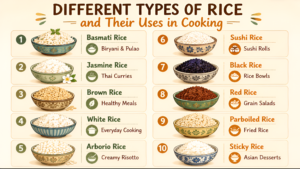
different types of rice and their uses in cooking, including basmati, jasmine, brown, white, arborio, sushi, and black rice. Rice is one of those ingredients that almost every kitchen has, but choosing the right variety can make a bigger difference than many people realize. Some rice varieties produce long, fluffy grains that work beautifully in biryani, while others become soft, creamy, or sticky when cooked. Each type has its own flavor, texture, cooking time, and purpose.
Understanding the different types of rice and their uses in cooking makes it easier to prepare everything from everyday family meals to traditional dishes and international recipes. Whether you are making vegetable pulao, fried rice, risotto, sushi, or a simple bowl of steamed rice, the variety you choose can affect the final result.
There are many rice varieties available in grocery stores and supermarkets. Basmati, jasmine, brown, white, arborio, sushi, black, and red rice are just a few popular examples. Some are best suited to specific recipes, while others are versatile enough for everyday cooking. Let’s explore their differences and discover how to use each one in the kitchen.
Why Are There Different Types of Rice?
Rice varieties differ in grain size, starch content, aroma, color, and nutritional composition. These characteristics determine whether cooked rice becomes fluffy, chewy, creamy, or sticky. For example, long-grain rice generally stays separate after cooking, while short-grain varieties tend to hold together because of their higher amylopectin content.
The way rice is processed also affects its appearance and cooking qualities. White rice has its outer bran and germ removed, whereas brown rice retains these layers. Other varieties, such as parboiled rice, undergo special processing before milling. Understanding these differences helps you select rice that matches the dish you want to prepare.
1. Basmati Rice
Basmati rice is a fragrant long-grain variety widely used in Pakistani, Indian, and Middle Eastern cooking. It is especially popular for its slender grains, delicate aroma, and ability to become longer and fluffier during cooking. When prepared correctly, the grains remain separate rather than sticking together, making basmati a favorite for traditional rice dishes.
Uses in cooking: Basmati rice is commonly used for chicken biryani, beef biryani, vegetable pulao, plain steamed rice, and rice pilaf. It also pairs wonderfully with lentils, grilled meat, and spicy curries. Soaking it for around 20–30 minutes before cooking can help produce evenly cooked grains with a desirable texture.
2. Jasmine Rice
Jasmine rice is an aromatic variety commonly found in Thai and Southeast Asian cuisine. It has long grains, a naturally pleasant fragrance, and a slightly soft, moist texture after cooking. Compared with basmati, jasmine rice is generally more tender and slightly sticky, making it suitable for meals that include flavorful sauces and curries.
Uses in cooking: Jasmine rice works particularly well with Thai green curry, coconut chicken, stir-fried vegetables, grilled fish, and Asian rice bowls. Its mild floral aroma adds an enjoyable touch without overpowering the other ingredients. It is also a good option for simple steamed rice served alongside spicy or savory dishes.
3. Brown Rice
Brown rice is a whole-grain variety that retains its bran and germ after the inedible outer husk is removed. These layers give it a light brown appearance, slightly nutty flavor, and chewy texture. Because the bran remains intact, brown rice usually takes longer to cook than ordinary white rice, but it also provides more dietary fiber and several naturally occurring nutrients.
Uses in cooking: Brown rice is commonly used in healthy rice bowls, vegetable stir-fries, grain salads, chicken meals, and meal-preparation recipes. It pairs nicely with beans, roasted vegetables, grilled chicken, and lightly seasoned sauces. If you enjoy rice with a firmer texture, brown rice is worth adding to your regular grocery list.
4. White Rice
White rice is one of the most widely consumed varieties because of its mild flavor, soft texture, and versatility. It is produced by removing the bran and germ layers, leaving the starchy inner grain. Depending on the grain size, white rice can be long-, medium-, or short-grain, so its texture varies between varieties. It also generally cooks faster than brown rice.
Uses in cooking: White rice is suitable for everyday family meals, rice and curry, vegetable rice, fried rice, soups, and rice pudding. It absorbs surrounding flavors easily, which makes it useful for recipes containing spices, vegetables, meat, and sauces. Its simple taste also makes it a convenient side dish for breakfast, lunch, or dinner.
5. Arborio Rice
Arborio rice is a short-grain Italian variety best known for its role in making risotto. It contains a relatively high amount of starch, which gradually releases during cooking and creates a naturally creamy consistency. The grains become tender on the outside while maintaining a slightly firm center when prepared properly. This combination gives risotto its familiar rich texture.
Uses in cooking: Arborio rice is mainly used for mushroom risotto, chicken risotto, seafood risotto, and creamy vegetable rice. It can also be used in certain rice-based desserts. Unlike ordinary steamed rice, risotto is usually prepared by gradually adding warm stock while stirring, allowing the rice to release starch and develop its signature creamy consistency.
6. Sushi Rice
Sushi rice is a short-grain Japanese rice variety that becomes sticky and slightly glossy after cooking. Its texture helps the grains hold together, which is essential when preparing sushi rolls and other Japanese rice dishes. It is commonly seasoned with rice vinegar, sugar, and salt to create the slightly sweet and tangy flavor associated with traditional sushi.
Uses in cooking: Sushi rice is used for sushi rolls, nigiri, onigiri rice balls, Japanese rice bowls, and other traditional dishes. It is important to rinse the rice before cooking to remove excess surface starch and follow the recommended water ratio. Once cooked, the seasoning should be mixed in gently while the rice is still warm.
7. Black Rice
Black rice, often called forbidden rice, is a distinctive whole-grain variety recognized by its deep purple-black color. Its natural color comes from anthocyanins, which are plant pigments also found in foods such as blueberries and purple cabbage. Black rice has a slightly nutty flavor and a firm, chewy texture that makes it different from ordinary white rice.
Uses in cooking: Black rice works well in colorful grain bowls, vegetable salads, seafood meals, and rice-based desserts. It can also be served alongside grilled vegetables or chicken for a more interesting presentation. Its rich color makes ordinary meals look more appealing without requiring complicated ingredients or special cooking techniques.
8. Red Rice
Red rice is a whole-grain variety with a reddish outer bran layer and a slightly earthy, nutty flavor. It has a firmer and chewier texture than many refined rice varieties. Different red rice varieties are grown in several regions, so their grain size, cooking time, and flavor can vary. Since the bran remains intact, red rice also provides dietary fiber.
Uses in cooking: Red rice is suitable for vegetable bowls, rice salads, lentil dishes, traditional meals, and side dishes served with grilled meat. It pairs especially well with beans, herbs, roasted vegetables, and mildly spiced sauces. If you want to introduce more whole grains into your meals, red rice offers a flavorful alternative.
9. Parboiled Rice
Parboiled rice is produced through a special process in which rice is soaked, steamed under pressure, and dried before milling. This process helps move some nutrients from the outer layers into the grain. Parboiled rice often has a slightly golden appearance and a firmer texture than regular white rice. Its grains generally remain separate after cooking, making it useful for large family meals.
Uses in cooking: Parboiled rice is commonly used for everyday rice dishes, fried rice, curries, vegetable pulao, and large-batch cooking. It is particularly useful when you want rice that holds its shape and is less likely to become mushy. However, its cooking time and water requirements can differ from ordinary white rice, so package instructions are helpful.
10. Sticky Rice
Sticky rice, also known as glutinous rice or sweet rice, is a special variety with a high proportion of amylopectin starch. Despite the name, it does not contain gluten. When cooked, it becomes soft, sticky, and easy to shape. This unusual texture makes it especially popular in Southeast Asian cooking, where rice is sometimes eaten by hand or used in sweet dishes.
Uses in cooking: Sticky rice is used for Thai mango sticky rice, steamed rice cakes, Asian desserts, rice dumplings, and traditional savory dishes. It is usually soaked before being steamed rather than cooked using the same method as regular white rice. This preparation helps create the soft and cohesive texture that makes the variety so popular.
11. Wild Rice
Wild rice is technically not a true rice variety because it comes from aquatic grasses rather than the ordinary rice plant. However, it is commonly prepared and served like rice. Its long, dark grains have a firm, chewy texture and a distinctive earthy, nutty flavor. Wild rice also contains dietary fiber, protein, and several minerals, making it an interesting addition to different meals.
Uses in cooking: Wild rice is often added to soups, grain salads, vegetable casseroles, and stuffed vegetables. It also pairs nicely with roasted chicken, mushrooms, and seasonal vegetables. Because it has a stronger flavor and firmer texture than ordinary rice, it can add variety to recipes that would otherwise use plain white rice.
12. Red Cargo Rice
Red cargo rice is a traditional whole-grain variety commonly associated with Southeast Asian cooking. It has a reddish-brown bran layer, an earthy flavor, and a chewy texture. It is generally less processed than ordinary white rice, which allows it to retain more of its natural outer grain layers. Depending on the variety, it may need additional soaking and cooking time.
Uses in cooking: Red cargo rice is suitable for traditional rice meals, vegetable bowls, lentil dishes, and grain salads. It can also be served with curries, grilled vegetables, and flavorful sauces. Its slightly nutty taste works particularly well with ingredients such as garlic, ginger, herbs, and roasted vegetables.
Comparison of Different Types of Rice and Their Uses in Cooking
Choosing rice becomes much easier when you understand the basic differences between popular varieties. Some are better for fluffy side dishes, while others are specifically suited to creamy recipes or sticky desserts.
| Rice type | Main texture | Common cooking uses |
|---|---|---|
| Basmati | Long and fluffy | Biryani, pulao |
| Jasmine | Soft and moist | Thai curry, rice bowls |
| Brown | Firm and chewy | Salads, healthy meals |
| White | Soft and tender | Everyday meals, soups |
| Arborio | Creamy | Risotto |
| Sushi | Sticky | Sushi, rice balls |
| Black | Chewy | Grain bowls, salads |
| Red | Firm and nutty | Vegetable dishes, salads |
| Parboiled | Firm and separate | Fried rice, curries |
| Sticky | Very sticky | Rice cakes, desserts |
| Wild | Firm and chewy | Soups, casseroles |
| Red cargo | Chewy and earthy | Traditional meals, grain bowls |
How to Choose the Right Type of Rice for Cooking
The best rice for a recipe depends on the texture, flavor, and cooking method you want. You do not need to buy every variety available in the supermarket. A few versatile options can cover most everyday cooking needs, while specialty varieties can be purchased when a particular recipe calls for them.
Best Rice for Biryani and Pulao
Basmati rice is generally the preferred choice for biryani and pulao because of its long grains, delicate aroma, and fluffy texture. It works particularly well with chicken, beef, vegetables, and traditional spices. Proper soaking and careful cooking help prevent the grains from breaking or becoming overly soft.
Best Rice for Fried Rice
Long-grain white rice, jasmine rice, and parboiled rice are all suitable for fried rice. The most important thing is to avoid using freshly cooked, overly moist rice. Chilled cooked rice is often easier to stir-fry because the grains are firmer and less likely to clump together.
Best Rice for Creamy Dishes
Arborio rice is an excellent choice for creamy dishes, especially traditional Italian risotto. Its starch content helps create a smooth consistency without needing excessive cream. It is also useful in recipes where you want tender rice with a slightly firm center.
Best Rice for Healthy Meals
Brown, red, and black rice are popular whole-grain options because they retain their bran layers. These varieties provide more dietary fiber than their refined white counterparts. They work well in balanced meals containing vegetables, beans, lean protein, and healthy fats.
Best Rice for Desserts
Sticky rice is particularly suitable for Southeast Asian desserts, including mango sticky rice. Short-grain white rice is another useful option for traditional rice pudding because it becomes soft and releases starch during cooking. Arborio rice can also create a rich texture in certain sweet rice recipes.
Practical Tips for Cooking Different Rice Varieties
Even good-quality rice can turn out poorly if it is not prepared correctly. A few simple habits can help you get better results, whether you are cooking a small serving for yourself or preparing a large meal for your family.
Rinse Rice Before Cooking When Needed
Rinsing rice under cool water removes excess surface starch, which can help reduce unwanted stickiness. This is particularly useful for basmati and many long-grain varieties. However, preparation requirements differ between recipes, so follow the recommended method for the particular rice you are using.
Use the Correct Water Ratio
Different rice varieties absorb different amounts of water. Brown rice generally requires more water and cooking time than white rice, while sticky rice is commonly soaked and steamed. Always begin with the package instructions and adjust according to your preferred texture and cooking equipment.
Avoid Overcooking the Grains
Leaving rice on the heat for too long can make it mushy and unpleasant. Once the water has been absorbed and the grains are tender, turn off the heat and allow the rice to rest covered for approximately five to ten minutes when appropriate. This helps moisture distribute more evenly.
Store Cooked Rice Properly
Cooked rice should not be left at room temperature for long periods because bacteria such as Bacillus cereus can grow in improperly stored rice. Cool it quickly, ideally within one hour, and refrigerate it in a covered container. Use refrigerated leftovers within 24 hours and reheat them thoroughly until steaming hot.
Common Mistakes to Avoid When Cooking Rice
One common mistake is using the same cooking method for every rice variety. Basmati, brown rice, arborio, and sticky rice have different requirements, so treating them exactly alike can affect the final texture. Another mistake is adding too much water, which can leave the grains soft and mushy.
Stirring ordinary rice too frequently can also break the grains and release additional starch. For fluffy varieties, it is better to let the rice cook undisturbed and fluff it gently before serving. Finally, avoid skipping important preparation steps, such as soaking sticky rice or allowing cooked rice to rest when the recipe recommends it.
Conclusion
Different rice varieties bring something unique to the kitchen. Basmati is ideal for biryani and pulao, jasmine rice complements Asian curries, arborio creates creamy risotto, and sushi rice provides the sticky texture needed for Japanese dishes. Brown, red, black, and wild rice offer additional flavors and textures for everyday meals.
The best choice ultimately depends on what you are cooking and how you want the finished dish to taste. Once you understand the characteristics of different rice varieties, you can make better choices, avoid common cooking mistakes, and get more enjoyment out of this everyday kitchen staple.
Frequently Asked Questions
1. Which type of rice is best for everyday cooking?
White rice and basmati rice are popular everyday choices because they are versatile and easy to prepare. They pair well with vegetables, meat, lentils, and curries.
2. What is the best rice for biryani?
Basmati rice is generally the best option for biryani. Its long grains, delicate aroma, and fluffy texture complement traditional spices, meat, and vegetables.
3. What is the difference between jasmine rice and basmati rice?
Basmati rice has long, slender grains and a delicate fragrance, while jasmine rice has a softer texture and a slightly floral aroma. Jasmine rice also tends to be stickier after cooking.
4. Which rice is best for fried rice?
Long-grain white rice, jasmine rice, and parboiled rice are suitable for fried rice. Using properly chilled cooked rice helps the grains stay separate during stir-frying.
5. Is brown rice healthier than white rice?
Brown rice generally contains more dietary fiber because it retains its bran and germ layers. White rice is more refined and usually cooks faster. Both varieties can be part of a balanced diet.
Read also: Instant Yeast to Active Dry Yeast Conversion
Pingback: Different Types of Cooking Oils and Their Common Uses