25 Easy Ideas Nut Free Snacks for School
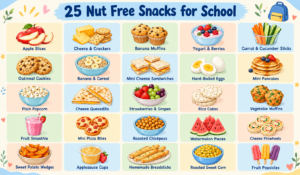
25 easy nut free snacks for school, including healthy fruit, homemade muffins, cheese bites, and budget-friendly lunchbox ideas for kids. Nut-free snacks are especially important in schools where children have peanut or tree nut allergies. For some children, exposure to an allergen can cause a serious reaction, so families and schools need to take food safety seriously. Choosing suitable snacks, reading ingredient labels, and following school guidelines can help reduce the risk of accidental exposure. Even if your child does not have a food allergy, bringing snacks that meet school rules helps create a safer and more inclusive environment for classmates.
25 Best Nut Free Snacks for School
The best school snacks are simple to pack, easy to eat, and suitable for your child’s age. You do not need expensive products or complicated recipes. Many nutritious options can be prepared at home with ingredients you probably already have in your kitchen.
1. Fresh Apple Slices
Apple slices are a simple, naturally sweet snack that fits easily into a lunchbox. You can cut an apple into thin wedges and pack them in a sealed container to keep them fresh. A little lemon juice can help reduce browning, making the slices more appealing by lunchtime.
2. Cheese and Whole-Grain Crackers
Cheese cubes with whole-grain crackers provide a satisfying combination of protein, carbohydrates, and calcium. This snack takes only a few minutes to prepare and works well for children who prefer savory foods. Choose crackers with verified ingredients and pack the cheese with an ice pack to keep it cold.
3. Homemade Banana Muffins
Banana muffins are a convenient option when you want to prepare several snacks in advance. Ripe bananas add natural sweetness, while oats or whole-wheat flour can provide extra fiber. Use a nut-free recipe, check every ingredient, and store the muffins properly before packing them for school.
4. Yogurt with Fresh Fruit
Yogurt paired with strawberries, blueberries, or banana slices makes a creamy and refreshing snack. Plain or lightly sweetened yogurt can be a good choice for families who want to limit added sugar. Keep it refrigerated until packing and use an insulated lunch bag with an ice pack.
5. Carrot and Cucumber Sticks
Fresh vegetables offer a crunchy alternative to packaged snacks. Cut carrots and cucumbers into age-appropriate pieces and pack them in a small container. You can include hummus if the school allows it and the product is suitable for the child’s allergies.
6. Nut-Free Oatmeal Cookies
Homemade oatmeal cookies can satisfy a child’s sweet tooth without needing nuts. A basic recipe can include oats, flour, eggs, raisins, cinnamon, and a small amount of sugar. Check the labels on the oats, flour, and other ingredients, and use clean utensils to avoid accidental cross-contact with nuts.
7. Banana and Plain Cereal
Bananas are easy to carry and do not require much preparation. Pair banana slices with a school-approved cereal for a simple snack that provides carbohydrates and some fiber, depending on the cereal. If your child prefers crunchy food, pack the cereal separately to prevent it from becoming soggy.
8. Mini Cheese Sandwiches
Small cheese sandwiches are ideal when your child needs something more filling between meals. Use bread that meets the school’s allergy requirements and add cheese with cucumber slices for extra freshness. Cut the sandwich into small squares or triangles so it is easy to handle during a short break.
9. Hard-Boiled Eggs
Hard-boiled eggs are a practical source of protein and can be prepared the night before. Once cooked, cool them promptly and refrigerate them until you pack the lunchbox. Because eggs are perishable, use an insulated bag with ice packs rather than leaving them at room temperature for several hours.
10. Homemade Mini Pancakes
Mini pancakes can turn leftover breakfast into a fun school snack. Prepare small pancakes using flour, milk, eggs, and other ingredients from a verified nut-free recipe. Pack them with sliced fruit, and keep any dairy-based toppings chilled when needed.
11. Plain Popcorn
For older children, plain air-popped popcorn can be an inexpensive whole-grain snack. You can add a small amount of salt or mild seasoning instead of relying on heavily flavored packaged varieties. However, popcorn is a choking hazard for young children, so choose a safer alternative for children who are not developmentally ready to eat it.
12. Cheese Quesadilla Wedges
A cheese quesadilla is easy to make using a tortilla and shredded cheese. Cook it until the cheese melts, let it cool, and cut it into small wedges. It can be a useful option for children who enjoy warm, savory foods, although it should be kept at a safe temperature until lunchtime.
13. Fresh Strawberries and Grapes
Fresh fruit brings natural sweetness, color, and variety to a school lunchbox. Strawberries can be washed and packed whole or cut into suitable pieces, while grapes should be cut lengthwise into quarters for young children to reduce choking risk. Follow the school’s food preparation rules and keep cut fruit properly chilled when necessary.
14. Rice Cakes with Cream Cheese
Plain rice cakes offer a light, crunchy base for different toppings. Spread a thin layer of cream cheese on top and add finely sliced cucumber for a savory snack. Check the rice cake packaging and cream cheese ingredients, and pack the finished snack in a suitable container.
15. Homemade Vegetable Muffins
Vegetable muffins are a useful way to include more variety in your child’s diet. You can prepare them with grated carrots, zucchini, flour, eggs, and cheese using a recipe that does not contain nuts. Their mild flavor makes them suitable for children who are still learning to enjoy different vegetables.
16. Fruit Smoothies
A homemade smoothie made with banana, strawberries, and milk or yogurt can be a refreshing snack. Blend the ingredients until smooth and pour the drink into a clean, leakproof bottle. Since smoothies containing dairy need temperature control, pack them in an insulated lunch bag with an ice pack.
17. Mini Pizza Bites
Mini pizza bites are a fun choice for children who enjoy familiar flavors. Top small pieces of bread or English muffins with tomato sauce and cheese, then bake until the cheese melts. Let them cool before packing and check the bread, sauce, and cheese labels for allergy information.
18. Roasted Chickpeas
Chickpeas provide plant-based protein and fiber, making them a useful ingredient for homemade snacks. You can season cooked chickpeas with mild spices and roast them until crisp. Because hard roasted chickpeas can be difficult to chew and may pose a choking risk, avoid them for young children and choose a softer snack when appropriate.
19. Watermelon Pieces
Watermelon is refreshing, naturally sweet, and easy to serve in small portions. Remove the seeds where appropriate, cut the fruit into age-appropriate pieces, and place it in a sealed container. Keep it cold when packed for school, especially during warm weather.
20. Cheese Pinwheels
Cheese pinwheels add variety to an ordinary lunchbox. Spread a suitable filling over a tortilla, add finely chopped vegetables if desired, roll it tightly, and cut it into small rounds. Check the tortilla and filling labels before preparing the snack, particularly when the school has strict allergy rules.
21. Homemade Sweet Potato Wedges
Baked sweet potato wedges offer a naturally sweet, savory snack that can be prepared in advance. Cut the sweet potato into suitable pieces, add a little olive oil, and bake until tender. Allow the wedges to cool and pack them with appropriate temperature control if they will not be eaten soon.
22. Applesauce Cups
Unsweetened applesauce is a convenient choice for busy mornings because it requires almost no preparation. Choose a sealed, shelf-stable product or follow the storage instructions on refrigerated varieties. Check the label for allergen statements and pack a spoon if needed.
23. Homemade Breadsticks
Simple homemade breadsticks can be made with flour, yeast, water, olive oil, and a little seasoning. They work well for children who prefer crunchy or savory snacks and can be served with a suitable dip if school rules allow it. Verify the ingredients and avoid toppings or spreads that may contain nuts.
24. Roasted Sweet Corn
Sweet corn can be served as a soft, flavorful snack when prepared properly. Cook the corn until tender, remove the kernels from the cob, and allow them to cool before packing. This option can add variety to the lunchbox, although the portion and preparation should be suitable for the child’s age.
25. Homemade Fruit Popsicles
Homemade fruit popsicles are a fun alternative to sugary frozen treats, particularly for school events where frozen snacks are permitted. Blend strawberries, bananas, or other suitable fruits with a little water or yogurt and freeze the mixture in small molds. They need to remain frozen until serving, so check whether the school can store them safely.
How to Choose Healthy Nut Free Snacks for School
Choosing snacks becomes easier when you focus on variety rather than searching for one perfect food. A useful approach is to combine fruit or vegetables with a source of protein or another filling ingredient, such as yogurt, cheese, eggs, or suitable whole-grain crackers. This gives children different nutrients and helps keep the snack interesting. Pay attention to portion sizes, your child’s appetite, and the time between meals instead of packing more food than they can comfortably eat.
Look for Simple Ingredients
Foods with familiar ingredients are often easier to evaluate when you are checking for allergens. Fresh fruit, plain vegetables, eggs, and unseasoned foods may need less label checking than complex packaged snacks, but preparation and cross-contact still matter. For packaged items, read the current ingredient list and allergen information every time you buy them.
Limit Excess Added Sugar
Cookies, sweetened yogurt, flavored cereal, and packaged snack bars can contain substantial amounts of added sugar. These foods do not need to be completely excluded, but rotating them with fruit, vegetables, and less-sweet homemade options can help create a more balanced routine. Choose snacks that your child enjoys rather than making every lunchbox feel like a list of restrictions.
Consider Your Child’s Preferences
A nutritious snack is not especially useful if it comes home uneaten every day. Some children prefer crunchy foods, while others like soft fruit, yogurt, or small sandwiches. Ask your child to choose a few options from a short list, then rotate those foods throughout the week to reduce waste and make preparation easier.
Nut Free Snacks for School on a Budget
You do not need to buy expensive allergy-friendly snack products to prepare suitable school food. Seasonal fruit, homemade muffins, eggs, plain popcorn for older children, and simple cheese sandwiches can all be affordable choices. Buying ingredients in larger quantities, preparing snacks at home, and using leftovers safely can also help reduce food costs.
For example, one batch of banana muffins can cover several snack breaks, while a carton of eggs can be used for both breakfast and school lunches. Apples, bananas, carrots, and cucumbers are also easy to rotate according to availability and price. Always compare the cost of homemade options with packaged products, and account for refrigeration and preparation time.
How to Prepare Nut Free School Snacks Ahead of Time
A little preparation can make weekday mornings much easier. Start by choosing three or four snacks for the coming week and checking that each one meets the school’s food policy. Wash produce, prepare suitable portions, bake muffins if needed, and store everything in clean containers according to food safety guidance.
Keep dry snacks separate from moist ingredients so they stay fresh and retain their texture. Refrigerate perishable foods promptly, and pack cold items in an insulated lunch bag with enough ice packs to keep them at a safe temperature. Avoid leaving cheese, eggs, yogurt, or cut fruit at room temperature for long periods.
Important Nut Allergy Safety Tips for School
Nut-free school food requires more than simply leaving peanuts out of a recipe. A packaged snack may contain nuts as an ingredient or may be made on equipment shared with nut-containing products. The meaning of precautionary labels can vary, so a product that appears suitable should not automatically be considered safe for a child with a serious allergy.
Read ingredient and allergen statements carefully, follow the school’s rules, and contact the manufacturer if you need clarification. Wash hands with soap and water before preparing food, and clean kitchen surfaces, containers, and utensils to reduce the risk of cross-contact. Do not rely on visual inspection alone to determine whether a snack is safe.
If your child has a diagnosed food allergy, follow the advice of their healthcare professional and the school’s allergy management plan. Confirm whether the school permits products made in facilities that also process nuts, and avoid ingredients that the child’s individual allergy plan identifies as unsafe.
Conclusion
Finding suitable school snacks does not have to make every morning complicated. With a few dependable recipes and some simple preparation, you can offer fresh, filling, and enjoyable choices throughout the week. Fruit, vegetables, cheese, yogurt, homemade muffins, and mini sandwiches provide plenty of variety without relying on nuts.
Most importantly, treat allergy safety as part of the planning process. Read labels, prevent cross-contact, and follow the school’s rules so your child can enjoy snack time with greater confidence.
Frequently Asked Questions
1. What are the best nut free snacks for school?
Some easy choices include fresh fruit, cheese and crackers, yogurt, cucumber sticks, homemade muffins, mini sandwiches, and hard-boiled eggs. The best option depends on your child’s preferences, age, dietary needs, and the school’s allergy policy.
2. What packaged snacks are suitable for a nut-free school?
Some plain crackers, pretzels, cereals, applesauce cups, and selected snack products may meet a school’s nut restrictions. However, ingredients and manufacturing practices differ by brand and product, so check the current packaging and confirm that the snack meets the school’s requirements.
3. Are granola bars safe for children with nut allergies?
Not necessarily. Many granola bars contain peanuts, almonds, or other nuts, and some may carry precautionary allergen warnings. Only choose a bar after checking its ingredients, allergen statements, and suitability for the child’s specific allergy.
4. What are some cheap nut free snacks for school?
Seasonal fruit, homemade banana muffins, hard-boiled eggs, carrot sticks, plain crackers, and homemade breadsticks can be budget-friendly choices. Planning a few snacks around ingredients you already have can help reduce waste and grocery costs.
5. Can I pack homemade baked goods for a nut-free school?
Yes, if the school’s policy allows homemade food and you can verify every ingredient and prevent cross-contact during preparation. Some schools accept only commercially packaged foods with clear ingredient labels, so check the rules before sending homemade treats.
6. How do I keep school snacks fresh until lunchtime?
Use clean, sealed containers and an insulated lunch bag with ice packs for perishable foods. Refrigerate prepared foods promptly, and follow food safety guidance for storage times and temperatures. Shelf-stable products should be stored according to their packaging instructions.
7. Are nut-free snacks always safe for children with food allergies?
No. A snack can be free from nuts as ingredients but still be exposed to them during manufacturing, storage, or preparation. Children may also have allergies to other foods, such as milk, eggs, or wheat. Check the individual child’s allergy plan and follow the school’s food safety requirements.
Read also: Weekly Grocery List for Healthy Eating on a Budget
Pingback: Stainless Steel Water Bottle for Hiking and Camping