Cheap Healthy Groceries for College Students A Budget-Friendly Guide
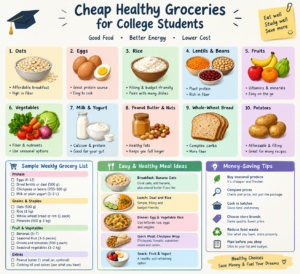
Cheap healthy groceries for college students, including affordable staples, easy meal ideas, and practical grocery shopping tips to save money and eat well. College life can make healthy eating feel harder than it should be. Between classes, assignments, transport, and other expenses, grocery shopping often comes down to one question: What can you buy that is affordable, filling, and good for you? The good news is that cheap healthy groceries for college students do not need to be complicated or expensive. With a little planning, you can build balanced meals using everyday foods such as eggs, oats, rice, lentils, beans, seasonal fruits, and vegetables. Whether you live in a dorm, share a kitchen, or cook at home, the right grocery list can help you save money, eat well, and spend less time worrying about what to have for your next meal.
Why College Students Need a Budget-Friendly Grocery Plan
College students often have limited food budgets and busy schedules, which makes it tempting to rely on instant noodles, packaged snacks, or takeout. These options may seem convenient, but buying them regularly can become expensive and may leave you missing important nutrients. A simple grocery plan helps you use your money wisely, prepare meals ahead of time, and keep nutritious food available when you are hungry. It also makes it easier to avoid unnecessary purchases because you know what you need before entering the store.
Best Cheap Healthy Groceries for College Students
The best budget groceries are versatile, easy to store, and useful in several different meals. Instead of buying a long list of specialty ingredients, start with a few affordable staples and add fresh foods according to your needs. Here are some of the most practical choices for students who want to eat healthier without overspending.
1. Oats for an Affordable Breakfast
Oats are a convenient breakfast choice because they provide carbohydrates and fiber that can help keep you satisfied throughout the morning. You can prepare them with water or milk, then add a banana, cinnamon, or a small spoonful of peanut butter for extra flavor. A bag of plain oats can last several breakfasts, making it a practical alternative to buying pastries or expensive breakfast bars on your way to class.
2. Eggs for Inexpensive Protein
Eggs are one of the easiest foods to include in a student grocery budget because they are simple to prepare and work with many meals. You can boil them for a quick snack, scramble them with vegetables, or serve them with toast, rice, or roti. They provide protein and several important nutrients, and buying an amount you can use before the expiration date helps prevent food waste.
3. Rice for Filling Everyday Meals
Rice is an affordable pantry staple that can form the base of many lunches and dinners. Pair it with lentils, beans, eggs, or seasonal vegetables to create a more balanced meal without spending much money. Buying a larger bag may reduce the cost per serving, although it is still important to compare prices and choose a quantity you can store safely.
4. Lentils and Dried Beans
Lentils, chickpeas, and dried beans are excellent budget-friendly sources of plant protein and fiber. They are especially useful for students who want to prepare filling meals without buying meat every day. Daal, chickpea curry, bean soup, and lentil rice are simple options that use inexpensive ingredients and can often be cooked in batches for several meals.
5. Bananas and Other Seasonal Fruits
Fruit gives you a convenient way to add vitamins, minerals, and fiber to your daily diet. Bananas are easy to carry to campus, while apples, oranges, guavas, and other seasonal fruits may be affordable depending on local prices. Rather than choosing expensive imported fruit, compare what is available at nearby markets and buy a reasonable quantity that you can eat before it spoils.
6. Fresh and Frozen Vegetables
Vegetables are an important part of a balanced diet, but you do not need to buy expensive varieties to get their benefits. Onions, carrots, cabbage, tomatoes, spinach, and other seasonal options can be used in omelets, rice dishes, soups, and curries. Frozen vegetables are also worth considering when they cost less than fresh produce or when you want ingredients that last longer.
7. Milk and Plain Yogurt
Milk and plain yogurt can provide protein and calcium, making them useful additions to a student meal plan. Add milk to oats, enjoy yogurt with fruit, or serve plain yogurt alongside rice and curry. Choose the option that fits your budget, dietary needs, and storage arrangements, especially if you live in a dorm without reliable refrigeration.
8. Peanut Butter and Affordable Nuts
Peanut butter can make a small meal more satisfying because it provides protein and unsaturated fats. Spread it on toast, add a little to oatmeal, or pair it with banana slices for a quick snack between classes. Nuts can also be nutritious, but prices vary, so compare small portions and avoid paying extra for heavily sweetened or flavored products if your main goal is saving money.
9. Whole-Wheat Bread and Potatoes
Whole-wheat bread and potatoes are useful options when you need inexpensive foods that can be combined with protein and vegetables. Bread works well with eggs or peanut butter, while potatoes can be boiled, roasted, or added to vegetable curry. You do not need to avoid ordinary carbohydrates to eat healthily; the key is to build meals that also include protein, vegetables, fruit, or other nutrient-rich foods.
How to Make a Cheap Healthy Grocery List for College
A good grocery list starts with the meals you actually eat, not the foods you think you should buy. Before shopping, plan a few breakfasts, lunches, dinners, and snacks for the coming week, then check your kitchen to see what you already have. Choose ingredients that can be reused in different recipes, such as eggs for breakfast and dinner or rice for lunch and meal prep. This approach helps you avoid buying unnecessary items and makes it easier to stick to your budget without sacrificing variety.
Sample Weekly Grocery List for One Student
A basic weekly shopping list might include oats, eggs, rice, lentils, chickpeas, potatoes, bread or roti, milk or yogurt, bananas, and several seasonal vegetables. You can adjust the quantities according to your appetite, the number of meals you cook at home, and whether you share groceries with roommates. If your budget is especially tight, prioritize filling staples, affordable protein sources, and produce that is in season before spending money on extras such as packaged snacks or specialty drinks.
Cheap and Healthy Meals College Students Can Make
Healthy eating becomes much easier when your groceries can turn into several simple meals. You do not need advanced cooking skills or an expensive kitchen setup to prepare satisfying food. A few basic ingredients, some seasoning, and a little planning can help you make meals that are both affordable and enjoyable.
Breakfast: Banana Oatmeal
Banana oatmeal is an easy breakfast for mornings when you need to get to class quickly. Cook plain oats with water or milk, add sliced banana, and sprinkle in cinnamon if you have it. You can prepare it on the stove or use a microwave-safe bowl, making it suitable for many student kitchens. If you need a more filling breakfast, add a spoonful of peanut butter or serve a boiled egg on the side.
Lunch: Daal and Rice
Daal and rice make a satisfying, low-cost lunch because both ingredients are affordable and easy to combine. Cook lentils with onion, tomato, garlic, and your preferred spices, then serve them with rice and a vegetable side. You can prepare several portions at once, which saves time on busy college days. This meal is also easy to adapt with chickpeas, different lentils, or whatever vegetables you already have.
Dinner: Egg and Vegetable Fried Rice
Egg and vegetable fried rice is a practical way to use leftover rice instead of letting it go to waste. Cook an egg with chopped vegetables, add properly stored leftover rice, and season with a little salt, pepper, or soy sauce if available. You can change the ingredients depending on what needs to be used first. For food safety, cool cooked rice promptly, refrigerate it within two hours, and reheat it thoroughly before eating.
Quick Meal: Chickpea Salad Wrap
A chickpea salad wrap works well for students who want a meal they can prepare without much cooking. Mix cooked chickpeas with chopped tomato, cucumber, onion, lemon juice, and simple seasonings, then wrap the mixture in roti or place it inside bread. Chickpeas provide protein and fiber, while the vegetables add freshness and variety. If you prepare it ahead of time, keep the filling refrigerated until you are ready to eat.
Budget Snack: Fruit and Yogurt
Fruit with plain yogurt is a simple snack that can help you avoid spending money on expensive packaged options between classes. Combine a banana, apple, or other seasonal fruit with a serving of yogurt for a mix of carbohydrates, protein, and other nutrients. If yogurt is too expensive or refrigeration is unavailable, a whole piece of fruit can still be a practical choice. The best snack is one that fits your budget, preferences, and daily routine.
How to Save Money on Healthy Groceries
Saving money does not always mean buying the cheapest product on the shelf. It means choosing foods that provide good value, last long enough to use, and fit into meals you enjoy. A few small shopping habits can make a noticeable difference in your weekly food expenses.
Compare Prices Before You Buy
Check the price per kilogram, litre, or serving instead of looking only at the package price. A larger bag of rice or lentils may offer better value, but only if you can store it properly and use it before it becomes stale or attracts pests. Compare supermarket prices with local markets, and pay attention to quality as well as cost. These simple checks can help you make better decisions without spending hours searching for bargains.
Buy Seasonal Produce
Seasonal fruits and vegetables are often cheaper because they are more readily available. Rather than planning your meals around expensive produce, see what is fresh and affordable when you shop. You might buy oranges one week, guavas the next, and different vegetables depending on the season. This flexible approach adds variety to your diet while keeping your grocery spending under control.
Cook in Batches
Preparing food in batches can save both money and time, especially during exam periods when cooking every day feels difficult. Make a pot of lentils, cook rice for a planned number of meals, or prepare a vegetable curry that can be served in different ways. Divide leftovers into clean containers and refrigerate them promptly. Freeze portions you will not eat soon, and label them so you remember when they were prepared.
Choose Store Brands and Basic Ingredients
Generic or store-brand versions of staples such as oats, rice, beans, and flour are often less expensive than heavily marketed alternatives. Plain ingredients also give you more flexibility because you can season and combine them according to your preferences. Compare the ingredient list, package size, and unit price rather than assuming a familiar brand is automatically better. You can often spend less without giving up quality.
Reduce Food Waste
Food that spoils before you eat it is money wasted. Buy smaller quantities of delicate produce, store food according to its needs, and plan meals around ingredients that must be used first. For example, use leafy vegetables early in the week, while keeping suitable pantry staples for later meals. Before shopping again, check your refrigerator and cupboards so you do not purchase duplicates of items you already have.
How College Students Can Eat Healthy Without a Kitchen
Not every student has access to a full kitchen, and some dorms have only a shared microwave or kettle. In that situation, focus on foods that require little preparation and can be stored safely. Depending on your facilities, useful options may include bananas, apples, whole-wheat bread, peanut butter, ready-to-eat chickpeas, plain yogurt, and oats that can be prepared with hot water or milk. Choose shelf-stable foods when refrigeration is unavailable, and avoid keeping perishable foods at room temperature for extended periods.
Common Grocery Shopping Mistakes to Avoid
One common mistake is buying too many ingredients for recipes you will probably never make. Specialty sauces, expensive snack bars, and large quantities of fresh produce can quickly consume a small budget. Another mistake is focusing only on calories or choosing the cheapest food without considering its nutritional value. Build your meals around affordable staples, include a variety of protein sources and produce, and leave some flexibility for foods you genuinely enjoy. A grocery plan should make healthy eating easier, not turn it into another stressful college assignment.
How Much Should a College Student Spend on Groceries?
The right grocery budget depends on your location, appetite, cooking facilities, and how often you eat outside. Students in Pakistan may find different prices at local markets and supermarkets, so it is best to set a realistic weekly limit based on current prices in your area. Start with essential foods such as rice, flour, lentils, eggs, seasonal produce, and other affordable protein sources. Then use any remaining money for milk, yogurt, fruit, or snacks. If your budget is very limited, prioritize enough food for regular meals rather than spending most of your money on drinks and packaged snacks.
Example of a Budget-Friendly Daily Meal Plan
A simple day of eating could begin with oatmeal and a banana for breakfast, followed by daal and rice with vegetables for lunch. For an afternoon snack, you might have seasonal fruit, yogurt, or toast with peanut butter. Dinner could be an egg and vegetable roti wrap or chickpea curry with rice. This is only an example, not a strict diet plan, and portion sizes should match your appetite and energy needs. The main idea is to combine inexpensive staples with protein-rich foods and vegetables throughout the day.
How to Build Balanced Meals on a Student Budget
You do not need to make every meal perfect to eat well. Try to include a source of protein, a carbohydrate-rich food, and some fruit or vegetables across your meals. Rice with lentils, eggs with whole-wheat toast, or chickpeas with roti are straightforward combinations that can provide several important nutrients. Vary your ingredients when possible, drink water regularly, and eat enough to support your daily activities. If you have specific dietary needs or food allergies, adjust your shopping list accordingly rather than buying foods that do not work for you.
Conclusion
Finding cheap healthy groceries for college students is mostly about making practical choices and using ingredients wisely. Oats, eggs, lentils, rice, beans, potatoes, seasonal fruit, and vegetables can form the foundation of an affordable grocery routine. Plan a few simple meals before shopping, compare prices, cook when you can, and store leftovers safely. You do not need expensive superfoods or complicated recipes to eat well during college. Start with a manageable list, learn which foods give you the best value, and build a routine that works for your budget and schedule.
Frequently Asked Questions
1. What are the cheapest healthy groceries for college students?
Some affordable options include oats, rice, eggs, lentils, dried beans, potatoes, bananas, seasonal vegetables, and plain yogurt. Prices vary by location, but these foods can be used in several meals and provide a range of important nutrients.
2. How can college students eat healthy on a tight budget?
Plan meals before shopping, buy seasonal produce, compare unit prices, and prepare simple dishes at home. Choose affordable protein sources such as eggs, lentils, chickpeas, and beans, and use leftovers to reduce waste.
3. What should a college student buy for a week of groceries?
A basic weekly grocery list can include oats, eggs, rice, lentils, chickpeas, potatoes, bread or roti, seasonal fruit, vegetables, and milk or yogurt. Adjust quantities based on your needs, budget, and cooking facilities.
4. What are the best cheap protein sources for students?
Eggs, lentils, chickpeas, dried beans, milk, plain yogurt, and peanut butter are useful options. Choose a variety that suits your dietary preferences and compare local prices to find the most affordable choices.
5. How can I eat healthy in college without cooking?
Choose convenient foods such as fresh fruit, whole-wheat bread, peanut butter, ready-to-eat beans or chickpeas, and yogurt when refrigeration is available. Oats can also be prepared with hot water or milk. Always consider food safety and the facilities available in your dorm.
Pingback: Barilla Whole Wheat Spaghetti 16 oz Case of 8