








monthly grocery list for family of 4 with practical amounts for proteins, dairy, produce, pantry staples, snacks, and frozen foods. Planning groceries for four people can feel surprisingly complicated. Buy too little, and you are back at the store every few days. Buy too much, and fresh food gets forgotten in the refrigerator. A good monthly grocery list for family of 4 should sit somewhere in the middle: enough food to cover regular meals without filling the kitchen with things nobody actually eats.
The easiest approach is to divide your shopping into a few basic categories, including proteins, dairy, produce, pantry staples, snacks, frozen foods, and condiments. Stock up on foods that store well once a month, then refresh fresh items such as milk, bread, fruit, and vegetables every week or two.
How Much Groceries Does a Family of 4 Need Each Month?
A family of four does not necessarily need enormous quantities of food each month. The right amount depends on ages, appetites, how often you cook at home, school lunches, dietary preferences, and how frequently your family eats outside the home.
For a general starting point, a family of four can build its monthly shopping around 5–6 pounds of chicken, 3–4 pounds of ground meat, 2–3 dozen eggs, several pounds of fish, basic dairy products, a few bags of produce, rice, pasta, bread, breakfast foods, snacks, and a small selection of frozen foods. Think of these quantities as a flexible starting point rather than a strict rule.
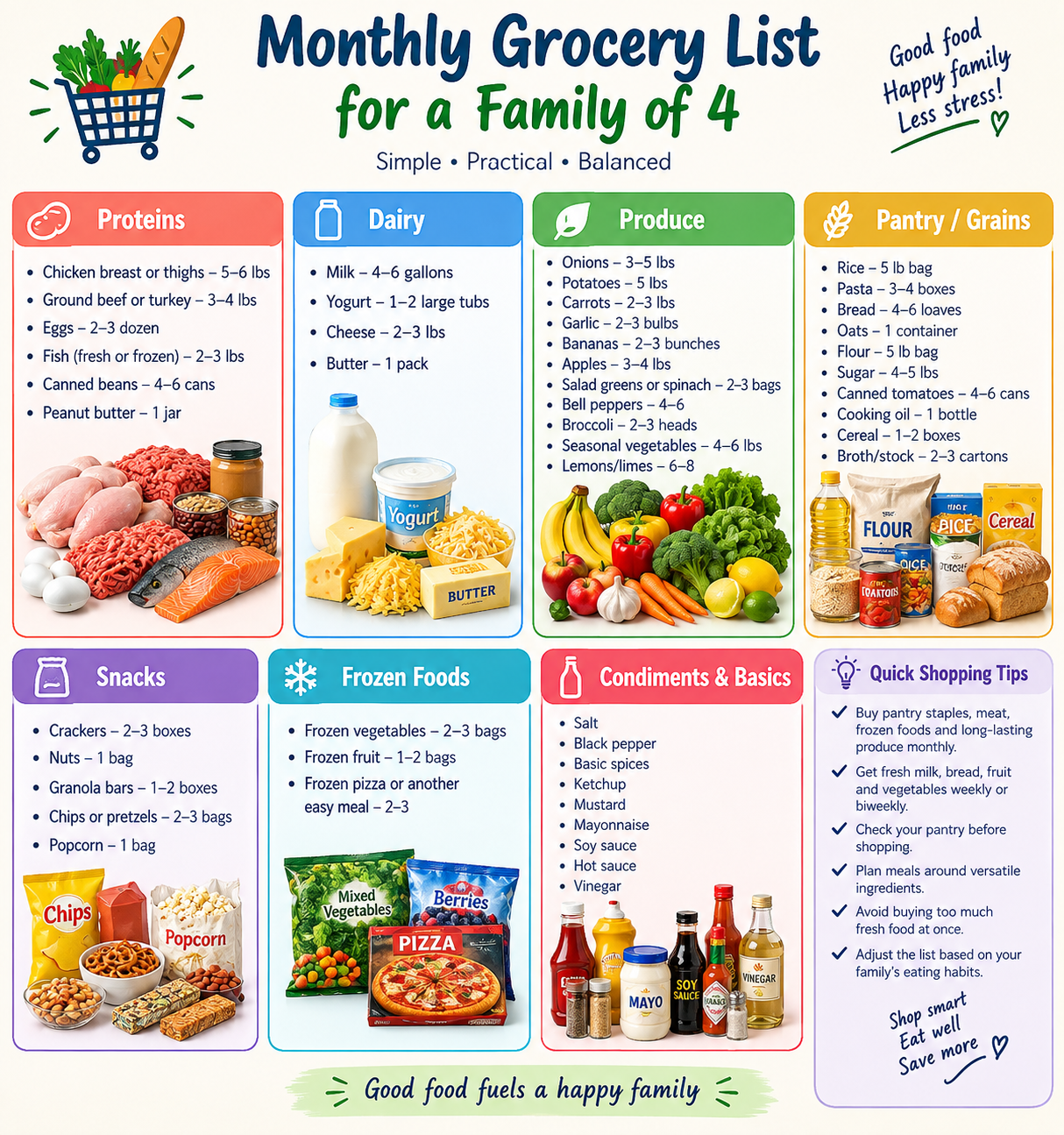
Monthly Grocery List for Family of 4
A useful grocery list should be short enough to follow while still covering the foods your household actually uses. The list below focuses on everyday ingredients rather than specialty products or excessive quantities.
Proteins
Protein is one of the easiest categories to organize because many options can be portioned and frozen. Chicken can be used for curries, sandwiches, salads, wraps, pasta dishes, or simple grilled meals, while ground beef or turkey works well for burgers, tacos, meatballs, pasta sauces, and rice dishes.
- Chicken breast or thighs — 5–6 lbs
- Ground beef or turkey — 3–4 lbs
- Eggs — 2–3 dozen
- Fish, fresh or frozen — 2–3 lbs
- Canned beans — 4–6 cans
- Peanut butter — 1 jar
You do not need every protein on the list if your family has clear favorites. For example, a household that eats chicken several times a week may need less ground meat or fish.
Dairy
Dairy shopping is largely determined by how quickly your family goes through milk and yogurt. Families with young children may use considerably more milk than households where everyone drinks it occasionally.
- Milk — 4–6 gallons
- Yogurt — 1–2 large tubs
- Cheese — 2–3 lbs
- Butter — 1 pack
Cheese is particularly useful because it can move between several meals. A little shredded cheese can turn pasta, eggs, sandwiches, baked vegetables, or homemade pizza into a more filling meal without requiring another complicated ingredient.
Vegetables
Fresh vegetables is where monthly grocery planning needs a little flexibility. Buying an entire month’s supply of delicate vegetables and fruit usually does not make sense because some items lose their quality quickly.
- Onions — 3–5 lbs
- Potatoes — 5 lbs
- Carrots — 2–3 lbs
- Garlic — 2–3 bulbs
- Bananas — 2–3 bunches
- Apples — 3–4 lbs
- Salad greens or spinach — 2–3 bags or bunches
- Bell peppers — 4–6
- Broccoli — 2–3 heads
- Seasonal vegetables — 4–6 lbs
- Lemons or limes — 6–8
The practical trick is to divide produce into two groups. Long-lasting foods such as onions, potatoes, carrots, and apples can be purchased in larger quantities, while greens, bananas, and other delicate produce should be replenished more frequently.
Pantry and Grains
Pantry foods are the foundation of a monthly grocery trip because they are generally easy to store. Rice, pasta, flour, oats, canned tomatoes, and cereal can sit in your kitchen until you need them.
- Rice — 5 lb bag
- Pasta — 3–4 boxes
- Bread — 4–6 loaves
- Oats — 1 container
- Flour — 5 lb bag
- Sugar — 4–5 lbs
- Canned tomatoes — 4–6 cans
- Cooking oil — 1 bottle
- Cereal — 1–2 boxes
- Broth or stock — 2–3 cartons
Bread is the exception here. Unless you have plenty of freezer space, buying all of your monthly bread at once may not be practical. Purchasing it weekly or freezing extra loaves can help reduce waste.
Snacks
Snacks can quietly become one of the most expensive parts of grocery shopping, especially when several people in the household reach for them throughout the day. Keeping a short list helps prevent the pantry from becoming overloaded.
- Crackers — 2–3 boxes
- Nuts — 1 bag
- Granola bars — 1–2 boxes
- Chips or pretzels — 2–3 bags
- Popcorn — 1 bag
You can also rotate snacks from month to month. One month might focus on crackers and granola bars, while another includes more nuts, popcorn, or fresh fruit.
Frozen Foods
Frozen foods are useful as backup ingredients rather than replacements for everything fresh. They can save dinner when you are tired, short on time, or simply forgot to plan ahead.
- Frozen vegetables — 2–3 bags
- Frozen fruit — 1–2 bags
- Frozen pizza or another easy meal — 2–3
Frozen vegetables are particularly practical because they can be added to soups, rice dishes, pasta, stir-fries, and quick side dishes without worrying about them spoiling in a few days.
Condiments and Basic Ingredients
Most families do not need to buy these items every month. Once you have them in the pantry, simply check your supplies before shopping and replace anything that is running low.
- Salt
- Black pepper
- Basic spices
- Ketchup
- Mustard
- Mayonnaise
- Soy sauce
- Hot sauce
- Vinegar
This is one area where a quick pantry check can save money. There is little reason to buy another bottle of ketchup simply because it appears on your standard grocery list when there is already half a bottle in the refrigerator.
How to Organize Your Monthly Grocery Shopping
The easiest system is to separate groceries into monthly, biweekly, and weekly purchases. Pantry staples, frozen foods, rice, pasta, canned goods, and household basics can usually be purchased during the main monthly shop.
Fresh meat can also be purchased monthly if you have enough freezer space. Divide it into meal-sized portions before freezing so you are not constantly defrosting more food than you need.
Fresh produce, milk, bread, and yogurt usually work better as weekly or biweekly purchases. This keeps food fresher and gives you the opportunity to adjust your shopping based on what your family actually ate during the previous week.
How to Save Money on Groceries for a Family of 4
Saving money does not always mean choosing the cheapest product in every category. Often, the bigger savings come from reducing food waste and avoiding unnecessary purchases.
Start by checking your refrigerator, freezer, and pantry before writing your shopping list. If you already have rice, pasta, spices, and several cans of tomatoes, build a few meals around those ingredients instead of buying more.
Another useful habit is planning five or six main dinners rather than assigning every meal for the entire month. Plans change. Someone may eat leftovers, order takeout, or simply want something different. A flexible meal plan gives you structure without creating a rigid schedule.
Create Meals Around the Ingredients You Already Have
A grocery list becomes much more useful when the ingredients can work across several meals. Chicken, for example, can become grilled chicken one night, chicken wraps the next day, and part of a rice bowl later in the week.
The same idea works with vegetables. Bell peppers, onions, carrots, and broccoli can appear in stir-fries, pasta, omelets, rice dishes, soups, and side dishes. Buying versatile ingredients gives you more meals without requiring a long list of specialty products.
Avoid Buying a Month of Fresh Food at Once
It may sound convenient to buy everything in one shopping trip, but fresh food does not always cooperate with that plan. Lettuce can wilt, berries can spoil, bananas can become overripe, and fresh herbs can disappear before you have a chance to use them.
Instead, use your monthly trip for durable ingredients and schedule smaller fresh-food trips during the month. This simple change can make your grocery budget work harder because less food ends up in the trash.
A Simple Monthly Grocery Routine
A practical routine could look like this: make one larger shopping trip at the beginning of the month for pantry staples, meat, frozen foods, snacks, and long-lasting produce. Then make one smaller trip each week for milk, bread, eggs, fruit, vegetables, and other fresh items.
Before each smaller trip, spend five minutes checking what you already have. That quick habit can prevent duplicate purchases and make meal planning much easier.
What If Your Family Eats Differently?
There is no single perfect grocery list for every family of four. A household with teenagers may need more food than one with two young children. A vegetarian family will need a different protein section, while someone following a specific diet may need to replace several standard pantry items.
The goal is not to follow a generic list perfectly. Use the quantities as a starting framework, then adjust them according to your family’s eating habits. After two or three shopping cycles, you will have a much better idea of what your household actually consumes.
How to Turn This List Into a Meal Plan
You do not need a complicated meal calendar. Pick a handful of dependable meals that use ingredients from your grocery list. For example, chicken can cover one dinner, ground meat can become another meal, fish can provide a third option, and beans can be used for a meat-free dinner.
Breakfast can stay simple with eggs, oats, cereal, fruit, yogurt, or toast. Lunch can revolve around leftovers, sandwiches, wraps, salads, or rice bowls. Keeping meals flexible makes the grocery list easier to manage and reduces the pressure to cook something completely different every night.
Conclusion
A good monthly grocery list for family of 4 should make life easier, not create another chore. Keep the main shopping trip focused on versatile proteins, dairy, pantry staples, snacks, frozen foods, and long-lasting produce. Then replenish fresh foods throughout the month.
Most importantly, build the list around what your family genuinely eats. A shorter list of useful ingredients is often more valuable than a huge shopping cart filled with food that eventually gets forgotten. Once you find the quantities that match your household, grocery shopping becomes faster, more predictable, and much easier to budget.
FAQs
1. What should a family of 4 buy for a month?
A basic monthly grocery list can include chicken, ground meat, eggs, fish, beans, milk, yogurt, cheese, fruit, vegetables, rice, pasta, bread, oats, cereal, snacks, frozen vegetables, and everyday condiments.
2. How much meat does a family of 4 need per month?
A useful starting point is around 5–6 pounds of chicken, 3–4 pounds of ground meat, and 2–3 pounds of fish, although actual needs depend heavily on how often your family eats meat.
3. How often should a family of 4 buy groceries?
Many families find that one larger monthly stock-up combined with weekly or biweekly fresh-food trips works well. Fresh milk, bread, fruit, and vegetables usually need more frequent shopping.
4. How can I save money on groceries for a family of 4?
Plan several meals around overlapping ingredients, check your pantry before shopping, compare prices, use frozen foods as backups, and avoid buying more fresh food than your family can eat.
5. Should I buy all groceries for the entire month at once?
Not necessarily. Pantry staples, meat, frozen foods, and long-lasting produce can be purchased monthly, while delicate produce, bread, and milk are usually better purchased weekly or every couple of weeks.
Read also: Top 5 Cheap Grocery Stores in Germany



One thought on “Monthly Grocery List For Family of 4”