Essential Baking Ingredients to Buy at a Grocery Store
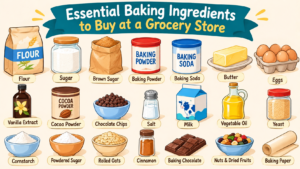
Essential baking ingredients to buy at a grocery store, including flour, sugar, butter, eggs, chocolate, and pantry staples for homemade baking. Baking at home becomes much easier when your kitchen has the right ingredients ready to use. Whether you enjoy making soft cookies, fluffy cakes, homemade bread, or delicious brownies, having a well-stocked pantry saves time and makes baking more enjoyable. Fortunately, you do not need to purchase expensive specialty products to get started. Most essential baking ingredients are available at an ordinary grocery store or supermarket, often in different varieties and package sizes.
However, walking through the baking aisle can sometimes feel confusing, especially when you see several types of flour, sugar, chocolate, and other baking products. Some ingredients serve similar purposes, while others are important for achieving a particular texture or flavor. Knowing what to look for can help you make better grocery choices without spending money on products you rarely use.
This guide covers the essential baking ingredients to buy at a grocery store, explains how they are used, and highlights what beginners and regular home bakers should keep in their kitchens.
Why Should You Keep Essential Baking Ingredients at Home?
Keeping basic baking supplies in your kitchen makes it easier to prepare homemade treats whenever you want. Instead of visiting the supermarket every time you plan to bake, you can rely on everyday pantry ingredients such as flour, sugar, baking powder, eggs, and cooking oil. These products are useful for several recipes, including pancakes, muffins, cakes, cookies, and quick breads.
Another advantage is that you can control the ingredients used in your homemade food. You can choose the amount of sugar, select your preferred type of flour, and experiment with different flavors. Having a few reliable baking essentials also helps beginners build confidence because they can practice different recipes without purchasing an entirely new set of supplies each time.
1. All-Purpose Flour
<escape>All-purpose flour</escape> is one of the most important ingredients to purchase when building a home baking pantry. It is made from wheat and has a moderate protein content, making it suitable for many everyday recipes. You can use it to prepare cookies, cupcakes, pancakes, muffins, brownies, and several types of homemade bread. Most grocery stores sell it in different package sizes, so you can choose according to how frequently you bake.
For beginners, regular all-purpose flour is a practical starting point because it works in many recipes without requiring several different flour varieties. Check the packaging for the product type and storage instructions, and keep it in an airtight container to protect it from moisture and pantry pests.
2. Granulated White Sugar
Granulated white sugar is another basic ingredient found in almost every baking pantry. It provides sweetness, but its purpose goes beyond flavor. Sugar also helps create a softer texture, contributes to browning, and supports moisture retention in many baked products. It is commonly used in sponge cakes, chocolate chip cookies, muffins, and homemade desserts.
When shopping, look for ordinary granulated sugar rather than assuming that every type of sugar works exactly the same way. Different varieties can affect the texture and moisture of a recipe. A standard package of white sugar is usually enough for beginners who want to prepare a range of everyday baked goods.
3. Brown Sugar
Brown sugar is a useful addition if you enjoy making chewy cookies, soft cakes, and rich desserts. It contains molasses, which gives it a slightly caramel-like flavor and a darker color than regular white sugar. Light brown sugar is commonly used in cookies and cakes, while dark brown sugar offers a stronger molasses taste.
You can find brown sugar in the baking section of many supermarkets. It is particularly useful for recipes where a moist, chewy texture is desirable. Keep the package tightly sealed after opening because brown sugar can become hard when exposed to air for extended periods.
4. Baking Powder
Baking powder is a leavening ingredient that helps baked goods rise. It releases carbon dioxide when activated by moisture and heat, creating small air pockets that make cakes, muffins, and pancakes lighter. Unlike yeast, baking powder does not require a long rising period, which makes it convenient for quick baking recipes.
Most supermarkets sell baking powder in small tins, sachets, or larger containers. If you bake occasionally, a smaller package may be more practical. Always check the expiration date because old baking powder may lose its effectiveness and leave your cakes or muffins flat.
5. Baking Soda
Baking soda, also known as sodium bicarbonate, is another important ingredient used in homemade baking. It reacts with acidic ingredients such as yogurt, lemon juice, buttermilk, and vinegar to produce carbon dioxide. This reaction helps baked goods rise and can also influence their color and texture.
Although baking soda and baking powder may look similar, they are not interchangeable in every recipe. Baking soda needs an acidic ingredient to activate properly, while baking powder already contains an acid component. Keeping both products in your kitchen is helpful if you regularly prepare cookies, cakes, and quick breads.
6. Unsalted Butter
Butter adds richness, flavor, and texture to many baked products. It is commonly used in cakes, cookies, pastries, biscuits, and pie crusts. Unsalted butter is particularly useful because it allows you to control how much salt goes into a recipe. It also makes it easier to follow baking instructions that specify exact quantities.
When shopping at a grocery store, check the dairy section for butter sold in blocks or wrapped portions. Pay attention to storage instructions and keep it refrigerated. Some recipes require softened butter, while others need cold or melted butter, so preparation can make a noticeable difference in the final result.
7. Eggs
Eggs are an essential ingredient in many baking recipes because they help bind ingredients together and contribute moisture, structure, and richness. They are frequently used in sponge cakes, brownies, muffins, cookies, and homemade bread. Depending on the recipe, eggs can also help create a lighter texture by trapping air during mixing.
Choose clean, intact eggs and follow the storage guidance on the packaging. Many recipes are written using large eggs, so checking the size can help you achieve more consistent results. Eggs are also useful outside baking, making them a practical grocery purchase for everyday cooking.
8. Vanilla Extract
Vanilla extract is a popular flavoring ingredient that gives baked goods a pleasant aroma and warm, sweet flavor. Even a small amount can improve the taste of cakes, cookies, cupcakes, custards, and homemade desserts. It is particularly useful in recipes containing butter, milk, eggs, and sugar.
Grocery stores may carry pure vanilla extract, vanilla essence, and imitation vanilla flavoring. These products are not identical, so read the label before purchasing. Pure vanilla extract is generally more expensive, while imitation versions offer a more affordable option for everyday baking. Choose according to your recipe and budget.
9. Cocoa Powder
If you enjoy chocolate-flavored desserts, cocoa powder deserves a place in your pantry. It is used to prepare chocolate cakes, brownies, cookies, frostings, and homemade hot chocolate. Unsweetened cocoa powder is especially useful because it allows you to control the sweetness of your recipe.
You may find natural cocoa powder and Dutch-process cocoa powder at larger supermarkets. They differ in acidity and processing, which can affect how they interact with leavening ingredients. For reliable results, follow the type specified in your recipe rather than replacing one with the other without checking.
10. Chocolate Chips
Chocolate chips are convenient baking ingredients that add small pockets of chocolate to cookies, muffins, brownies, and other desserts. They are available in several varieties, including milk chocolate, dark chocolate, semi-sweet chocolate, and white chocolate. Each type offers a slightly different sweetness and flavor.
A small packet of semi-sweet chocolate chips is a useful starting choice because it works in many traditional cookie and dessert recipes. You can also purchase chocolate chunks or baking bars if you prefer larger pieces of melted chocolate in your homemade treats.
11. Salt
Salt might seem like an unusual ingredient to highlight in a dessert-focused shopping list, but it plays an important role in baking. A small quantity helps balance sweetness and brings out other flavors, including chocolate, vanilla, and butter. It is commonly included in cookie, cake, bread, and pastry recipes.
Regular table salt is suitable for many everyday baking needs. Some recipes specifically call for kosher salt or fine sea salt, so it is worth checking the instructions before making substitutions. If you already have ordinary salt in your kitchen, there is usually no need to purchase another variety immediately.
12. Milk
Milk adds moisture and contributes to the texture and flavor of many baked products. It is used in pancakes, muffins, cakes, bread, and custards. Depending on the recipe, whole milk may provide a richer result, while lower-fat milk can work well in many everyday preparations.
Most grocery stores offer fresh milk, long-life milk, and powdered milk. Fresh milk should be refrigerated according to the package instructions, while unopened long-life milk can usually be stored at room temperature until opened. Choose the variety that matches your recipes and household needs.
13. Vegetable Oil
Vegetable oil is a practical ingredient for cakes, muffins, quick breads, and other recipes that require liquid fat. It helps add moisture and can produce a soft texture. Unlike butter, oil remains liquid at room temperature, which can help certain baked goods stay moist after cooling.
Sunflower oil, canola oil, and other neutral-flavored cooking oils are common supermarket options. For baking, choose an oil with a mild flavor so that it does not overpower the other ingredients. Olive oil can also work in selected recipes, particularly those with richer or savory flavor profiles.
14. Yeast
Yeast is an important ingredient for anyone interested in making homemade bread, pizza dough, dinner rolls, or other traditional baked products. It helps dough rise by producing carbon dioxide as it consumes available sugars. This process creates the airy structure and characteristic texture associated with yeast-based bread.
Grocery stores commonly stock instant yeast and active dry yeast. Instant yeast can usually be mixed directly with dry ingredients, while active dry yeast may require activation according to the package instructions. Check the expiry date and store opened yeast as directed because inactive yeast may prevent dough from rising properly.
15. Cornstarch
Cornstarch is a fine powder made from corn and is useful in several baking and dessert recipes. It can help create a tender texture in cookies and cakes when used as part of a flour mixture. It is also commonly used to thicken custards, fruit fillings, puddings, and dessert sauces.
You can usually find cornstarch near flour and other baking supplies. A small package is enough for occasional baking because recipes generally require only a few tablespoons. Store it in a dry, sealed container to prevent moisture from affecting its texture.
16. Powdered Sugar
Powdered sugar, also called icing sugar or confectioners’ sugar, has a very fine texture that makes it ideal for smooth frostings, glazes, and dessert decorations. It dissolves more easily than ordinary granulated sugar, which is why it is frequently used for buttercream and sweet toppings.
If you enjoy making cupcakes, cookies, or celebration cakes, keeping a packet of powdered sugar at home is worthwhile. It can also be sprinkled over brownies, doughnuts, and other baked treats for a simple decorative finish.
17. Rolled Oats
Rolled oats are a versatile ingredient for homemade cookies, breakfast bars, muffins, and crumble toppings. They provide a slightly chewy texture and a mild nutty flavor. You can also use them in selected bread recipes or combine them with flour, butter, and sugar to create a simple topping for fruit desserts.
Look for plain rolled oats rather than flavored instant oatmeal products when shopping for baking supplies. Plain oats give you greater control over the sweetness and flavor of your recipes. They are also useful for preparing everyday breakfasts.
18. Cinnamon Powder
Cinnamon is one of the most useful baking spices because it adds warmth and a pleasant aroma to homemade food. It is commonly used in cinnamon rolls, apple cakes, muffins, cookies, pancakes, and fruit-based desserts. A small quantity can make a noticeable difference to the overall flavor.
Most supermarkets sell ground cinnamon in small spice jars or packets. If you only bake occasionally, a small package is sufficient. Keep it sealed in a cool, dry place to help preserve its fragrance and flavor.
19. Baking Chocolate
Baking chocolate is useful for recipes that require melted chocolate rather than small chocolate pieces. It is commonly sold in bars, blocks, or baking squares and can be used in brownies, chocolate cakes, ganache, and homemade chocolate desserts.
You can find unsweetened, semi-sweet, dark, and milk baking chocolate depending on the supermarket. Check the sweetness level and cocoa content before buying because different varieties can change the flavor and consistency of your recipe.
20. Nuts and Dried Fruits
Nuts and dried fruits are excellent additions for people who enjoy experimenting with different baking flavors and textures. Almonds, walnuts, raisins, dates, dried cranberries, and cashews can be added to cookies, fruit cakes, muffins, and homemade bread.
Most supermarkets stock these ingredients in the baking aisle, snack section, or dried-fruit section. Choose plain, unsweetened varieties when possible, particularly if your recipe already contains enough sugar. Store them in sealed containers and follow the packaging instructions to maintain freshness.
21. Baking Paper
Baking paper, also called parchment paper, is a useful kitchen supply for preparing trays and baking pans. It helps prevent cookies, biscuits, and other baked goods from sticking to the surface. It can also make cleaning easier because leftover crumbs and melted ingredients are less likely to attach directly to the tray.
Look for food-safe parchment paper in the household supplies or kitchen section of your grocery store. Check the manufacturer’s temperature instructions before using it in an oven. Ordinary wax paper is not a suitable replacement for parchment paper in most oven-baking situations.
22. Food Coloring
Food coloring is an optional but useful ingredient for decorating cakes, cupcakes, cookies, and other homemade desserts. It allows you to create different shades for frosting, cake batter, icing, and decorative details. Supermarkets may offer liquid, gel, or powdered food coloring.
Gel food coloring is often useful when you want stronger colors without adding much extra liquid to your mixture. Liquid coloring is easy to use for simple recipes, while powdered varieties can be suitable for particular applications. Always choose products labeled for food use.
How to Choose the Right Baking Ingredients at a Grocery Store
Shopping for baking supplies becomes easier when you understand what your recipes actually require. Start with versatile ingredients such as all-purpose flour, white sugar, eggs, butter, baking powder, and vanilla extract. These products can be used in many recipes, making them sensible purchases for beginners and regular home bakers.
Before placing products in your grocery basket, check the expiration dates, packaging condition, and storage instructions. Ingredients such as baking powder, yeast, and cocoa powder should be checked carefully because freshness and product quality can affect the final result. You should also compare package sizes and prices rather than automatically choosing the largest option.
Another useful tip is to avoid buying every specialty ingredient at once. If you rarely make bread, you may not need a large package of yeast. Similarly, expensive decorations and specialty chocolates can wait until you have a recipe that requires them. Building your baking pantry gradually is a practical way to manage grocery spending.
How to Store Baking Ingredients Properly
Proper storage helps maintain the quality and usefulness of your baking supplies. Flour, sugar, oats, cornstarch, and other dry ingredients should generally be kept in clean, airtight containers in a cool and dry location. This protects them from moisture, insects, and unwanted odors.
Refrigerate products such as eggs, milk, and butter according to their packaging instructions. Yeast and certain chocolate products may also require specific storage conditions after opening. Always check the manufacturer’s guidance, especially for products that can lose quality when exposed to heat or humidity.
In warmer and more humid environments, including kitchens during hot weather, keeping dry ingredients tightly sealed is particularly important. Avoid placing containers near ovens, sinks, or other areas where heat and moisture can build up.
Conclusion
A well-stocked baking pantry does not need to be complicated or expensive. Starting with everyday ingredients such as flour, sugar, eggs, butter, baking powder, milk, and vanilla extract gives you the flexibility to prepare many homemade treats. As you become more comfortable with baking, you can gradually add chocolate chips, cocoa powder, yeast, nuts, spices, and decorative supplies.
The next time you visit a grocery store, focus on ingredients that match the recipes you actually enjoy making. A few carefully chosen essentials can turn an ordinary kitchen into a place where you can prepare fresh cookies, delicious cakes, homemade bread, and plenty of other treats.
Frequently Asked Questions
1. What are the most essential baking ingredients to buy at a grocery store?
The most essential baking ingredients include all-purpose flour, granulated sugar, eggs, butter, baking powder, baking soda, salt, milk, and vanilla extract. These basic products are used in many everyday recipes, including cakes, cookies, muffins, pancakes, and brownies.
2. What baking ingredients should beginners buy first?
Beginners should start with all-purpose flour, white sugar, eggs, butter, baking powder, baking soda, vanilla extract, salt, and milk. These ingredients provide a useful foundation for learning basic baking recipes without purchasing too many specialty products.
3. What is the difference between baking powder and baking soda?
Baking powder contains an acid and a base that produce carbon dioxide when activated. Baking soda is sodium bicarbonate and needs an acidic ingredient, such as yogurt or lemon juice, to react properly. Both help baked goods rise, but they are used differently in recipes.
4. Which flour is best for everyday home baking?
All-purpose flour is a convenient choice for everyday home baking because it works in many recipes, including cookies, muffins, cakes, and pancakes. However, bread flour and cake flour may be more suitable when a recipe requires a particular texture or protein level.
5. What ingredients are needed to make homemade cookies?
Basic homemade cookies generally require flour, sugar, butter, eggs, baking soda or baking powder, and vanilla extract. Chocolate chips, nuts, cinnamon, and other additions can be included depending on the type of cookies you want to prepare.
Read also: Different Flavors of Greek Yogurt to Find at Supermarkets