Meal Prep Grocery List for Beginners on a Budget
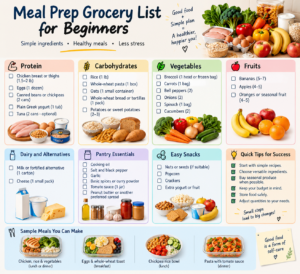
Meal prep grocery list for beginners made simple with affordable foods, easy meal ideas, shopping tips, and a weekly plan to save time. Starting meal prep can feel overwhelming when you are unsure what to buy, how much food you need, or which ingredients work together. The good news is that you do not need a complicated diet plan or a shopping cart full of expensive health foods to get started.
A simple meal prep grocery list for beginners helps you shop with a plan, prepare meals ahead of time, and make everyday cooking easier. With a few affordable proteins, vegetables, fruits, grains, and pantry staples, you can build several meals from the same ingredients without eating exactly the same thing every day.
Whether you want to eat healthier, spend less on takeout, or save time during busy weekdays, this guide will help you create a practical grocery list and turn it into meals you will actually enjoy.
What Is a Meal Prep Grocery List for Beginners?
A meal prep grocery list for beginners is a shopping list of basic ingredients that can be prepared ahead of time and used in several meals throughout the week. It usually includes protein sources, carbohydrates, vegetables, fruits, healthy fats, and a few seasonings or sauces. The goal is to buy only what you need, reduce food waste, and make breakfast, lunch, and dinner easier to manage.
You do not have to prepare every meal in advance. Even cooking a batch of rice, washing vegetables, boiling eggs, or portioning snacks can make your week much more manageable.
Why Beginners Should Start With a Simple Grocery List
One of the biggest mistakes new meal preppers make is buying too many ingredients at once. You might plan several complicated recipes, purchase unfamiliar foods, and then discover that you do not have enough time to prepare everything. A shorter shopping list keeps things realistic and helps you build a routine you can maintain.
It can also help you control your food budget because you know what you are buying and how you intend to use it. Instead of ordering takeout when you are tired, you already have ingredients ready for a quick meal. Over time, you will learn which foods your household enjoys and which quantities make sense for your needs.
The Complete Meal Prep Grocery List for Beginners
For your first week, focus on ingredients that are easy to cook, affordable, and flexible enough to use in different recipes. The quantities below are a starting point for one adult for approximately five days, not a strict nutrition prescription. Adjust them based on your appetite, meal schedule, household size, and the food you already have at home.
1. Protein Foods to Keep You Satisfied
Protein is one of the most useful parts of a balanced meal prep plan because it helps build and maintain muscle and supports normal body functions. Start with chicken, eggs, canned beans, lentils, chickpeas, plain yogurt, or tofu. For one person, a practical shopping list might include 1.5–2 pounds of chicken, one dozen eggs, two cans of beans or chickpeas, and one tub of yogurt. You can add canned tuna or another preferred protein if it fits your budget and eating habits. Choose two or three main protein sources rather than buying everything at once.
2. Carbohydrates for Energy and Easy Meals
Carbohydrates provide energy and make meals satisfying, so there is no need to avoid them when preparing healthy food. Rice, oats, potatoes, whole-wheat pasta, bread, and tortillas are useful beginner-friendly choices. Buy a small bag of rice, one box of pasta, a container of oats, one pack of bread or wraps, and two or three potatoes to get started. These ingredients can become breakfast porridge, rice bowls, pasta lunches, baked potatoes, or quick wraps without requiring a different set of groceries for every recipe.
3. Vegetables for Color, Flavor, and Variety
Vegetables add fiber, vitamins, minerals, color, and variety to everyday meals. Beginners can start with broccoli, carrots, bell peppers, onions, spinach, and cucumbers, choosing whichever options are affordable and readily available. A bag of frozen vegetables is also a smart purchase because it reduces chopping time and helps prevent spoilage. Roast carrots and broccoli for lunch bowls, add spinach to eggs, mix peppers into rice dishes, or use cucumbers in fresh salads. Buying vegetables that work across several recipes makes your shopping list easier to manage.
4. Fresh Fruits for Breakfast and Snacks
Fruit is an easy way to add natural sweetness and variety to your meals without preparing complicated snacks. Bananas, apples, oranges, and seasonal fruits are practical options because they can be eaten as they are, added to oatmeal, or served with yogurt. For a five-day plan, you might buy five bananas, four apples, and a few other pieces of fruit, depending on how often you snack. Choose fruits that are in season and avoid buying more than you can comfortably eat before they spoil.
5. Dairy Products and Alternatives
Dairy products can make meal prep more convenient by providing protein, calcium, and other nutrients. Milk, plain yogurt, cheese, and fortified dairy alternatives can be used in breakfast bowls, sandwiches, sauces, and quick snacks. A small carton of milk, one tub of yogurt, and a modest pack of cheese are enough to begin experimenting with different meals. If you avoid dairy because of an allergy, intolerance, or personal preference, choose suitable alternatives and check labels for added sugar, protein, calcium, and fortification where relevant.
6. Pantry Staples That Make Meals Taste Better
A few pantry basics can turn plain ingredients into meals you actually look forward to eating. Cooking oil, salt, black pepper, garlic, curry powder, paprika, dried herbs, and tomato sauce are useful starting points. You do not need every spice in the supermarket; choose seasonings that suit the food you already enjoy. For example, garlic and paprika work well with chicken and potatoes, while curry powder can add flavor to chickpeas, lentils, and vegetables. Check your cupboards before shopping so you do not spend money replacing ingredients you already own.
7. Healthy Snacks for Busy Days
Snacks are worth planning because hunger between meals can lead to unnecessary spending on convenience foods. Keep things simple with fruit, yogurt, popcorn, crackers, boiled eggs, or nuts and seeds if they suit your dietary needs. You can portion snacks into small containers or keep ready-to-eat options near the front of the refrigerator. There is no need to buy every snack on the list. Pick two or three favorites that fit your budget and make sense for your daily routine.
How to Choose the Right Quantities for Your Grocery Shopping
The right amount of food depends on how many people you are feeding, how often you eat at home, and whether you want to prepare every meal or only lunches and dinners. A useful starting point for one adult is enough protein for several meals, one or two carbohydrate staples, three or four vegetables, and a few fruits. If you cook for a family, increase quantities according to the number of people and their appetites rather than multiplying every item blindly. Most importantly, plan around meals you genuinely enjoy so your groceries do not sit unused in the refrigerator.
A Budget-Friendly Meal Prep Grocery List
You can prepare several satisfying meals without buying expensive ingredients marketed specifically for healthy eating. Rice, eggs, lentils, beans, oats, seasonal vegetables, and frozen produce are often useful budget choices, while chicken or other proteins can be purchased according to local prices and promotions. Compare the price per kilogram or unit, use store brands when appropriate, and buy larger packages only when you can store and use the food safely. If you already have oil, spices, and basic condiments, your shopping bill may be considerably lower because you only need to replace the main ingredients.
How to Turn Your Grocery List Into a Weekly Meal Plan
A grocery list becomes much more useful when you know how each ingredient will be used. Choose a few meals before shopping and reuse ingredients across the week instead of planning a completely different recipe for every day. For example, chicken and rice can form a lunch bowl, while leftover vegetables can be added to an omelet or pasta. Beans can go into a rice bowl one day and a wrap the next. This approach creates variety without making cooking complicated, and it helps you estimate quantities more accurately.
Easy Breakfast Ideas for Beginners
Breakfast does not need to involve a separate cooking session every morning. Oatmeal with banana, yogurt with fruit, boiled eggs with whole-wheat toast, or overnight oats are all simple options that use ingredients from the same grocery list. You can prepare overnight oats the evening before or boil a few eggs in advance for quick breakfasts. If you prefer a warm meal, cook eggs with spinach and peppers in just a few minutes. Choose two or three breakfasts you enjoy and alternate them throughout the week.
Simple Lunches You Can Prepare Ahead
Lunch is often the easiest meal to prepare in batches because several portions can be cooked at once. Chicken and rice bowls with vegetables, chickpea salads, pasta with tomato sauce, and bean-filled wraps are practical choices for beginners. Cook the main ingredients, divide them into individual portions, and add sauces or fresh vegetables when serving if you prefer a different texture. Keeping a few meal combinations in rotation means you can pack lunch quickly instead of deciding what to eat during a busy workday or study session.
Quick Dinners With Minimal Cooking
Dinner can be simple even when you arrive home tired. Eggs with potatoes and spinach, chicken with roasted vegetables, lentil curry with rice, or whole-wheat pasta with beans are all manageable options. If you prepared ingredients earlier in the week, you may only need to reheat a portion and add a fresh side. Keep at least one very quick meal available for evenings when you do not feel like cooking. That small bit of planning can make it easier to stick with your routine without relying on takeout.
A Simple 5-Day Meal Prep Plan for Beginners
You do not need five different recipes to eat well throughout the week. A straightforward plan can include oatmeal or eggs for breakfast, chicken and rice bowls for lunch, and pasta, potatoes, beans, or vegetables for dinner. On Monday, prepare chicken with rice and broccoli; on Tuesday, enjoy a chickpea bowl; on Wednesday, serve pasta with tomato sauce and vegetables; on Thursday, make a quick egg and potato dinner; and on Friday, use remaining ingredients in wraps or another rice bowl. Swap meals around as needed, and freeze portions you will not eat within the recommended refrigerator storage period.
How to Meal Prep in One Hour
Set aside about an hour when you have time to cook without rushing, although your first session may take longer. Start by washing and chopping vegetables, then prepare rice or another grain while cooking your chosen protein. Roast or steam the vegetables, portion the finished ingredients into containers, and leave enough time for safe cooling and refrigeration. You can save time by using frozen vegetables, canned beans, and prewashed produce. There is no need to cook every meal from scratch; preparing a few ingredients in advance can make a noticeable difference during the week.
Best Food Storage Tips for Beginners
Food safety matters just as much as meal planning. Refrigerate cooked food within two hours, using shallow containers so it cools more quickly, and keep your refrigerator at 40°F (4°C) or below. Most cooked leftovers can be refrigerated for three to four days, so freeze portions intended for later in the week. Label containers with the preparation date, and thaw frozen meals safely in the refrigerator or using a suitable microwave method. Reheat leftovers to 165°F (74°C), and avoid relying on smell or appearance alone to decide whether food is safe.
Common Meal Prep Mistakes to Avoid
The most common beginner mistake is trying to prepare too many meals at once. Complicated recipes and excessive shopping can make meal prep feel like another chore rather than a helpful habit. Start with a small collection of ingredients, avoid buying perishables without a plan, and leave room for meals outside your prepared menu. Another mistake is making every meal identical, which can become boring quickly. Change the seasonings, sauces, vegetables, or meal combinations to keep things interesting while using the same basic groceries.
How to Make Your Meal Prep Grocery List Healthier
A balanced grocery list should offer variety rather than focus on one food group or promise quick results. Include different protein sources, whole grains, fruits, vegetables, and suitable sources of unsaturated fats, such as olive oil, seeds, or nuts. Choose foods with a range of colors and textures, and adjust portions to your hunger, activity level, and personal needs. You do not have to eliminate favorite foods or follow a restrictive diet to make meal prep worthwhile. Consistency, variety, and meals you enjoy are more useful than chasing perfection.
Frequently Asked Questions
1. What should a beginner buy for meal prep?
A beginner should start with a few proteins, carbohydrates, vegetables, fruits, and basic seasonings. Chicken, eggs, beans, rice, oats, broccoli, carrots, bananas, and yogurt are useful choices because they can be combined in several different meals. Choose ingredients based on your budget, cooking skills, and food preferences.
2. How many groceries do I need for one week of meal prep?
The amount depends on the number of meals you prepare and how many people you feed. For one adult, a small pack of chicken, a dozen eggs, a bag of rice, a box of pasta, several vegetables, and a selection of fruit can provide a starting point for a week of mixed meals. Adjust the quantities to avoid running short or wasting food.
3. Is meal prepping cheaper than cooking every day?
Meal prepping can reduce food costs when you plan meals, use ingredients more than once, and limit food waste. Buying staples such as rice, oats, lentils, and beans can also help stretch your budget. However, savings depend on local prices, the ingredients you choose, and how much food you actually eat.
4. How many days can meal prep food stay in the fridge?
Most cooked leftovers should be refrigerated for three to four days at 40°F (4°C) or below. If you prepare food for a longer period, freeze the portions you will not eat within that window. Refrigerate cooked food promptly and reheat leftovers thoroughly before eating.
5. What are the easiest meals for beginner meal prep?
Chicken and rice bowls, egg and vegetable wraps, pasta with tomato sauce, overnight oats, and chickpea salads are easy options. They use common ingredients, require relatively little preparation, and can be adapted with different vegetables and seasonings.
Read also: Non-Stick Frying Pan Set Induction Base
Pingback: Canned Cake in Supermarket Flavors, Packaging, and Storage