






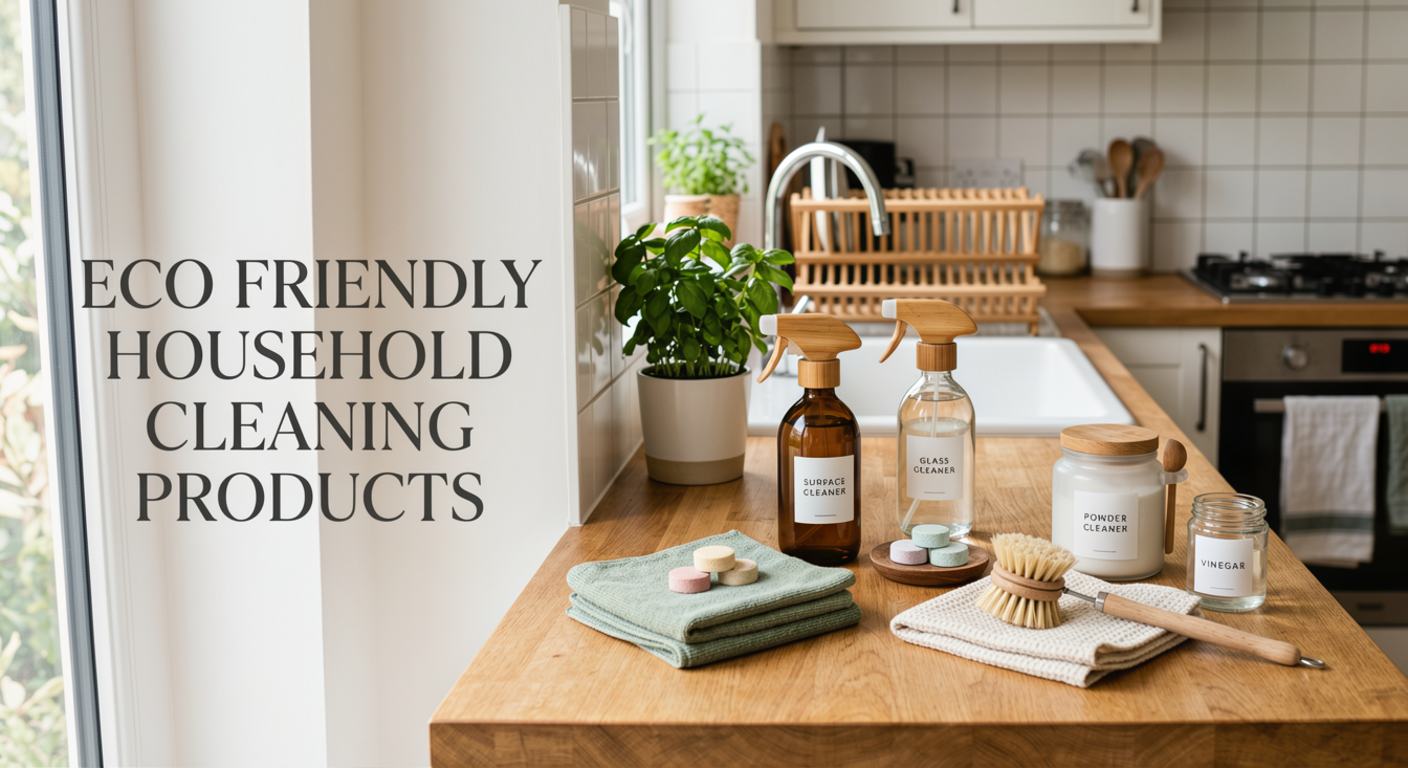
Eco friendly household cleaning products often use gentler ingredients, less packaging, refillable formulas, or recycled and recyclable materials.
These products can include laundry detergents, dish soaps, bathroom cleaners, glass cleaners, floor cleaners, multipurpose sprays, cleaning powders, reusable cloths, brushes, and other household supplies.
Importantly, “eco friendly” is not a guarantee of a particular ingredient list or performance level. The term can be used broadly, so shoppers should look beyond the marketing language and examine what the product actually offers.
Why Choose Eco Friendly Cleaning Products?
The biggest reason people switch to greener cleaning supplies is simple: everyday purchasing decisions add up. A household may go through dozens of cleaning bottles, rolls of disposable wipes, detergent containers, and paper towels every year.
Choosing concentrated products, refill systems, reusable tools, and thoughtfully packaged cleaners can reduce some of that waste. It can also encourage manufacturers to develop products with more responsible ingredients and packaging.
There is another benefit that is easy to overlook. A simpler cleaning routine can sometimes mean buying fewer specialized products. One suitable cleaner may handle several ordinary surfaces, reducing clutter as well as unnecessary consumption.
What Makes a Cleaning Product More Eco Friendly?
A genuinely greener cleaning product usually involves more than one environmental consideration. Ingredients, packaging, manufacturing, transportation, product concentration, and disposal can all influence its overall impact.
Safer and More Considered Ingredients
Some environmentally conscious cleaners are formulated with ingredients selected to reduce concerns for people, aquatic life, or the wider environment. However, “plant-based” does not automatically mean harmless, and natural ingredients can still cause irritation or environmental problems.
This is why looking for transparent ingredient information and credible certification can be more useful than relying on phrases such as “all natural” or “green.”
Less Packaging
Packaging is another important part of the equation. A concentrated cleaner that comes in a smaller container may require less material than a ready-to-use product that contains mostly water.
Refill pouches, tablets, powders, and reusable bottles can also reduce the number of conventional spray bottles that households purchase and discard.
Reusable Cleaning Tools
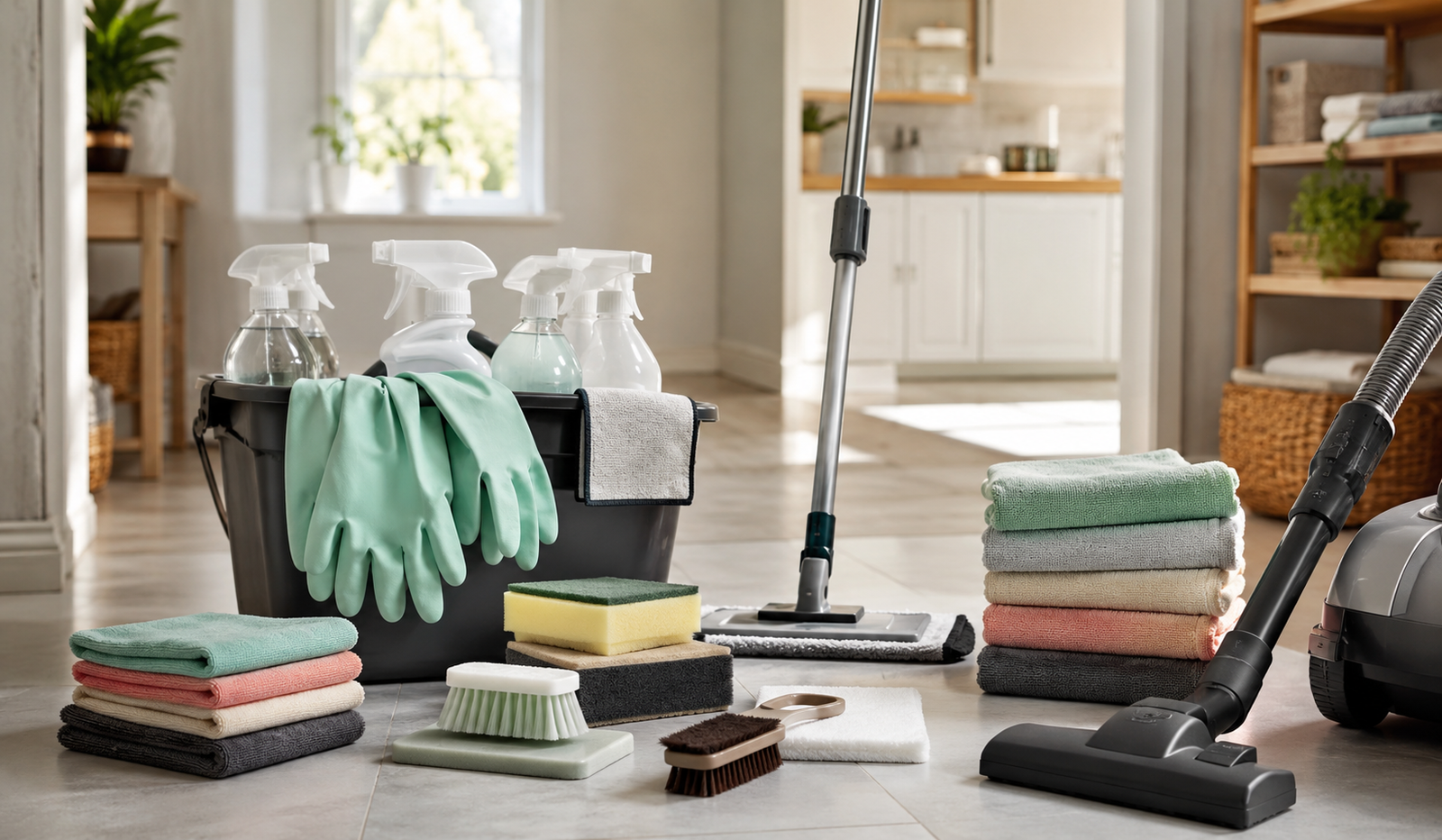
Not every eco friendly cleaning choice has to be a chemical product. Washable microfiber cloths, reusable mop heads, durable brushes, and washable sponges can replace many disposable cleaning items.
A reusable cloth that lasts for months or years can be a surprisingly simple way to reduce household waste.
Best Types of Eco Friendly Household Cleaning Products
There is no single product that works for every cleaning job. The better approach is to choose products according to the task and avoid buying more than you actually need.
Eco Friendly All Purpose Cleaners
An all-purpose cleaner can be one of the most useful products in a household. A suitable formula can often be used on counters, tables, washable surfaces, and other areas according to the manufacturer’s instructions.
A concentrated version can be particularly convenient because you mix or dilute it as directed rather than repeatedly purchasing large bottles of ready-to-use cleaner.
Green Dishwashing Products
Dish soap is used frequently, so small differences in packaging and formula can become meaningful over time. Look for products that provide clear ingredient information and avoid unnecessarily oversized packaging.
Refillable dish soap systems can also be useful if you already have a durable dispenser that you can keep using.
Eco Friendly Laundry Detergent
Laundry detergent is another everyday essential where concentrated formulas, powders, and refill systems can make sense. Some products are designed to deliver the required cleaning performance with relatively small amounts.
The important thing is not to assume that using more detergent will produce cleaner clothes. Follow the manufacturer’s dosage instructions, especially with concentrated formulas.
Natural Bathroom Cleaners
Bathrooms often need products capable of handling soap residue, mineral deposits, and everyday grime. An environmentally conscious bathroom cleaner should still be appropriate for the specific surface.
Natural ingredients can be useful for some cleaning jobs, but homemade mixtures should be handled carefully. Never combine cleaning chemicals simply because both products are individually considered mild.
Refillable Cleaning Sprays
Refillable sprays are becoming popular because the same bottle can be used repeatedly. Instead of purchasing a complete spray bottle each time, you purchase a refill and reuse the container.
This approach can be particularly practical for households that regularly use multipurpose or glass cleaners.
Cleaning Powders and Tablets
Powders and concentrated tablets can reduce the amount of water transported in cleaning products. The consumer adds water at home when the formulation is designed for that purpose.
These formats can also be convenient for storage because they often take up less space than multiple bottles.
Eco Friendly Cleaning Products vs. Traditional Cleaners
The difference is not simply that one product is “good” and the other is “bad.” Traditional cleaning products can perform very specific jobs effectively, and some situations require specialized products.
The more useful comparison is to examine the whole product. Does it use excessive packaging? Is it highly concentrated? Are ingredients clearly disclosed? Is the packaging reusable or recyclable where appropriate? Is there a credible certification?
This broader view helps prevent greenwashing and makes product selection more practical.
How to Spot Greenwashing
Greenwashing happens when environmental marketing creates a greener impression than the available evidence supports. Words such as “natural,” “earth-friendly,” “green,” and “non-toxic” can sound reassuring, but they do not tell you everything you need to know.
Instead of focusing on the front of the package, check the details. Look for specific environmental claims, ingredient information, packaging details, and recognized certification where available.
The U.S. Environmental Protection Agency’s Safer Choice program is one example of a certification system that evaluates cleaning-product ingredients against specific human health and environmental criteria.
Are Eco Friendly Cleaning Products Safe?
Eco friendly does not mean risk-free. Any cleaning product can cause problems if it is swallowed, splashed into the eyes, inhaled improperly, or used against label instructions.
Even products made with familiar household ingredients deserve careful handling. Keep cleaning products away from children and pets, use appropriate ventilation, and follow the manufacturer’s directions.
Most importantly, never mix cleaning chemicals unless the manufacturer specifically states that the combination is safe. Bleach, in particular, should never be mixed with ammonia or certain acidic cleaners because dangerous gases can form.
Are Homemade Cleaners Really More Eco Friendly?
Homemade cleaning solutions can reduce packaging and may use inexpensive ingredients, but they are not automatically better in every situation. Effectiveness depends on the cleaning task, surface, concentration, and ingredients.
For example, vinegar is acidic and can be useful for some mineral deposits, but it is not appropriate for every surface. It can damage certain natural stones and other acid-sensitive materials.
Homemade recipes also should not be treated as disinfectants unless they have been specifically tested and are appropriate for that purpose. Cleaning and disinfecting are different jobs.
How to Build a Greener Cleaning Routine
You do not need to replace every cleaning product in your home overnight. Start with the items you use most often.
A simple routine might include one suitable multipurpose cleaner, a bathroom-specific product when needed, an appropriate dish soap, laundry detergent, reusable cloths, and a durable brush or mop. Add specialized products only when a particular cleaning problem actually requires them.
This approach can save money as well as storage space. Buying fewer products also makes it easier to understand what you are using and how each product should be handled.
Simple Ways to Reduce Cleaning Waste
One of the easiest changes is to stop treating disposable products as the default. Reusable cloths can replace many paper towels, while washable mop heads can replace disposable alternatives.
You can also measure concentrated cleaners correctly instead of using extra product. More cleaner does not necessarily mean better cleaning.
Another useful habit is finishing products before replacing them. Throwing away a half-full bottle simply because a new “green” product looks more appealing does not necessarily reduce environmental impact.
How to Choose Eco Friendly Cleaning Products on a Budget
Greener cleaning does not have to mean buying the most expensive product on the shelf. Look at the cost per use rather than only the price of the package.
A concentrated cleaner may have a higher upfront price but last longer. A durable reusable cloth may cost more than a disposable wipe package initially but can be washed and reused repeatedly.
Generic or store-brand products can also be worth considering when their ingredients, performance, packaging, and certifications meet your needs. The goal is to make sensible choices rather than buy something simply because it carries an environmental slogan.
What Certifications Should You Look For?
Certifications can make environmental claims easier to evaluate because they provide standards beyond ordinary advertising language. The specific certifications available depend on the country and product category.
In the United States, EPA Safer Choice is one established program for identifying products whose ingredients meet its safety and environmental criteria. EPA also provides information about identifying greener cleaning products and avoiding vague environmental claims.
When shopping elsewhere, look for reputable national or international certification programs and check what the certification actually evaluates.
Common Mistakes to Avoid
One common mistake is assuming that anything labeled natural is automatically environmentally friendly. Another is buying several different cleaners for jobs that could be handled by fewer products.
Using too much cleaner is another avoidable problem. Follow the label rather than guessing the amount.
Finally, avoid mixing cleaning products. Combining household chemicals can create dangerous reactions, even when each product seems ordinary when used separately.
A Practical Eco Friendly Cleaning Checklist
Before buying a cleaning product, ask yourself a few simple questions. Do I actually need this product? Can an existing cleaner handle the job? Is the product concentrated or refillable? Is the packaging designed for reuse or recycling? Are the environmental claims specific and supported? Does the product provide clear usage and safety instructions?
These questions take only a few seconds, but they can make your shopping decisions much more thoughtful.
Conclusion
Eco friendly household cleaning products are not about finding one magical “green” bottle. They are about making better-informed choices across ingredients, packaging, product concentration, reusable tools, and everyday cleaning habits.
Start small. Replace a frequently used disposable item with a reusable alternative, consider concentrated or refillable cleaners, and look beyond marketing claims when comparing products. You do not need a completely different cleaning routine to reduce waste. A few sensible changes can make your household cleaning habits more efficient and environmentally conscious.
FAQs
1. What are eco friendly household cleaning products?
They are household cleaning products designed with environmental considerations such as ingredients, packaging, concentration, recyclability, refillability, and waste reduction.
2. Are eco friendly cleaning products actually effective?
Yes. Eco-conscious products can effectively clean everyday household surfaces when the formula is appropriate for the job and used according to its instructions.
3. Are natural cleaning products always eco friendly?
No. “Natural” does not automatically mean environmentally friendly or safe. Ingredients, packaging, manufacturing, transportation, and how the product is used all matter.
4. What is the most eco friendly way to clean a home?
Using the appropriate amount of cleaner, choosing reusable tools, reducing disposable products, and selecting concentrated or refillable products where practical can help reduce waste.
5. Are homemade cleaning products better for the environment?
Not necessarily. Homemade cleaners may reduce packaging, but their environmental benefits depend on the ingredients, effectiveness, storage, and cleaning task.
Read also: Magnolia Bakery Banana Pudding Its Taste and Texture
One thought on “How to Choose Eco Friendly Household Cleaning Products”