






Household essentials and pantry staples shopping makes everyday life a little easier. When your kitchen and home are stocked with the basics, you can prepare meals, handle daily chores, and avoid last-minute trips to the store. Whether you’re shopping for a family or just yourself, keeping everyday necessities on hand saves time, reduces waste, and helps your home stay organized.
What Is Household Essentials and Pantry Staples Shopping?
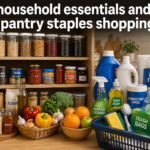
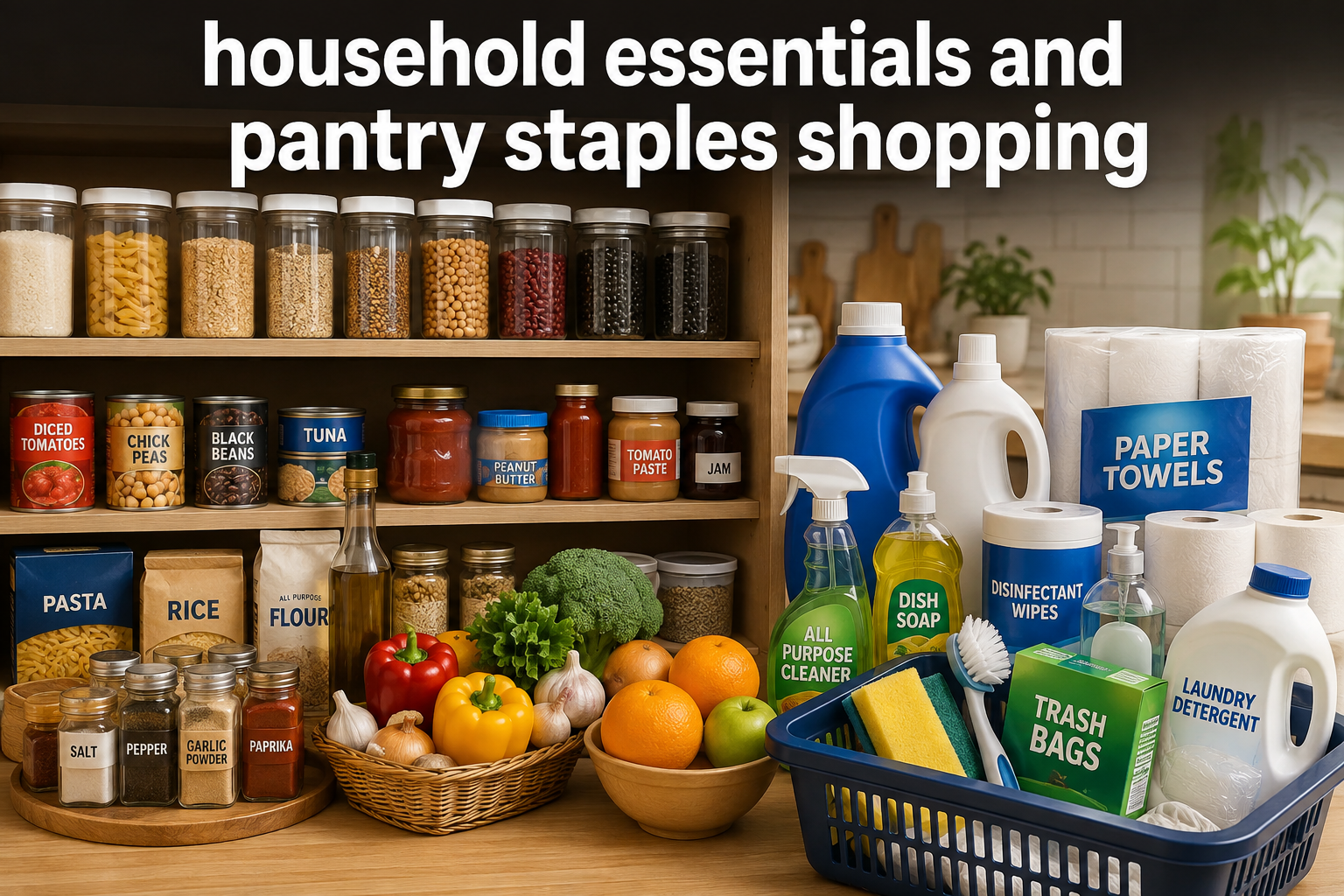
Household essentials and pantry staples shopping refers to purchasing the everyday products that most homes regularly use for cooking, cleaning, and personal care. Pantry staples include foods with a long shelf life, such as rice, pasta, canned vegetables, beans, flour, sugar, spices, and cooking oils, while household essentials include cleaning products, paper goods, laundry supplies, and hygiene items. Keeping these products stocked means you’re ready for everyday meals and routine household tasks without unnecessary last-minute shopping trips.
Why a Well-Stocked Pantry Makes Life Easier
A fully stocked pantry gives you flexibility in the kitchen because you can prepare meals even when fresh groceries are limited. Having ingredients like rice, pasta, canned tomatoes, broth, and spices allows you to create countless recipes without constantly visiting the supermarket. It also reduces stress during busy workdays, unexpected weather, or times when shopping isn’t convenient, making daily meal preparation faster and more enjoyable.
Essential Pantry Staples Every Home Should Have
Every pantry benefits from a balanced selection of dry grains, canned foods, baking ingredients, seasonings, and cooking oils. Rice, oats, pasta, flour, sugar, salt, pepper, canned beans, canned tuna, tomato paste, vegetable broth, olive oil, vinegar, herbs, and spices form the foundation of many home-cooked meals. These ingredients stay fresh for extended periods and make it easy to prepare breakfast, lunch, dinner, and snacks without relying on takeout.
Household Cleaning Supplies Worth Keeping Stocked
Cleaning products are just as important as food because they help maintain a safe and healthy living environment. Multi-purpose cleaners, dishwashing liquid, laundry detergent, disinfectant wipes, bathroom cleaner, glass cleaner, garbage bags, paper towels, sponges, and microfiber cloths should always be available. Keeping these essentials on hand ensures that spills, laundry, and daily cleaning routines can be handled immediately without interruptions.
Everyday Refrigerated Essentials
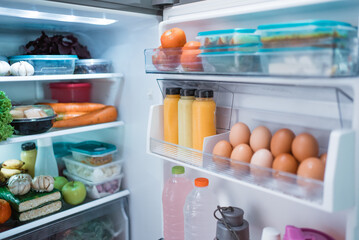
While pantry staples provide long-lasting storage, refrigerated items complete everyday meals and recipes. Milk, butter, cheese, yogurt, eggs, fresh vegetables, fruits, and fresh meat or poultry offer nutrition and versatility throughout the week. Purchasing these items based on your family’s eating habits helps reduce food waste while ensuring fresh ingredients are always available.
How to Create a Smart Shopping List
An organized shopping list begins with checking what you already have at home before visiting the store. Looking through your pantry, refrigerator, and cleaning cabinet prevents duplicate purchases while helping you identify products that genuinely need replacing. Dividing your list into categories such as pantry items, fresh produce, dairy, frozen foods, cleaning supplies, and personal care products also makes shopping faster and less overwhelming.
Ways to Save Money While Shopping
Saving money doesn’t always mean buying the cheapest products. Comparing unit prices, choosing store brands, shopping during sales, purchasing frequently used items in larger quantities, and using digital coupons can significantly reduce grocery expenses over time. Planning meals before shopping also prevents impulse purchases because every item in your cart has a clear purpose for the week ahead.
Buying in Bulk: Is It Worth It?
Bulk shopping can be an excellent strategy for products your household uses regularly, including rice, flour, pasta, paper towels, toilet paper, laundry detergent, and canned goods. Buying larger packages often lowers the cost per unit and reduces shopping frequency, but it only works well if you have enough storage space and know the products will be used before their expiration dates.
Organizing Your Pantry for Maximum Efficiency
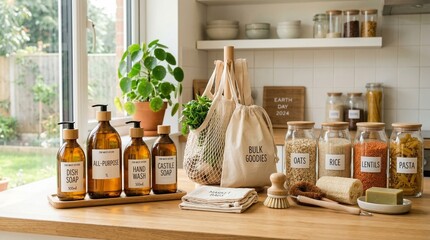
An organized pantry saves both time and money because you can easily see what you already own. Grouping similar items together, placing older products toward the front, labeling storage containers, and keeping shelves clean helps prevent forgotten ingredients from expiring. Clear containers for flour, sugar, rice, and cereal also make your pantry look tidy while allowing you to monitor inventory at a glance.
Choosing Healthy Pantry Staples
Healthy shopping starts with selecting nutritious ingredients that support balanced meals throughout the week. Whole grains, brown rice, oats, dried beans, lentils, canned vegetables with reduced sodium, natural peanut butter, olive oil, herbs, and low-sugar cereals provide lasting nutrition without sacrificing convenience. These healthier choices make preparing wholesome meals easier while supporting long-term wellness.
Avoiding Common Shopping Mistakes
Many shoppers spend more than necessary because they shop without a plan or purchase products they already own. Shopping while hungry often leads to unnecessary snack purchases, while ignoring expiration dates may result in wasted food. Creating a meal plan, checking pantry inventory beforehand, and sticking to a prepared shopping list helps eliminate these common mistakes and keeps grocery spending under control.
Shopping Online vs. In-Store
Online grocery shopping offers convenience by allowing you to compare prices, review your cart carefully, and avoid impulse purchases from store displays. In-store shopping, however, gives you the opportunity to personally inspect fresh produce, dairy products, and meat before buying. Many households combine both methods depending on their schedules, making grocery shopping more flexible and efficient.
Seasonal Shopping Can Reduce Costs
Buying seasonal fruits and vegetables often results in better quality at lower prices because these products are more abundant during their natural harvest periods. Seasonal shopping also adds variety to family meals throughout the year while supporting local agriculture and reducing transportation costs that can affect food prices.
Building Emergency Food Supplies
Keeping a small emergency pantry provides peace of mind during unexpected situations such as severe weather, power outages, or temporary supply shortages. Shelf-stable foods like canned vegetables, canned meats, rice, pasta, peanut butter, crackers, bottled water, powdered milk, and shelf-stable snacks ensure your household remains prepared without requiring frequent replacements when rotated regularly.
Sustainable Household Shopping Habits
Sustainable shopping benefits both your budget and the environment by reducing unnecessary waste. Choosing reusable shopping bags, purchasing refillable cleaning products, selecting recyclable packaging, minimizing single-use plastics, and planning meals carefully all contribute to a more environmentally responsible household while helping reduce long-term expenses.
How Often Should You Restock Household Essentials?
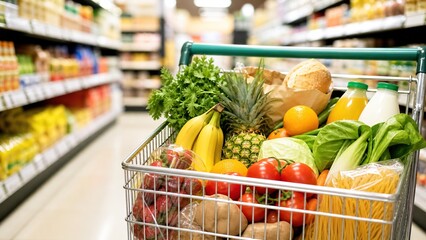
The ideal restocking schedule depends on your family’s size and consumption habits, but many households benefit from reviewing pantry staples weekly and performing a larger monthly inventory check. Frequently used products like milk, eggs, fresh produce, and bread may require weekly purchases, while cleaning supplies, paper products, and dry pantry items often last much longer before needing replacement.
Conclusion
Household essentials and pantry staples shopping is more than simply filling your grocery cart—it’s about creating a reliable system that saves time, reduces stress, and helps your home function smoothly every day. By planning your shopping trips, organizing your pantry, purchasing versatile ingredients, and keeping essential cleaning supplies available, you can simplify meal preparation, avoid unnecessary expenses, and maintain a comfortable household throughout the year. Small improvements in your shopping habits today can lead to significant savings, greater convenience, and better organization for years to come.
Frequently Asked Questions
What are pantry staples?
Pantry staples are long-lasting food items such as rice, pasta, canned goods, flour, cooking oil, beans, spices, and sugar that are regularly used in everyday cooking.
Why is household essentials and pantry staples shopping important?
It helps reduce last-minute shopping trips, supports meal planning, saves money, minimizes food waste, and keeps your home prepared for daily needs.
How often should I restock pantry staples?
Most households benefit from checking pantry supplies weekly and performing a full inventory every month to replace commonly used items.
What household cleaning products should every home have?
Basic supplies include dish soap, laundry detergent, disinfectant cleaner, bathroom cleaner, paper towels, garbage bags, sponges, and multi-purpose cleaner.
Is buying pantry staples in bulk a good idea?
Yes, buying frequently used products in bulk can reduce costs, provided you have adequate storage and can use them before they expire.